

School Board Newsletter: Strategic Plan Progress Report
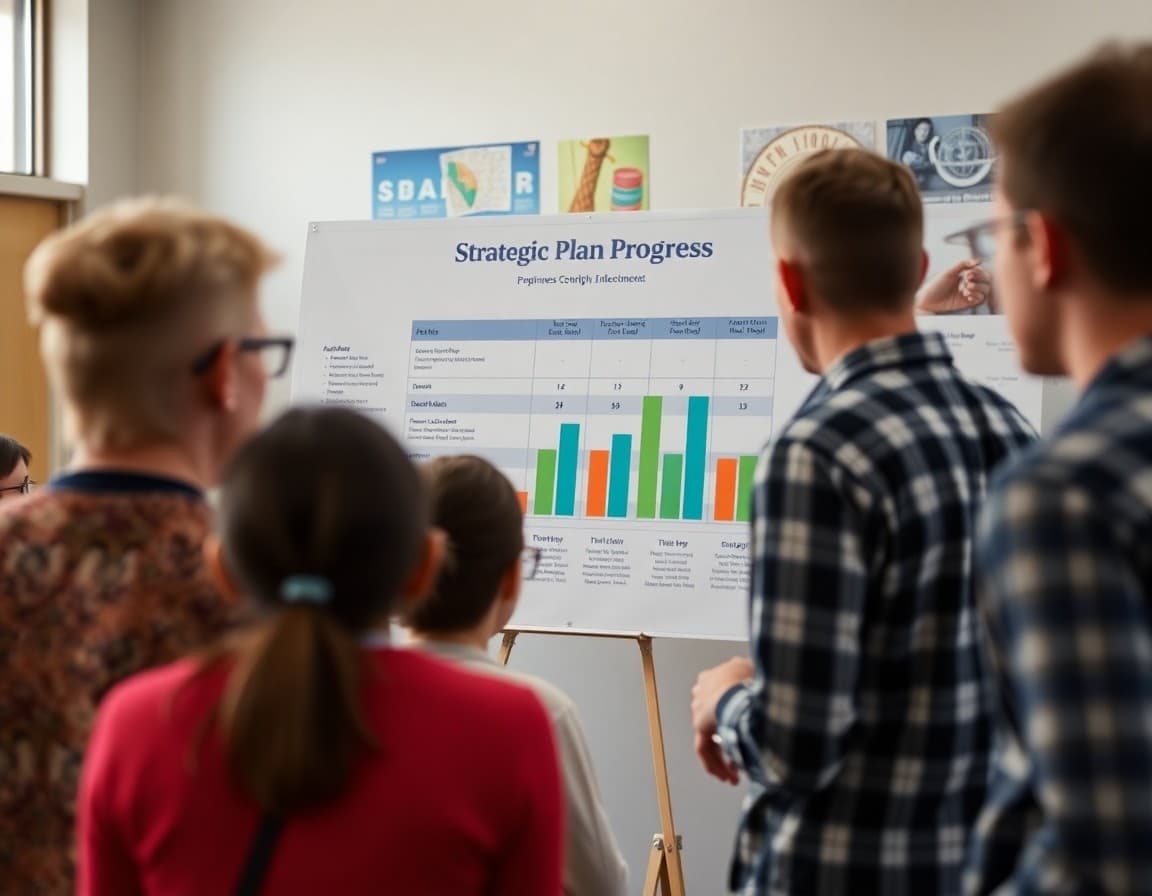
A strategic plan that is adopted and then never heard from again is a governance failure. Families who supported community engagement during the planning process, or who voted for a bond measure connected to the plan's implementation, deserve to know what the district is actually accomplishing. A strategic plan progress newsletter is the board's accountability delivery mechanism.
State the plan period and where we are in it
Open with a brief orientation: the plan's title and the years it covers, and where in the plan period this update falls. "This is the second annual progress report on the district's 2024-2029 strategic plan" gives families context for how to evaluate the progress described.
Report progress on each goal area
For each of the plan's major goal areas, describe progress using the specific metrics the plan identified. Start with the baseline, state the current year's result, and note whether the district is on track toward the multi-year target. Use consistent language for goal status, such as on track, ahead of target, behind target, or complete.
Describe specific accomplishments
Name the programs launched, policies adopted, or infrastructure investments completed that represent progress toward strategic goals. Concrete accomplishments connect the abstract goal language to things families can recognize in their children's experience.
Be honest about goals that are behind
An honest progress report includes goals where the district has not made expected progress. State the current performance, describe what is contributing to the gap, and explain what adjustments the district is making. Families who see honest reporting of challenges trust the board more than those who receive only positive updates.
Describe any goal revisions
If any goals have been revised since the plan was adopted, explain what changed and why. External factors such as state funding changes, enrollment shifts, or the COVID-19 pandemic's aftermath have required many districts to revisit strategic targets. Transparency about revisions builds more trust than silent changes.
Preview what comes next
Describe the most significant strategic initiatives planned for the coming year. This keeps the community connected to the direction the district is heading and maintains the sense that the strategic plan is a living guide to the board's work, not a historical document.
Invite community engagement with the plan
Describe opportunities for community members to engage with strategic plan implementation, whether through advisory committees, public input sessions on specific goal areas, or by tracking the plan's public dashboard. Daystage gives district teams a professional platform for delivering consistent strategic plan progress reports that build the community confidence that sustained accountability produces.
Get one newsletter idea every week.
Free. For teachers. No spam.
Frequently asked questions
How often should the board send strategic plan progress updates?
At minimum annually, and more frequently if the plan includes specific milestones with public reporting commitments. A mid-year progress check in January or February and an end-of-year report in June or July cover the most natural accountability checkpoints.
What does an honest strategic plan progress update look like?
It shows progress toward each goal, names goals that are on track, goals that have been achieved, and goals where progress is lagging. An update that shows only positive progress is not believable. Including goals where the district has not made expected progress is what separates a real accountability report from a public relations document.
How do we communicate when a strategic plan goal is not being met?
Name the goal, share the data showing the gap between the target and current performance, describe what is contributing to the gap, and state what the district is doing to close it. Honest assessment of challenges is more useful to the community than silence or spin.
Should the newsletter describe goal revisions?
Yes. If changed circumstances have required a goal to be revised, state what the original goal was, what it has been changed to, and why. Unexplained revisions to goals look like goal-post moving to a community that remembers the original commitment.
How does Daystage support strategic plan reporting?
Daystage gives district communications teams a professional newsletter platform for delivering consistent strategic plan progress reports throughout the plan period. Regular progress reporting is one of the most visible signs of a board that governs with accountability.

Adi Ackerman
Author
Adi Ackerman is a former classroom teacher and curriculum writer with 8 years in K-8 schools. She writes about school communication, parent engagement, and what actually works in real classrooms.
More for School Board
Ready to send your first newsletter?
3 newsletters free. No credit card. First one ready in under 5 minutes.
Get started free