
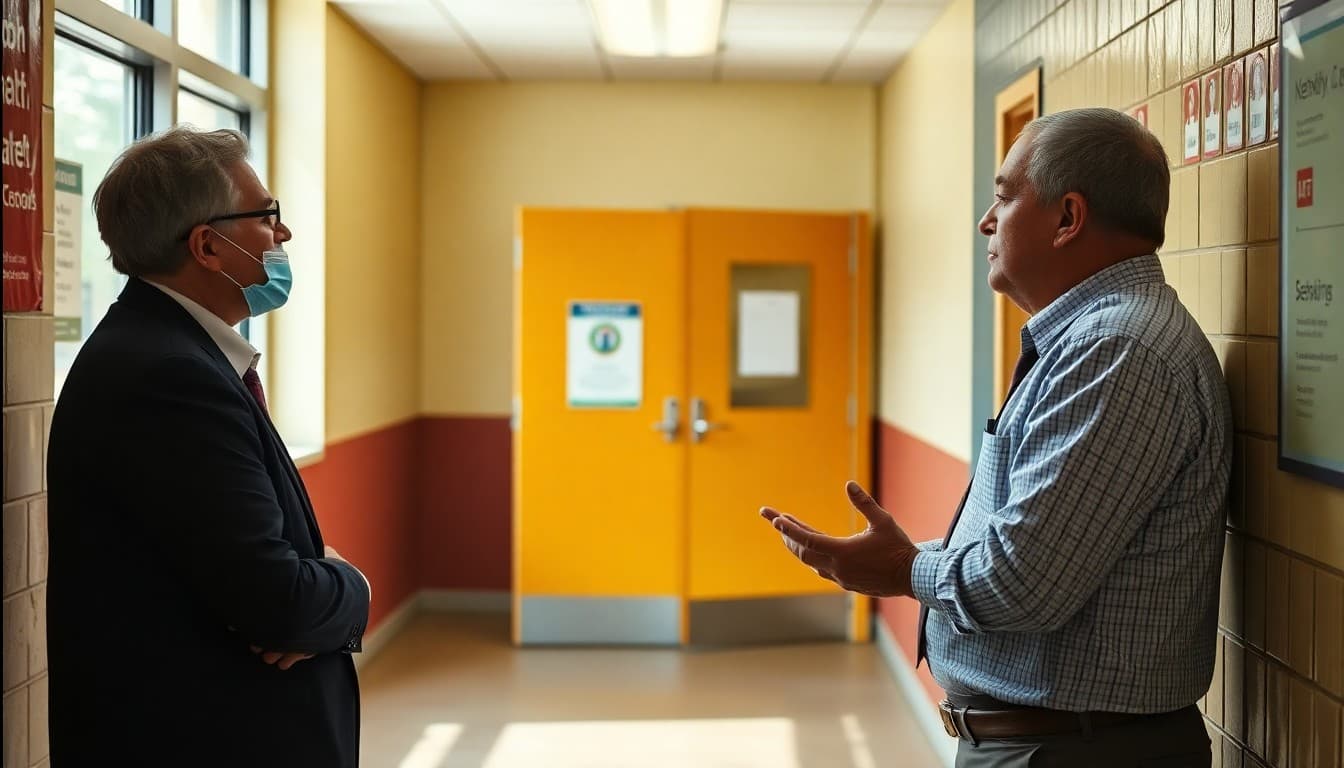
School Board Newsletter: Health and Safety Requirement Update

Health and safety requirements, whether they involve masks, screening procedures, ventilation changes, or other protocols, are among the most politically sensitive decisions school boards communicate. The families they serve hold a wide range of views on public health measures, and the board's job is not to resolve those disagreements but to communicate clearly what the requirement is, why it was adopted, and what families need to do.
State the requirement clearly at the top
Open with a direct statement of the requirement: what it is, who it applies to, and when it takes effect. "Beginning Monday, March 1, all students and staff in district schools are required to wear face coverings indoors during school hours" is a complete opening sentence. Families who need to act on the information can do so after the first sentence.
Describe the legal or public health basis for the decision
Explain the authority under which the requirement is being implemented. Is it a state mandate? A county public health order? A board decision based on local transmission data and public health guidance? Name the specific order, guidance, or authority. Families who understand the basis for a requirement are better positioned to accept or challenge it through appropriate channels.
Describe what the requirement means in practice
Translate the requirement into the practical details families need. When must face coverings be worn and when can they be removed? What types of coverings are acceptable? Are there different requirements for different settings within a school, such as outdoors versus indoors? Step-by-step practical guidance prevents confusion on the first day of implementation.
Describe exemptions and accommodations
State clearly whether medical exemptions are available, what documentation is required, and how families should request them. Note who reviews exemption requests and the expected timeline. Families with students who have medical conditions need this information before the effective date.
Explain what happens if the requirement is not followed
Describe the response process for non-compliance. Students who arrive without required equipment will typically be provided with it or sent home. The expectation should be clear to families before the first day. State consequences matter-of-factly, not as threats.
Acknowledge community concerns
Note that the board understands families have varying views on health requirements and that the decision was not made lightly. Describe the process for families to raise formal concerns, whether through the board's public comment process or through other official channels.
Commit to communicating when requirements change
Health situations evolve. Tell families that the board will communicate changes to requirements as conditions change. Daystage gives district teams a professional newsletter platform for delivering health requirement updates to the full community at any point in the school year.
Get one newsletter idea every week.
Free. For teachers. No spam.
Frequently asked questions
What should a health requirement update newsletter include?
The specific requirement being implemented or changed, the legal or public health basis for the decision, what it applies to and when it takes effect, what families need to do, and what exceptions or accommodations exist. Include a contact for families with questions.
How do we communicate a requirement that some families will strongly oppose?
Be factual, specific, and grounded in the guidance or law that supports the decision. Acknowledge that families may have concerns and describe the process for raising them. Avoid language that dismisses objections or frames the requirement as obviously correct. Calm, factual communication is more persuasive than advocacy.
Should the newsletter describe enforcement and consequences?
Yes. Families deserve to know what happens if the requirement is not followed. Describe the process clearly without being threatening. For most health requirements, the consequence is exclusion from school until compliance is documented or an exemption is on file.
What accommodations should the newsletter describe?
If medical exemptions or accommodations are available, describe the process for requesting them. Families with students who have medical conditions that affect compliance need to know their options before the requirement takes effect.
How does Daystage support urgent health communications?
Daystage gives district communications teams a professional newsletter platform for sending time-sensitive health and safety updates to the full community. A board that communicates health requirements clearly and promptly demonstrates that it takes community health seriously.

Adi Ackerman
Author
Adi Ackerman is a former classroom teacher and curriculum writer with 8 years in K-8 schools. She writes about school communication, parent engagement, and what actually works in real classrooms.
More for School Board
Ready to send your first newsletter?
3 newsletters free. No credit card. First one ready in under 5 minutes.
Get started free