
Facilities Tour Newsletter for School Board Communication
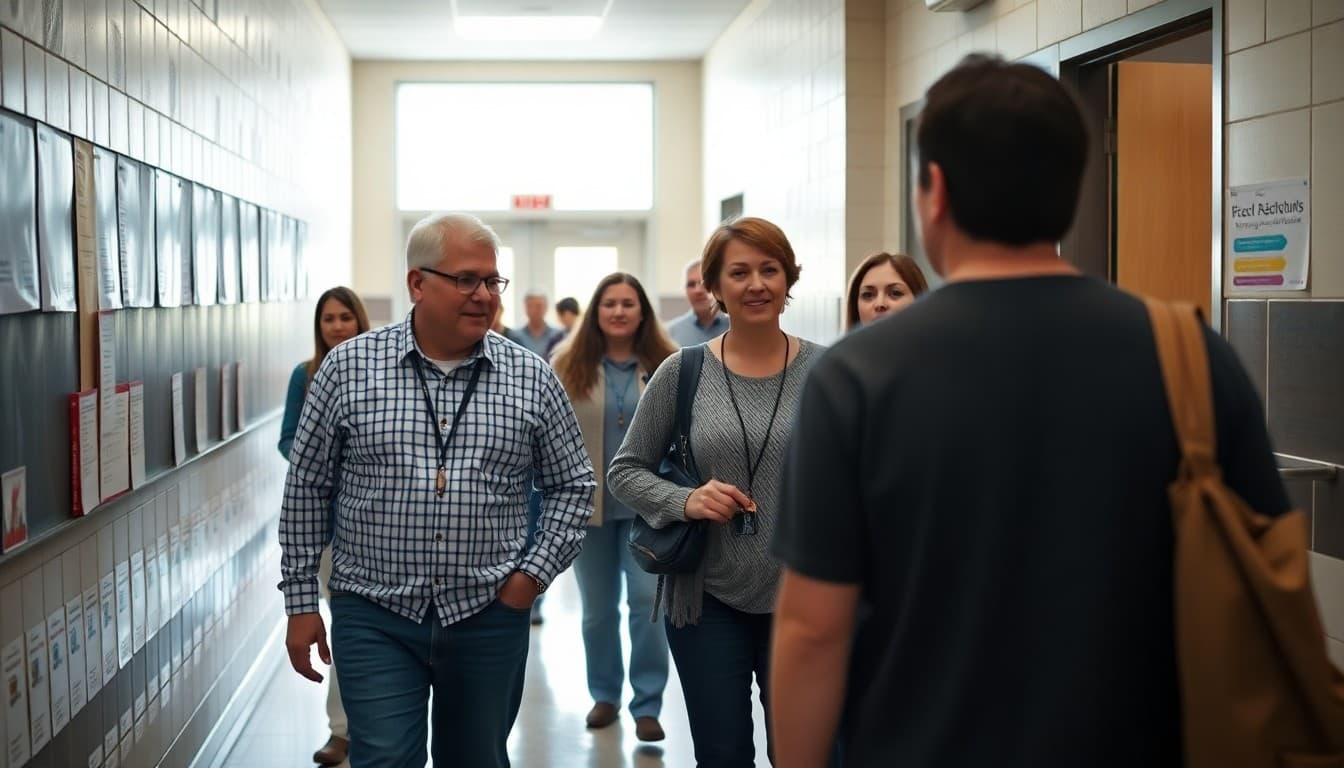
The condition of school buildings is easier to understand in person than in a report. When a community member walks through a school building and sees a boiler room from the 1960s, a gymnasium without adequate ventilation, or a roof drainage system that has been patched so many times that the patches have patches, they carry that knowledge into every future conversation about capital funding. Facilities tours transform abstract budget discussions into lived experience. A board that invites the community inside its buildings is a board that trusts the evidence to speak for itself.
What the Tour Will Cover
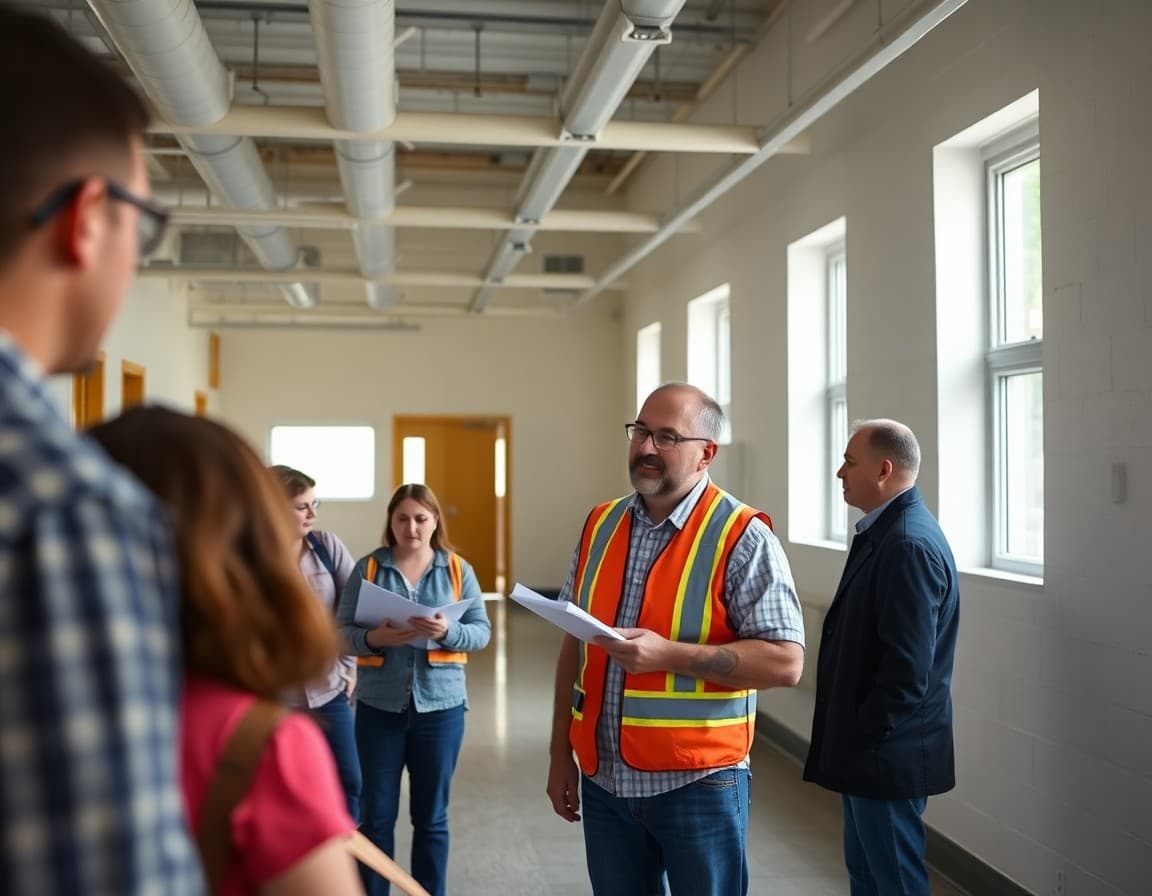
The district is hosting community facilities tours of [describe which schools or facilities are included] on [dates and times]. Each tour lasts approximately [duration] and is led by [the district's facilities director or a building engineer]. The tour will include [describe what participants will see: the main mechanical room and HVAC systems, the roof and exterior, instructional spaces and how they compare to current educational design standards, technology infrastructure, safety and security systems, and any areas currently undergoing or scheduled for renovation]. [Describe any before-and-after stops where a completed renovation can be compared to an area still awaiting attention.] Participants will have opportunities to ask questions throughout the tour and will receive a summary of the district's facility condition assessment at the end.
What the Facilities Assessment Shows
The district completed a comprehensive facilities condition assessment in [year], conducted by [describe who: an independent engineering firm, state inspectors, or district staff]. The assessment rated each building across [describe the dimensions: structural integrity, mechanical systems, electrical systems, plumbing, roofing, accessibility, and educational adequacy]. [Summarize the overall findings: how many buildings received satisfactory ratings, how many have significant deferred maintenance, what the estimated total cost of needed improvements is.] The tour routes have been designed to illustrate both the areas that are in good condition and the areas where investment is most urgently needed. Participants will come away understanding the full picture, not a selective presentation of the district's best buildings.
The Relationship Between Building Conditions and Student Learning
Research on school building conditions and academic outcomes documents consistent findings: students in buildings with poor indoor air quality, inadequate lighting, uncomfortable temperatures, and deteriorating physical environments perform below students in well-maintained buildings controlling for other factors. This is not a surprising finding. Humans do not function well in uncomfortable, poorly ventilated, or unsafe environments. The tour will include information about how each building's current conditions affect the day-to-day learning experience of the students inside it. [Describe any specific issues currently affecting student experience: a school where summer heat makes the first weeks of school miserable without air conditioning, or a building where plumbing problems have closed restrooms intermittently.]
How This Connects to the Capital Improvement Plan
The district's capital improvement plan, developed from the facilities condition assessment, identifies [number] projects over the next [number] years at a total estimated cost of $[amount]. [Describe the top priorities and their estimated costs.] Current funding sources include [describe: general fund transfers, state construction aid, reserves set aside from prior budgets, or existing bond authority]. The gap between identified needs and available funding is $[amount]. [Describe how the board is considering addressing this gap: a capital referendum, phase-based project prioritization, or other approach.] The facilities tour is part of the community education process that precedes any major capital funding decision. The board wants residents to understand what needs to be done and why before being asked to vote on how to fund it.
How to Register for the Tour
The tour is open to all community members and there is no admission cost. Space is limited to [number] participants per tour date to allow for meaningful engagement with the facilities director. Register by [describe registration method: online form, email to a specific address, or phone call to the district office] by [registration deadline]. [If multiple tour dates are available, describe each and whether they cover different buildings or the same buildings.] Tours will proceed regardless of weather conditions. Comfortable walking shoes are recommended. Questions about the tour can be directed to [contact name and information].
After the Tour
Following each tour date, the district will send a summary newsletter to all registered participants and to the broader community describing key findings and the questions that came up during the tour. This summary will be available through Daystage to all district families and community members who did not attend. If the tour informs any immediate changes to capital project priorities or timelines, those will be communicated through subsequent board meeting agendas and community updates. The district thanks every community member who takes the time to see these buildings firsthand. That kind of informed engagement is exactly what good school governance depends on.
Get one newsletter idea every week.
Free. For teachers. No spam.
Frequently asked questions
Why do school boards conduct community facilities tours?
Facilities tours give community members direct, firsthand experience of building conditions rather than relying on descriptions in reports or presentations. When voters are asked to support a capital bond for school improvements, a tour of aging facilities is far more compelling than a slide deck of photographs. Tours also build understanding and credibility: community members who have seen a problem with their own eyes are better advocates for addressing it.
What typically happens on a school district facilities tour?
A facilities tour covers the major building systems that affect safety and educational quality: HVAC and ventilation, electrical systems, plumbing, roofing and exterior envelope, structural elements, and the condition of instructional spaces. The facilities director or a building engineer typically leads the tour, pointing out both what works well and what needs attention. Tours usually include time for questions and a summary of the district's capital improvement priorities.
Who should attend a community facilities tour?
Community facilities tours are most valuable when attended by a broad cross-section of residents: parents of current students, community members without school-age children who pay property taxes, local business representatives, elected officials from the municipality, and members of civic organizations. The more diverse the participation, the broader the base of informed community members who can speak credibly about facility needs.
How do facilities tours connect to capital bond campaigns?
When a district is preparing to ask voters to approve a capital bond for facility improvements, facilities tours are one of the most effective forms of community education. Voters who have personally observed deteriorating roofs, outdated mechanical systems, or inadequate spaces make more informed decisions than those who have only read about these issues. Tours build the foundation of understanding that makes bond campaigns more likely to succeed.
How does Daystage help districts communicate facilities tour information to families?
Daystage lets districts send a well-organized tour announcement newsletter with dates, locations, and what participants will see. Following the tour, a Daystage newsletter summarizing key findings and next steps closes the loop for residents who attended and informs those who could not make it.

Adi Ackerman
Author
Adi Ackerman is a former classroom teacher and curriculum writer with 8 years in K-8 schools. She writes about school communication, parent engagement, and what actually works in real classrooms.
More for School Board
Ready to send your first newsletter?
3 newsletters free. No credit card. First one ready in under 5 minutes.
Get started free