
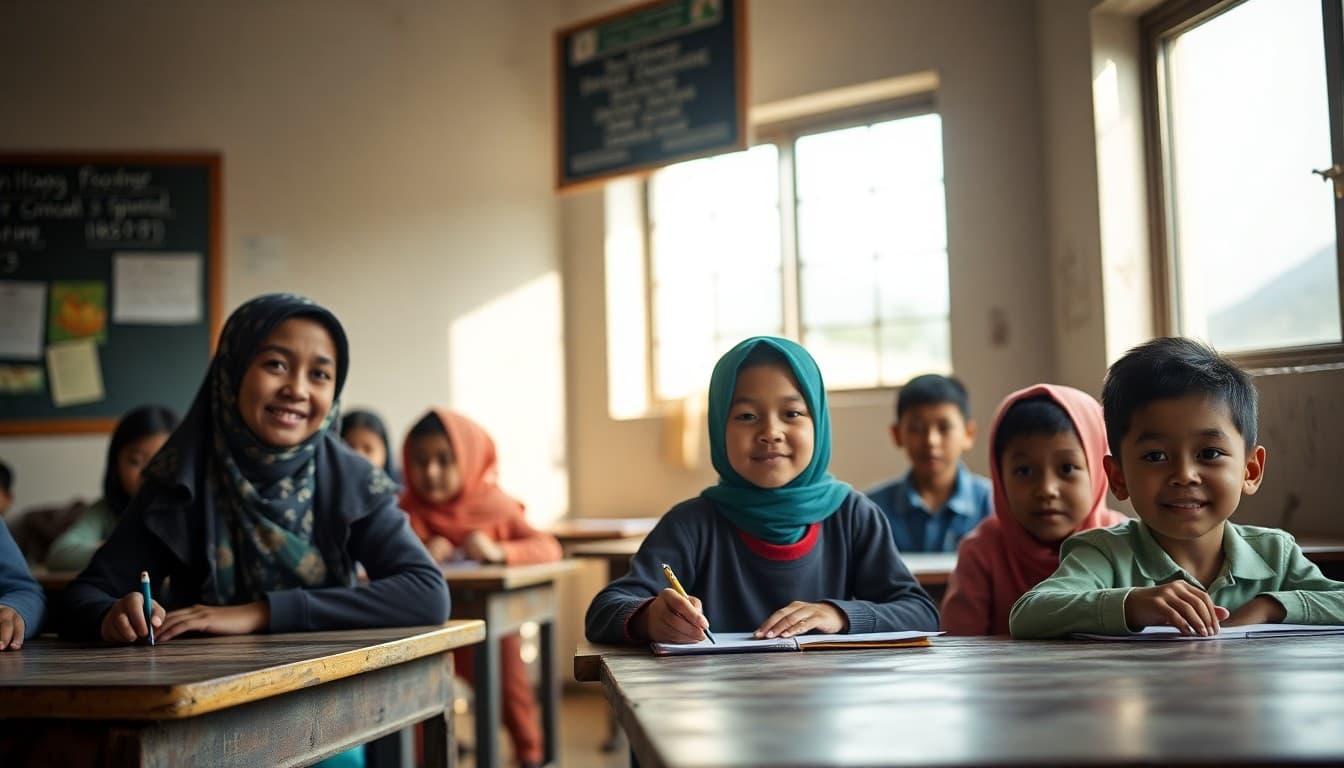
Seasonal Worker Family School Newsletter: Moving With the Seasons

Seasonal worker families arrive at your school knowing they will leave. Their children have changed schools before and will change schools again. The way your school communicates with them in the first week sets the tone for whether their child engages fully during their time there or maintains protective distance from a school they know they will be leaving. A newsletter that treats seasonal families as fully welcome members of the school community, not as temporary visitors, makes a real difference in how students experience their time with you.
Write a Permanent Welcome Section for Arriving Families
Every issue of your newsletter should include the same welcome section in a consistent location. Seasonal families who arrive in January need the same orientation information as families who arrive in September. A section that appears in every issue, not just at the start of the year, ensures that every family has access to the basics regardless of when they arrive:
Welcome to [School Name]
Enrollment: Open all year. Bring any documents you have, including proof of age. We can enroll your child without prior school records.
First day: Contact [name] at [phone] to arrange your child's first day. We will meet with you for 20 minutes to understand your child's academic background before they start class.
Questions: Our family liaison, [name], speaks [languages] and is available daily from [hours] at [contact information].
If you are only here for a few months: We want your child's time here to count. Tell us how long you plan to stay and we will work with you on what makes the most sense academically.
Explain Your Mid-Year Enrollment Process
Mid-year enrollment for a child who has been somewhere else requires assessment, placement decisions, and relationship-building. Families deserve to know how that process works before they are in the middle of it. "When your child enrolls mid-year, here is what we do: we review any records we have and ask you about where your child was academically at their last school. We give a brief informal assessment in reading and mathematics to understand their current level. We place them in a class group that matches what they know, not necessarily what the rest of the class is doing at that moment. We schedule a check-in at two weeks to see how the placement is working."
Communicate About Academic Records Transfer
For families who know they will be leaving, the records transfer process is one of the most important school services you can provide. A family who leaves your school with complete, organized academic records in hand helps their child avoid being placed in the wrong grade or starting the same material over at the next school. "When your family leaves our school, please tell us at least two weeks before your last day if possible. We will prepare a complete transfer packet including: current grades in all subjects, description of the curriculum your child was using, notes from their teacher on where they are in each subject area, and contact information if the receiving school has questions. We will have this ready within two days of your last day."
Feature What the School Can Offer in a Short-Term Enrollment
A family staying for two or three months may wonder whether it is worth the disruption to enroll their child at all. Your newsletter should make the case for enrollment, specifically for a short-term stay. "Even for two months, your child will receive consistent instruction, access to our school counselor, participation in our social-emotional learning program, and connections with students their age. We have seen students who were with us for only six weeks leave having made genuine friendships and made real academic progress. Short stays matter." That section is for the parent who is on the fence.
Connect Seasonal Families to Community Resources
Seasonal worker families often need support beyond the school: housing, food assistance, health care, and legal aid. A community resource section in your newsletter, updated for the current season when services change, helps families find what they need without knowing which agencies to call. List specific organizations with phone numbers and hours. "Health: [County health clinic], [address], open [days and hours], sliding scale fees, Spanish-speaking staff available. Food: [Food bank name], [distribution schedule and location]. Housing: [Organization name] can help with emergency housing for working families. Call [phone] between [hours]."
Recognize Seasonal Students' Resilience Without Making It a Display
Students who change schools multiple times per year are often academically resilient and socially adaptable in ways their peers are not. They have navigated new environments repeatedly and developed skills that have value. Recognize this without turning it into a performance or creating a category that separates these students from their peers. The best recognition is treating seasonal students as full members of the school community during their time there, giving them the same opportunities for academic recognition and social belonging as students who have been there all year.
Send Records Home With Students Who Leave
A family that leaves your school should never leave without records. Even if they give no advance notice, a basic records packet should be assembled the same day. A section in the newsletter explaining what families can expect when they leave reinforces that the school takes its responsibility to mobile students seriously. "If your family needs to leave unexpectedly, come to the front office on your last day. We will prepare a records packet for you to take with you that day. This packet is yours to keep and will help your child's next school place them appropriately."
Get one newsletter idea every week.
Free. For teachers. No spam.
Frequently asked questions
What is the difference between seasonal worker families and migrant families for school communication purposes?
The practical differences are relatively small for school communication purposes. Both groups include families who move with work cycles and whose children change schools mid-year. The key difference is that migrant families specifically move for qualifying agricultural or fishing work and may be eligible for the federal Migrant Education Program. Seasonal worker families may include workers in tourism, construction, fishing, forestry, or other cyclical industries who move but may not qualify for the same federal program. Both groups need welcoming, practical school communication that does not assume year-round enrollment.
How do we handle academic credit and grade placement for students who have been at another school for part of the year?
Be transparent with families about how you handle credit and placement decisions. Describe your assessment process, who makes placement decisions, and how families can be involved. For students who have been working on different curriculum or pacing at their previous school, describe how the school bridges that gap rather than simply placing the student where the class happens to be.
How do we communicate with seasonal worker families who are only at the school for a few months?
Prioritize the most practical information first: enrollment process, schedule, contact person, and support services. Families who are only staying for two months do not need the same orientation to the school culture that families who are enrolling for a full year need. A brief-stay version of the orientation information, focused on what a family needs to know for a partial-year enrollment, serves these families more efficiently.
How do we maintain continuity for students who leave mid-year?
Communicate clearly about the records transfer process and what the school sends to the receiving school. 'When your child leaves our school, we will prepare a transfer packet that includes their current grades, a description of the curriculum they were using, and contact information for their teacher. If the receiving school has questions, we will respond within two business days.' That commitment helps families advocate for appropriate placement at the next school.
Can Daystage help a rural school communicate with seasonal families who are only enrolled for a short period?
Yes. Daystage lets you send newsletters to a subscriber list that can be updated as families enroll and leave. New families can be added to the list when they enroll and removed when they leave, without affecting other subscribers. For seasonal schools where the population changes substantially at different times of year, that list management capability is practically useful.

Adi Ackerman
Author
Adi Ackerman is a former classroom teacher and curriculum writer with 8 years in K-8 schools. She writes about school communication, parent engagement, and what actually works in real classrooms.
More for Rural & Title I
Ready to send your first newsletter?
3 newsletters free. No credit card. First one ready in under 5 minutes.
Get started free