
Rural School Mental Health Newsletter: Resources for Remote Communities
Rural communities have fewer mental health providers per capita than any other setting in the country. For students in Title I rural schools, that shortage combines with geographic barriers, cultural stigma, and economic stress to create real risk. The school newsletter is one of the few reliable channels for reaching every family in the community. Used well, it can normalize help-seeking, connect families to resources they did not know existed, and establish the school as a place that cares about the whole child, not just test scores.
Frame Mental Health as Wellness, Not Crisis
The biggest mistake rural school mental health newsletters make is leading with crisis content: suicide prevention statistics, warning signs of depression, what to do if your child is in danger. That framing makes families skip the newsletter entirely or assume the school is signaling something about their child specifically. Start with wellness: "Taking care of our students' mental and emotional health is as important to us as their academic progress." Then move to resources. The framing determines whether families engage or disengage.
Introduce Your School Counselor by Name
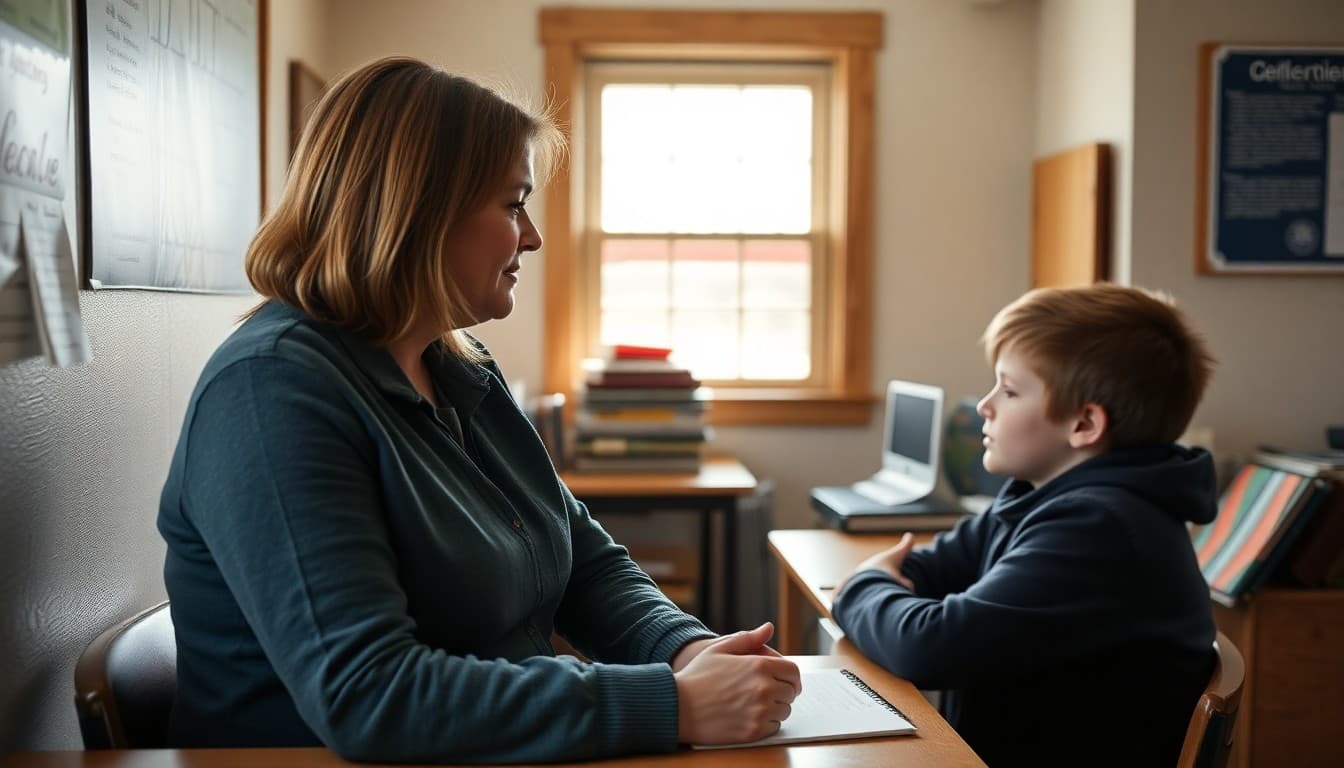
Many rural families have never met the school counselor or are unclear about what counselors actually do. A brief introduction in the newsletter with the counselor's name, photo, office hours, and what kinds of conversations they can have builds the relationship before a crisis occurs. Clarify that students can see the counselor without a referral, that conversations are confidential, and what the limits of confidentiality are. Families who understand the role are more likely to encourage their child to use it.
The 988 Lifeline Deserves Its Own Mention
The 988 Suicide and Crisis Lifeline is available 24 hours a day, 7 days a week, by call or text. Many rural families do not know this number exists or that texting is an option for young people who cannot make a voice call privately. Include 988 in every mental health newsletter along with a brief plain-language explanation: "If you or your child is in crisis, call or text 988 any time, day or night. It is free and confidential." That sentence costs you three lines of space and could save a life.
Telehealth Options for Remote Families
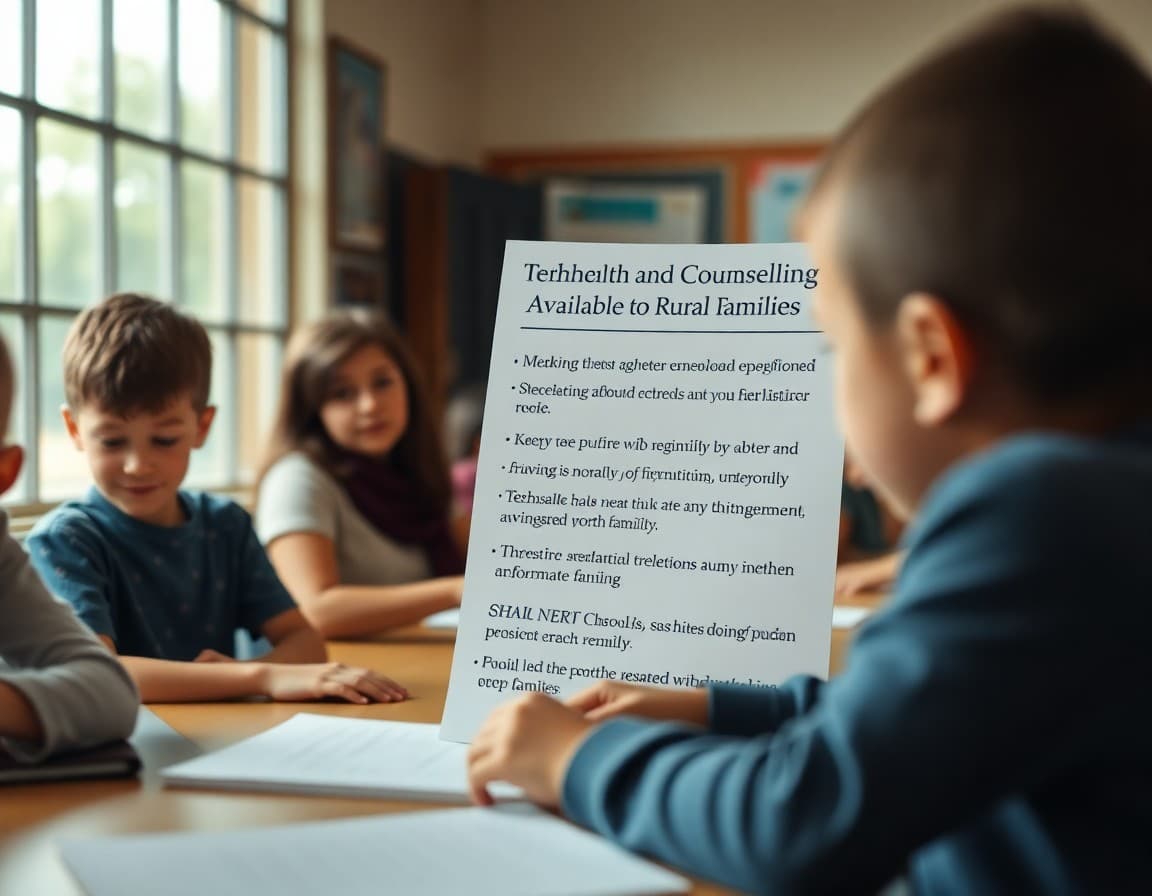
Families who live 60 miles from the nearest therapist are not going to drive there weekly. Telehealth has changed what is possible for rural communities, but families need to know where to start. List the specific telehealth options available to your community: state-funded programs, school-based telehealth contracts, sliding-scale platforms accessible with Medicaid, and any county mental health telehealth services. For families without reliable internet, clarify whether phone-only appointments are available and which services cover them.
A Sample Mental Health Resource Section
Here is a template excerpt that balances warmth with practical detail:
"Mental Health Resources for Our Community -- Our school counselor, Mr. Chavez, is available Monday through Thursday. Schedule an appointment through the main office at 555-0112 or email mchavez@school.org. Telehealth therapy: Valley Mental Health serves our county via video or phone, sliding scale fees, call 555-0199. Free and confidential crisis support: call or text 988 anytime. Crisis Text Line: text HOME to 741741. Substance use support for families: call 1-800-662-4357 (SAMHSA helpline, free, confidential). All of these services are available to your family regardless of insurance or income."
Address Seasonal Risk Periods
Mental health needs in rural communities peak at predictable points in the year: after winter break in January when seasonal depression and family conflict during holidays take a toll, during spring planting and harvest when farm family stress intensifies, and at the end of the school year when seniors face major transitions. Timing a mental health resource newsletter to land two weeks before these periods gives families the information before the need peaks rather than after.
Normalize Help-Seeking for Farm Families
Agricultural communities have particularly strong cultural norms around self-reliance and stoicism. "Toughing it out" is a value that runs deep. Your newsletter does not need to argue against this value; it can reframe help-seeking as a pragmatic decision that competent people make when they need specific expertise. "Just like you bring in a specialist when the combine breaks down, there are specialists for the things happening in our kids' minds. There is no shame in using them." That kind of culturally resonant framing works better in farm communities than clinical mental health language.
Invite Families to Ask
Close every mental health section with an open door: "If you are worried about your child and are not sure what to do, contact Mr. Chavez or the main office. You do not need to have all the answers before you reach out. That is what we are here for." Families who are struggling often wait because they are not sure their concern is serious enough to bring to the school. An explicit invitation to reach out before they are certain removes that barrier and gets students support earlier.
Get one newsletter idea every week.
Free. For teachers. No spam.
Frequently asked questions
Why is mental health communication harder in rural schools?
Rural communities face a combination of provider shortages, geographic barriers, and strong cultural stigma around mental health. The nearest licensed therapist may be 60 miles away. Families may be skeptical of outside help or worried about community judgment in small towns where everyone knows each other. A school newsletter has to navigate all of these barriers with language that normalizes help-seeking without triggering defensiveness.
What mental health resources should a rural school newsletter include?
Start with what the school itself provides: counselor hours, how to request an appointment, and what counseling services are confidential. Then list telehealth options families can access from home, the 988 Suicide and Crisis Lifeline, any county mental health services with sliding-scale fees, and state-specific crisis text lines. Substance use resources for families dealing with addiction in the household are also appropriate for many rural Title I communities.
How do you reduce stigma in mental health communication in a rural newsletter?
Use the same matter-of-fact tone you would use for a dental appointment. 'Our counselor is available every Tuesday. You can schedule a session the same way you schedule a parent-teacher conference.' Frame mental health as part of overall student wellness, not a sign of crisis. Including quotes from real staff members who model help-seeking, such as 'even I talk to someone when I need it,' normalizes the behavior for families who would otherwise see it as weakness.
Are there telehealth options specifically available to rural schools?
Yes. Many states have telehealth mental health programs specifically for rural and underserved schools, sometimes funded through USDA Rural Development or state health department grants. The School-Based Telehealth Network, if available in your state, connects students with licensed counselors via video. SAMHSA's rural behavioral health program also funds technical assistance for rural schools building mental health capacity. Contact your state's rural health association to find what applies to your district.
Can Daystage support mental health communication in rural schools?
Yes. A Daystage newsletter lets you send a carefully formatted mental health resource guide to all families with clickable links to telehealth services, the 988 Lifeline, and the school counselor's contact information. You can schedule this communication at strategic points in the year, such as after winter break when seasonal depression is highest, or at the start of testing season when student anxiety typically spikes.

Adi Ackerman
Author
Adi Ackerman is a former classroom teacher and curriculum writer with 8 years in K-8 schools. She writes about school communication, parent engagement, and what actually works in real classrooms.
More for Rural & Title I
Rural Distance Learning Newsletter: Reaching Remote Students
Rural & Title I · 6 min read
Food Insecurity Resources School Newsletter: Where to Get Help
Rural & Title I · 6 min read
Rural Community School Model Newsletter: How Schools Communicate Integrated Services to Families
Rural & Title I · 5 min read
Ready to send your first newsletter?
3 newsletters free. No credit card. First one ready in under 5 minutes.
Get started free