
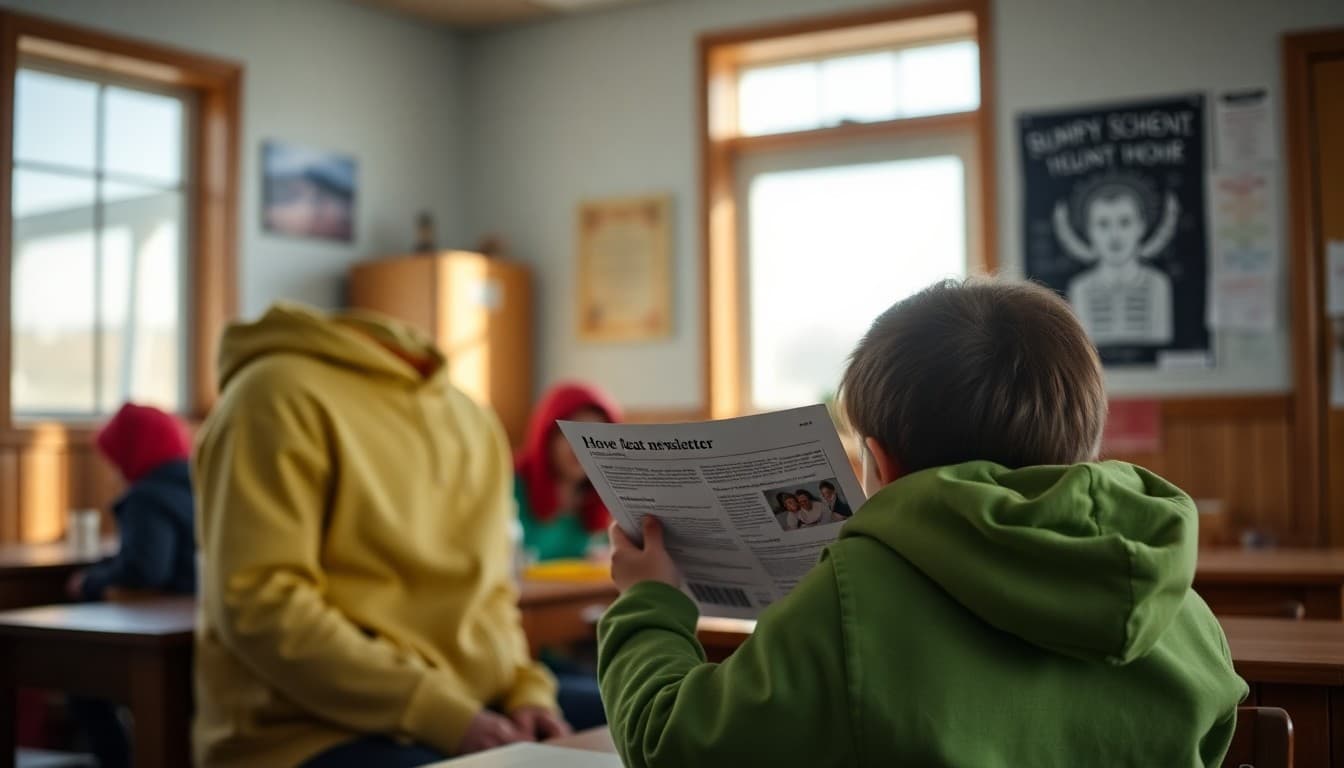
Remote School Newsletter: Communication for Isolated Communities
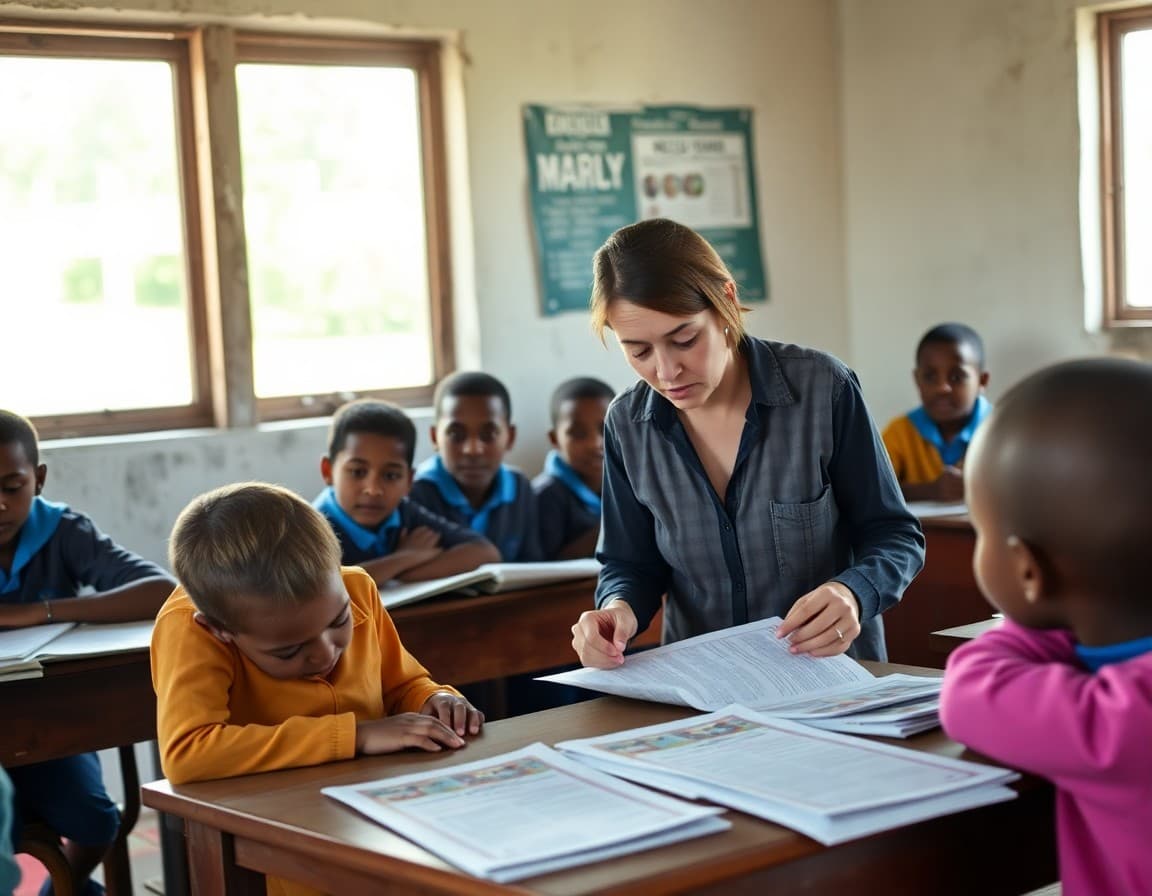
A school in a remote community is often the most important institution in that community's life. It is where children learn, where families gather, where the community's future takes shape day by day. A newsletter from that school carries weight that urban school newsletters rarely do. It is not just a schedule update. It is the school talking to the community it serves about the work it is doing on behalf of everyone who lives there. Write it with that understanding.
Use Every Delivery Channel Available
In remote communities, the distribution problem is as important as the content. Map every channel available to you before you write a word. Printed copies sent home with students is the most reliable. Email for families who have it. A physical bulletin board at the school, the post office, or the community store for families who are not connected to either. In some communities, the teacher makes phone calls. In others, the village council or tribal council distributes information. Know your channels and use all of them for every issue.
Address the School's Unique Logistics
Remote schools deal with logistics that urban families have no frame of reference for. Weather closures, supply delivery delays, teacher travel for professional development, and the intersection of subsistence seasons with the academic calendar all need to be communicated clearly. "School is on a weather delay policy. If conditions on the road or in the air make transportation unsafe, we notify families by [specific method] by 6:30 a.m. If you do not receive a delay notification, school is on normal schedule. Our weather closure archive is available at [location or contact]."
Cover Place-Based Learning Specifically
Remote schools often integrate local knowledge, subsistence skills, and community history into the curriculum in ways that urban schools cannot replicate. Your newsletter is the right place to celebrate this integration and explain it to families who may not fully understand how it connects to academic standards. Here is a template:
Place-Based Learning: November
This month's place-based unit: [Description of what students are doing outdoors, in the community, or with community members]
Academic connection: [Which standards this activity addresses, in plain language]
Community knowledge holder: [Name of the elder, community member, or expert who contributed to the unit, with their permission to be named]
What students will know after this unit: [Specific skills or knowledge, both traditional and academic]
Report on the School's Emergency and Safety Protocols
Remote schools are often the only structured emergency response institution in a community. Families deserve to know how the school handles medical emergencies, extreme weather, and other crises when professional services are hours away. Publish your emergency protocols clearly, once per year at the start of school, and reference them briefly whenever a relevant situation occurs. "Our school maintains a first aid kit certified for remote settings, has two trained emergency responders on staff at all times, and has a satellite phone for communication when cellular service is unavailable. In a medical emergency, our protocol is [brief description]."
Connect Academic Content to the Community's Knowledge
In many remote communities, especially Indigenous communities, there is a rich body of traditional knowledge that connects directly to academic subjects. Your newsletter can honor that connection specifically. "Our second and third graders are studying water cycles in science class. We spent two sessions with an elder who has been observing the watershed in this valley for 60 years. Her description of how the water cycle has changed during her lifetime provided context for the academic content that no textbook could supply. With her permission, we have included her words here: [brief quote]."
Acknowledge the Community's Commitment to Education
Families in remote communities often make significant sacrifices to maintain their children's access to education: long bus rides on unpaved roads, boarding their children in town for high school, paying for expensive transportation, or giving up family work opportunities when school schedules conflict with subsistence seasons. Acknowledge this sacrifice explicitly, at least once per year. "We know that getting your child to school is not simple in this community. We see what families do to make it happen. We do not take that commitment for granted, and we try to ensure that the education we provide is worth the effort."
Celebrate the Community's Pride in Its School
End each issue by naming one thing that makes this school unique and worth the community's commitment. Not a claim about excellence or achievement, but a specific, true observation about what makes this place and this school distinctive. "This month, students from our school competed in the regional science fair in town. They presented research based entirely on data they collected from our own watershed and community. They did not just compete. They represented a place that most of the other participants have never seen. That is something no urban school can replicate."
Get one newsletter idea every week.
Free. For teachers. No spam.
Frequently asked questions
How do we reach families in a remote community who do not have reliable mail, email, or internet access?
The most reliable channel in many remote communities is still the student backpack. A printed newsletter sent home with every student reaches every family regardless of technology access, postal reliability, or connectivity. For communities with satellite internet or intermittent cellular, email can supplement but should not replace the physical copy. In some remote Alaska, Pacific Island, or mountain communities, the school may be the only reliable communication infrastructure in the village.
How do we write for families who read at different literacy levels or who are more comfortable in a language other than English?
Write at a plain language level throughout and consider publishing bilingual sections for any language spoken by a significant portion of your families. Plain language means short sentences, common words, and no educational jargon. 'Your child will take a reading test on Friday' is plain language. 'Students will be administered a formative reading assessment' is not. Test your newsletter against the plain language standard before every send.
What unique content does a remote school newsletter need that urban schools do not?
Remote school newsletters often need to explain much more than urban schools do: how weather affects school schedules, how mail and supply delivery works, what to do in a medical emergency when the nearest clinic is hours away, how subsistence activities intersect with the school calendar, and how to access services that urban families take for granted. The newsletter does more because the school does more in a community that has fewer resources.
How do we celebrate place-based learning in a remote school newsletter?
Name the place specifically and describe what students are learning that is only possible there. A student who is learning to identify edible plants during a subsistence skills unit, or who is participating in a language revitalization program for an endangered Indigenous language, is doing something that cannot happen in an urban school. That place-specific learning is the school's most distinctive offering and deserves detailed, celebratory coverage.
Can Daystage help a remote school publish a newsletter given the connectivity challenges?
Daystage can be used during periods of connectivity to build and schedule newsletter sends. If internet access is available only at certain times, you can draft and schedule the newsletter in advance, and it will send when the connection is available. The PDF export feature also lets you create a print version for families without any digital access. For schools with satellite internet or limited connectivity windows, advance scheduling is especially valuable.

Adi Ackerman
Author
Adi Ackerman is a former classroom teacher and curriculum writer with 8 years in K-8 schools. She writes about school communication, parent engagement, and what actually works in real classrooms.
More for Rural & Title I
Ready to send your first newsletter?
3 newsletters free. No credit card. First one ready in under 5 minutes.
Get started free