
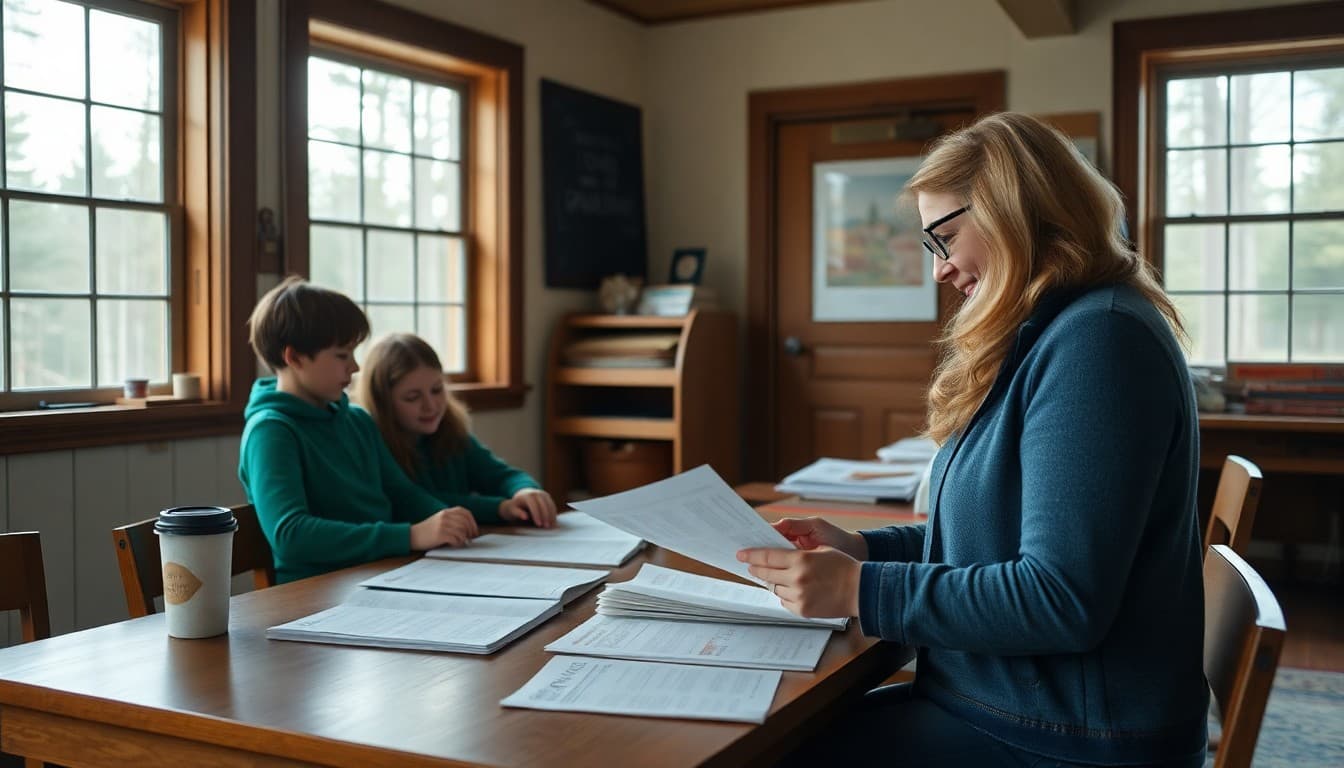
Rural School Communication Strategies for Michigan Educators
Michigan has two peninsulas with radically different rural school contexts. The Upper Peninsula has some of the most isolated communities in the Midwest, tribal lands, and winter conditions that rival Alaska. The Lower Peninsula's rural schools range from high-poverty agricultural communities in the west to resort economy towns in the north. Effective communication strategies for Michigan rural educators start with knowing which Michigan they are in.
Upper Peninsula: Isolation, Tribal Communities, and Connectivity
Keweenaw, Alger, and Schoolcraft counties have communities accessible by one road, cellular service that drops in valleys, and winters that make travel genuinely dangerous. Paper newsletters sent home with students are the primary communication channel in many UP communities. Digital supplements for families with access. For schools serving Ojibwe families on tribal lands, communication through the tribal education office and tribal community networks is more effective than standard institutional outreach.
West Michigan: Migrant Family Communication
The fruit belt counties of Allegan, Van Buren, Mason, and Oceana bring migrant farmworker families to schools during the harvest season. Many of these families are Spanish-speaking, and some move between Michigan and states like Florida and Texas following crop seasons. A Spanish newsletter or bilingual newsletter is the baseline. Connecting with the migrant family liaison if your district has one is the most effective communication investment for schools with significant migrant enrollment.
Northern Lower Peninsula: Seasonal Population Changes
Communities like Traverse City, Petoskey, and Charlevoix have significant resort and tourism economies. School enrollment can shift seasonally as families follow seasonal employment. The newsletter should include consistent re-enrollment information and a clear contact point for families managing mid-year school transitions.
Food and Economic Resource Communication in High-Poverty Districts
Michigan rural counties, particularly in the UP and in west Michigan agricultural communities, have significant food insecurity. Free and reduced lunch information, school pantry access, and community resource referrals should appear in newsletters consistently. Write these simply and without stigma language. Families who need this information should not have to ask for it.
Winter Weather Communication Protocol
Michigan rural schools, particularly in the UP, deal with school cancellations multiple times per year due to snow, ice, and extreme cold. Establishing the weather communication protocol at the start of the year, in the first newsletter, prepares families before the first storm. Which channel does the school use? What time does the decision go out? What is the backup channel?
Title I Documentation and Open-Rate Tracking
Michigan Title I schools distribute parent involvement policies and school-parent compacts annually. The newsletter is the primary delivery vehicle. Daystage's open-rate tracking provides documentation that Title I coordinators need for program reviews.
Community Pride as a Communication Asset
UP communities have fierce regional pride. A newsletter that celebrates this, that covers the school's connection to the regional culture, builds the relationship that makes families responsive when the school needs something from them. In communities where the school is often the central institution, the newsletter's community identity content is as important as its Title I compliance content.
Michigan rural educators who design communication systems matched to their community's geography, seasonality, and family needs maintain stronger engagement than those using default approaches. The newsletter is where that design work is most visible.
Get one newsletter idea every week.
Free. For teachers. No spam.
Frequently asked questions
What communication challenges are specific to Michigan rural schools?
The Upper Peninsula has extreme geographic isolation, significant Native American tribal communities, and limited broadband. Northern Lower Peninsula resort and agricultural communities have seasonal population changes. West Michigan agricultural communities have large Spanish-speaking migrant family populations. Each context requires a different communication approach.
How should Michigan UP school educators approach family communication?
Upper Peninsula communities have strong regional identity and are often skeptical of outside approaches. Communication that reflects genuine knowledge of the community, that uses the school's connection to UP culture as an asset, builds trust. For Native American communities on tribal lands, working through tribal education offices for communication design and distribution is standard practice.
How do Michigan rural schools communicate with Spanish-speaking migrant families in west Michigan?
West Michigan's fruit and vegetable growing regions bring migrant farmworker families to schools in Allegan, Van Buren, and Mason counties during summer and fall. Spanish newsletters and migrant family liaison staff are the baseline for communication with these families. Following ESEA migrant education program communication requirements is necessary for schools with migrant student populations.
What digital access barriers do Michigan rural educators face?
The Upper Peninsula consistently ranks among the least connected rural areas in the Midwest. Many UP communities rely on cellular data as their primary internet access. West Michigan agricultural areas also have gaps in rural broadband. Paper newsletters remain essential for families without consistent digital access.
What newsletter tool supports Michigan rural school communication in isolated communities?
Daystage lets Michigan rural educators send lightweight newsletters that load on limited connections and track which families are engaging with communications. Schools use it alongside paper distribution systems to reach families across digital access barriers.

Adi Ackerman
Author
Adi Ackerman is a former classroom teacher and curriculum writer with 8 years in K-8 schools. She writes about school communication, parent engagement, and what actually works in real classrooms.
More for Rural & Title I
Ready to send your first newsletter?
3 newsletters free. No credit card. First one ready in under 5 minutes.
Get started free