

Community Eligibility Provision Newsletter: Free Meals for All
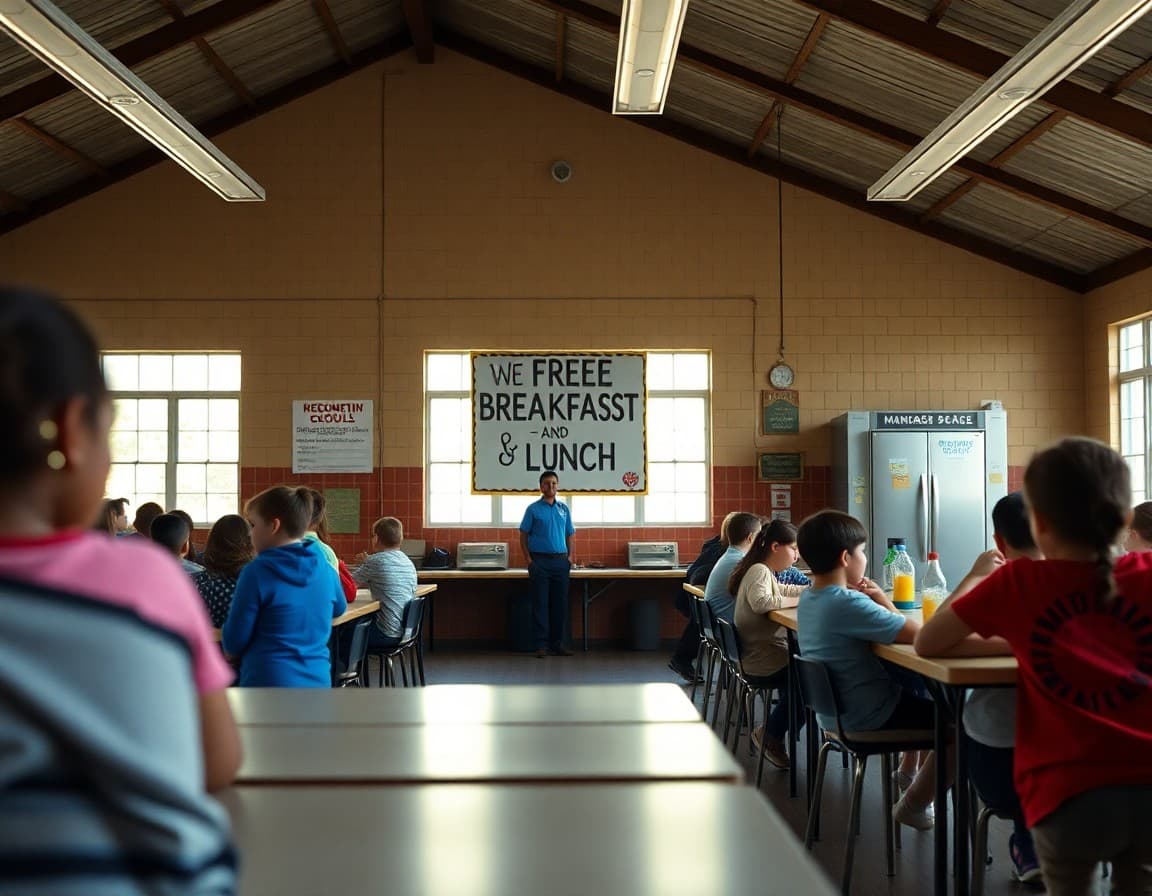
The Community Eligibility Provision changes one fundamental thing for qualifying schools: every student eats for free, no application required. That is a significant benefit, but it only works if families understand it. A CEP newsletter that is clear, early, and repeated prevents the confusion that leads to children going without meals or families filling out forms they do not need to complete.
Start With the Most Important Sentence
The first sentence of a CEP newsletter should be: "All students at [School Name] eat breakfast and lunch for free this year." Everything else is context. Many families arrive at the start of the school year expecting to submit a free and reduced-price meal application. They may have heard from relatives at other schools that an application is required. Your newsletter needs to correct that expectation immediately and unambiguously before confusion turns into missed meals.
Explain Why No Application Is Needed
Families who are used to the standard meal application process may be skeptical. A brief explanation builds confidence: "Our school qualifies for a federal program called the Community Eligibility Provision. Under this program, all students at our school receive free meals. The federal government covers the cost based on our school's eligibility data. You do not need to apply, and we will never ask for your income information." That paragraph eliminates the three most common questions in one pass.
Spell Out Meal Times and the Menu
Include the specific breakfast start time, where students pick up breakfast, whether they can eat breakfast if they arrive on the late bus, and where to find the monthly lunch menu. For rural students who ride long bus routes, breakfast timing is particularly important. Some CEP schools find that clarifying the "breakfast after the bell" option for bus riders increases breakfast participation by 20 to 30 percent just by communicating the option clearly.
A Sample CEP Announcement
Here is a template you can use directly in your newsletter:
"Free Meals for All Students This Year -- Great news: all students at Riverside Elementary eat breakfast and lunch for free this year, every day, with no application needed. This is possible because our school participates in the Community Eligibility Provision (CEP), a federal program that covers meal costs for qualifying schools. Breakfast is available starting at 7:30 AM in the cafeteria. Students arriving on the late bus can still get breakfast until 8:15 AM. Lunch is served at 11:30 AM and 12:15 PM. View the monthly menu at riverside.k12.us/menu. Questions? Contact our cafeteria manager, Mrs. Alvarez, at 555-0134."
Address Common Misconceptions Directly
Three misconceptions come up every year in CEP schools. One: "I thought only certain kids qualify." Answer: all students qualify, no exceptions. Two: "Do I need to renew this each year?" Answer: the school re-qualifies annually, but families never submit any paperwork. Three: "What if my child is not on free lunch -- do they still eat free?" Answer: yes, every student in the building eats free, regardless of their household income. Addressing these directly in the newsletter prevents avoidable phone calls to the office and makes sure no student hesitates at the cafeteria line.
Send It Before School Starts
A CEP newsletter that arrives in August before school opens beats one sent in October. Families making school supply budgets, planning work schedules, and figuring out morning routines want to know about free meals before the first day. If your district allows it, include the CEP announcement in the summer packet alongside the school supply list and immunization form.
Follow Up in January
Families change over the course of the year. New students enroll in January. Some families who ignored the August newsletter have questions in winter. A brief January reminder that all students eat free, no application required, with current meal times, takes two minutes to write and prevents a month of phone calls from families who are not sure if they still need to do something.
Include Information About Meal Accounts
Some CEP schools allow families to add money to meal accounts for a la carte purchases beyond the standard meal. If your school offers this, clarify it in the newsletter so families understand the distinction between the free standard meal and the optional a la carte items. If there are no a la carte purchases and no charges ever apply, say that explicitly: "There is nothing to pay. No money is needed at school for meals."
Get one newsletter idea every week.
Free. For teachers. No spam.
Frequently asked questions
What is the Community Eligibility Provision (CEP)?
The Community Eligibility Provision is a federal option under the National School Lunch Program that allows high-poverty schools to provide free breakfast and lunch to all students without collecting individual applications. Schools qualify based on the percentage of students who are directly certified as eligible through programs like SNAP, Medicaid, or foster care. When at least 40 percent of students are directly certified, a school can elect CEP and serve all students for free.
What do families need to do to get free meals under CEP?
Nothing. Under CEP, no application is required and no family submits income information. Every student receives breakfast and lunch at no charge. This is the main point families need to understand, and it is often the most surprising. Schools should state clearly in the newsletter that no form is needed and no one will be asked for financial information at the cafeteria.
How should schools announce CEP to families who are new to the program?
Lead with the clearest possible headline: 'All students eat free this year.' Then explain briefly that this is a federal program, that no forms are required, and what the breakfast and lunch times are. New families often assume they still need to apply or that only certain students qualify. Clearing up that misunderstanding early prevents both confusion and the embarrassment of a child being turned away at the cafeteria.
Does CEP affect a school's Title I funding?
CEP participation does not directly reduce Title I funding. In fact, many high-poverty schools find that the paperwork saved by eliminating individual applications allows staff to focus more on family engagement activities. However, schools should confirm with their district's finance office that their specific CEP participation rate does not affect other federal funding streams they rely on.
How can Daystage help schools communicate about CEP?
Daystage lets schools send a clear, formatted CEP announcement to every family at the start of the year with meal times, the cafeteria menu link, and confirmation that no application is needed. You can send the same communication in English and Spanish and schedule a reminder in the first week of school when new and returning families are most likely to have questions. Templates save preparation time each year.

Adi Ackerman
Author
Adi Ackerman is a former classroom teacher and curriculum writer with 8 years in K-8 schools. She writes about school communication, parent engagement, and what actually works in real classrooms.
More for Rural & Title I
Food Insecurity Resources School Newsletter: Where to Get Help
Rural & Title I · 6 min read
Title I Parent Advisory Committee Newsletter: Your Voice Matters
Rural & Title I · 6 min read
Rural Community School Model Newsletter: How Schools Communicate Integrated Services to Families
Rural & Title I · 5 min read
Ready to send your first newsletter?
3 newsletters free. No credit card. First one ready in under 5 minutes.
Get started free