
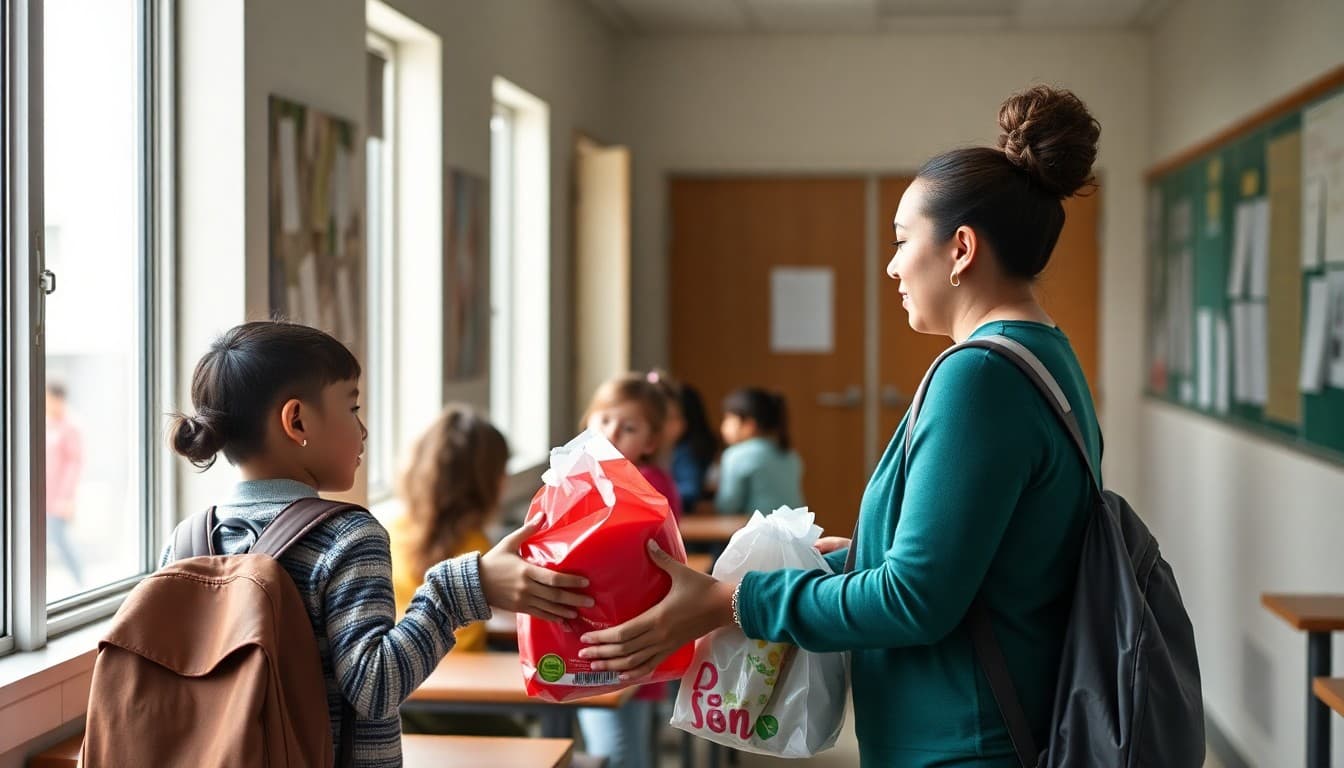
Backpack Food Program Newsletter: Weekend Food for Students in Need

Food insecurity does not pause for the weekend. Students who eat adequately at school from Monday through Friday may go without enough food on Saturday and Sunday, and that gap shows up on Monday in their ability to focus, regulate their behavior, and learn. A backpack food program addresses that gap directly. A well-written newsletter makes the program visible to families who need it and to community members who can support it, without exposing the students who benefit to any unnecessary attention.
Describe the Program Plainly
Every fall issue should include a clear description of what the program is and how it works. "Our backpack food program sends a bag of food home with participating students every Friday. The bag contains enough food for a child over the weekend: breakfast items, shelf-stable meals, snacks, and occasionally fresh fruit. The bags are placed discreetly in students' backpacks by our counselor before the end of the school day. There is no visible marking on the backpack and no announcement to other students."
Make Enrollment Simple and Discreet
The biggest barrier to program participation is the process of asking for it. Make enrollment as easy and private as possible. Here is a format for the enrollment section:
How to Enroll Your Child in the Backpack Program:
Option 1: Complete the form below and return it in any sealed envelope to the main office. Address it to [School Counselor Name] and mark it "Confidential."
Option 2: Call [counselor name] directly at [phone]. Calls are returned privately within one school day.
Option 3: Email [counselor email]. Messages are treated as confidential.
No income verification or documentation is required. Enrollment is based on family request. All families who request a spot are enrolled, regardless of reason.
[Detachable enrollment form with student name, grade, and teacher name. No other information required.]
Describe What Students Receive
Families who know what to expect from the program can plan around it more effectively. "This month's backpack bags contain: 2 pouches of instant oatmeal, 1 jar of peanut butter, 1 package of crackers, 2 granola bars, 1 package of dried fruit, 1 can of soup, 1 cup of applesauce, and 1 fruit cup. Bags are packed by volunteer students and community members on Thursday afternoons." That specific list helps families know what they have and plan accordingly.
Address Food Allergies and Dietary Needs
Families with dietary restrictions need to know that the program can accommodate them. "If your child has a food allergy or dietary restriction, please note it on the enrollment form or contact [counselor name]. We maintain a separate inventory of allergy-friendly items and can accommodate most restrictions. Common accommodations include nut-free bags, gluten-free items, and bags appropriate for families with vegetarian or halal dietary requirements."
Invite Community Support
A backpack food program sustained by community donations is more resilient than one dependent on a single grant. Your newsletter can solicit support without being heavy-handed. "Our backpack program serves 42 students each week at a cost of approximately $8 per bag, or $336 per week in food costs. The program is funded by a partnership with our local food bank and community donations. Tax-deductible donations can be made at [link] or by check payable to [organization name]. Non-perishable food donations can also be dropped off at the school office. Current most-needed items: peanut butter, canned beans, and individual oatmeal packets." Specific needs and costs produce more donations than general appeals.
Report on Program Impact Without Identifying Recipients
Aggregate data makes the program's impact visible to community members who might support it and to families who might enroll. "In the 2025-26 school year, our backpack program served 38 students over 36 weeks, distributing approximately 1,368 bags of food. Our school counselor reports that Monday morning attendance among enrolled students improved compared to non-enrolled students with similar academic profiles. Teachers in the program's initial years noted visible differences in Monday morning alertness among enrolled students."
Connect the Program to Weekend and Holiday Coverage
Backpack programs typically operate during the school year but may have gaps over school breaks. Communicate clearly about what happens during extended breaks. "During Thanksgiving week, December holiday break, and spring break, we provide extended food bags with enough food for the full break period. These are distributed the Friday before the break begins. Families who need food assistance during summer break can contact [name] for a referral to our district's summer food service program and to community food pantries."
Get one newsletter idea every week.
Free. For teachers. No spam.
Frequently asked questions
What is a backpack food program and how does it work in schools?
A backpack food program, sometimes called a weekend food program, sends bags of nonperishable food home with students on Fridays to ensure they have food access over the weekend and on school breaks. The bags typically contain enough food for a child for two to four days: shelf-stable meals, breakfast items, snacks, and sometimes fresh fruit. Programs are usually funded by a local food bank or community donors and coordinated through the school counselor or social worker.
How do we recruit students for the program without embarrassing them or their families?
The most effective approach is a discreet identification process through the school counselor, with teacher referrals when appropriate. Families can also self-refer through a confidential form. The newsletter should describe the program clearly enough that families who need it can identify themselves without having to admit need in a public or group setting. A discreet signup option, like a form families can return in a sealed envelope, reduces the barrier significantly.
What food is typically included in a backpack program?
Typical backpack program contents include shelf-stable protein sources like peanut butter, canned beans, or tuna; breakfast items like oatmeal packets or cereal; snack items like crackers, granola bars, or fruit cups; and sometimes fresh produce if the program has refrigeration capability. Contents vary by program and donor availability. Your newsletter should describe what students actually receive in your program so families know what to expect.
How do we fund a backpack food program and how does the newsletter help with that?
Most backpack programs are funded through local food bank partnerships, community donations, or small grants. Your newsletter can support fundraising by explaining the program's impact in specific terms: how many students it serves, what it costs per student per week, and how families can donate to support it. Many community donors give to backpack programs because the connection between weekend food access and student ability to focus on Monday morning is immediate and understandable.
Can Daystage help a school publish discreet, targeted communication about the backpack food program?
Yes. Daystage lets you send newsletters to specific subscriber lists. A general newsletter can describe the program publicly. A targeted communication to enrolled families can provide specific logistics about pickup and bag contents without broadcasting that information to the entire school community. That division helps maintain the program's discretion while ensuring enrolled families have the information they need.

Adi Ackerman
Author
Adi Ackerman is a former classroom teacher and curriculum writer with 8 years in K-8 schools. She writes about school communication, parent engagement, and what actually works in real classrooms.
More for Rural & Title I
Ready to send your first newsletter?
3 newsletters free. No credit card. First one ready in under 5 minutes.
Get started free