
Rural School Communication Strategies for Arizona Educators
Arizona has more land designated as rural than almost any other state, and its rural communities are as different from one another as the terrain they sit on. A school in Window Rock faces different communication challenges than a school in Nogales or a school in Wickenburg. Effective communication strategies for Arizona rural educators start with understanding which community they are actually serving.
Navajo Nation: Connectivity and Cultural Context
Schools serving Navajo communities deal with real infrastructure constraints. Limited cell coverage, satellite internet with weather sensitivity, and data caps mean that digital communications need to be small and simple. A newsletter that loads in under 5 seconds on a mobile connection serves these families. One that requires a full broadband connection does not. At the same time, the Navajo Nation has strong community communication practices through chapter houses and word of mouth. The school newsletter supplements those networks rather than replacing them.
Border Communities: Bilingual Communication
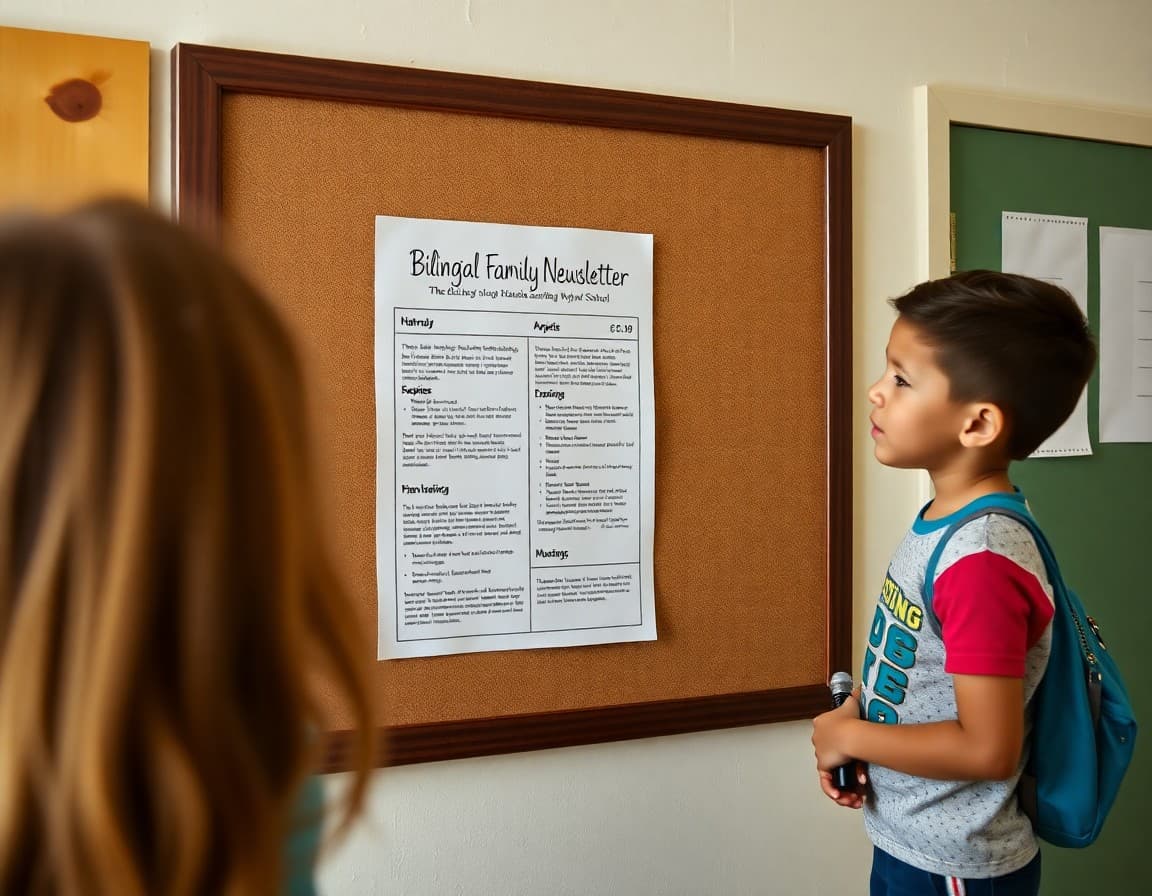
Schools near Nogales, Douglas, and Yuma serve families where Spanish is often the primary home language. A newsletter that goes out only in English excludes a significant portion of the parent population. Bilingual newsletters or at minimum a Spanish summary section are standard practice for effective border community communication. For legal notices, professional translation is required. For routine weekly content, a bilingual staff member's review of a machine translation is acceptable.
Agricultural Communities: Seasonal Awareness
Rural agricultural communities around Yuma, the Sulphur Springs Valley, and the Verde Valley have families whose schedules shift with harvest cycles. Planting and harvest seasons affect attendance and meeting availability. A newsletter that acknowledges this directly, "We know the harvest season is busy. Here is what your child will need this week," builds credibility with families who see that the school understands their lives.
Keep Every Issue Under Five Items
Rural families across Arizona, whether on the reservation, in a border town, or on a remote ranch, are often working long hours and have limited time to read school communications. Five items per newsletter is the right ceiling: dates, schedule changes, a meal program reminder, a Title I resource notice, and one student highlight. Longer newsletters lose families after the first paragraph.
Use Community Distribution Points Beyond the School
For families without reliable digital access, posting printed newsletters at community gathering points expands reach significantly. Chapter houses on the Navajo Nation, parishes in border communities, feed stores and post offices in ranch country. A 15-minute weekly posting route can double the number of families who receive the newsletter.
Address Title I Requirements Consistently
Arizona's Title I schools must communicate parent involvement policies, school-parent compacts, and program information to families each year. The newsletter is the most consistent delivery channel for these documents. Daystage lets schools save Title I boilerplate as reusable blocks that drop into the newsletter each quarter without reformatting.
Track Who Is Not Reading
Open-rate tracking turns a broadcast newsletter into a managed communication system. Families who have not opened newsletters in three or more weeks are the ones most likely to miss critical information. Knowing who those families are before a problem occurs is what separates a reactive communication system from a proactive one.
Arizona rural educators who build communication systems that match their community's specific geography, language, and connectivity see stronger family engagement numbers throughout the year. The newsletter is the foundation of that system.
Get one newsletter idea every week.
Free. For teachers. No spam.
Frequently asked questions
What communication challenges are specific to Arizona rural schools?
The Navajo Nation covers 27,000 square miles of northeastern Arizona with limited broadband infrastructure and significant Navajo-speaking family populations. Border counties like Santa Cruz and Cochise have high rates of Spanish-speaking families. Ranch and agricultural communities in central and southern Arizona have families spread across vast distances. Each context requires a different communication approach.
How should Arizona educators approach newsletter translation for Navajo-speaking families?
Including a Navajo greeting or short translated section acknowledges community identity. For critical information like Title I rights, enrollment deadlines, or special education notices, working with a Navajo-speaking staff member or community liaison for translation is necessary. Machine translation does not currently handle Navajo reliably.
What digital access barriers do Arizona rural educators face?
Satellite internet with weather-sensitive connectivity and data caps is common on the Navajo Nation. Many families use mobile hotspots with limited monthly data. Newsletters need to be under 100KB to load reliably. Plain-text email with compressed or no images outperforms image-heavy HTML newsletters in low-bandwidth environments.
How do Arizona rural schools handle Title I family engagement requirements?
Title I schools must share parent involvement policies, school-parent compacts, and annual reports with families. In Arizona, the most effective delivery channel is often a combination of the school newsletter, printed copies sent home, and brief presentations at community gatherings like chapter house meetings on the Navajo Nation.
What tool do Arizona rural and tribal school educators use for family communication?
Daystage sends lightweight newsletters that load on limited-bandwidth connections and tracks open rates so teachers can identify families who need printed copies or phone follow-up. Schools use it to run both digital and paper communication from a single platform.

Adi Ackerman
Author
Adi Ackerman is a former classroom teacher and curriculum writer with 8 years in K-8 schools. She writes about school communication, parent engagement, and what actually works in real classrooms.
More for Rural & Title I
Ready to send your first newsletter?
3 newsletters free. No credit card. First one ready in under 5 minutes.
Get started free