

Weekly Reading Newsletter: A Five-Minute Template
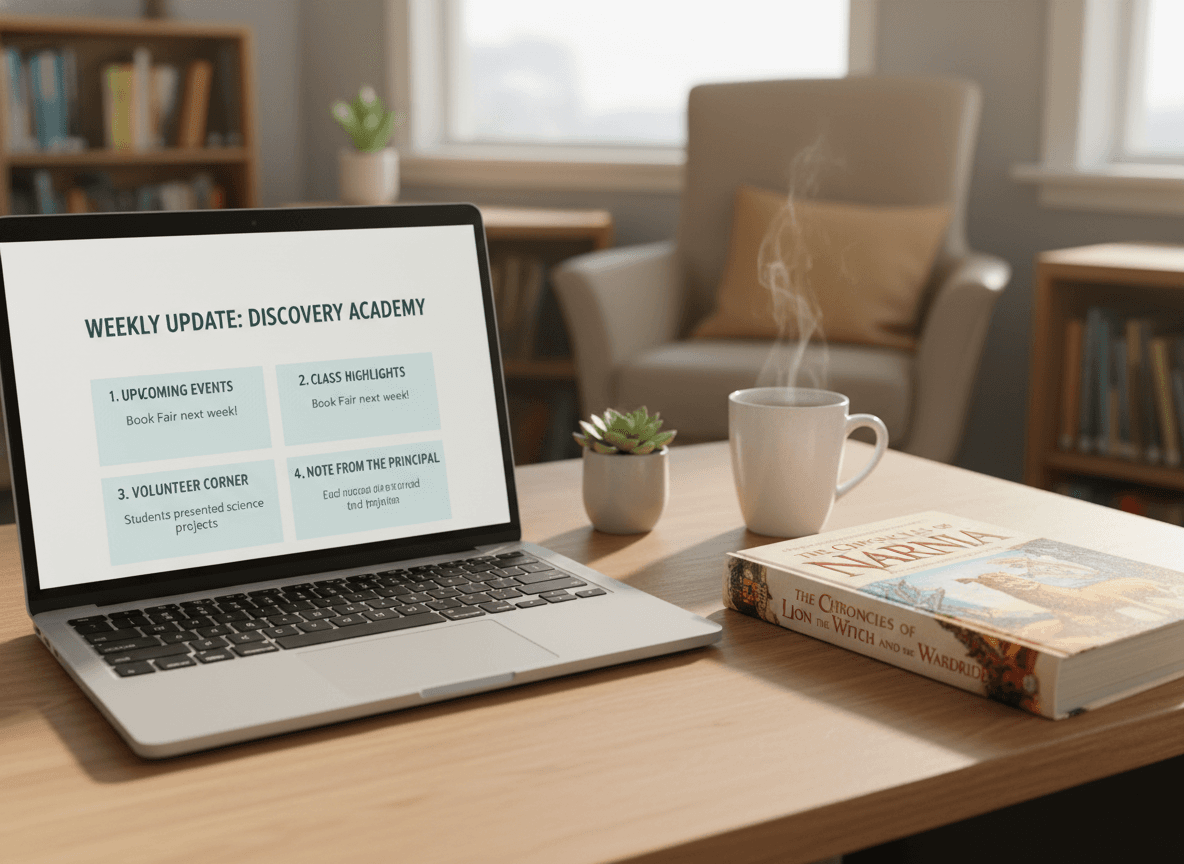
Most weekly newsletters die in October. They start ambitious in August, grow long in September, and quietly stop by the time report cards go out. The fix is a template so small you can fill it in on Sunday night without thinking. Four blanks, five minutes, sent to every family on your list. Here is the version that has lasted for years in my classroom.
Open with the heads-up line
One line at the top, in bold. Whatever parents need to act on this week. "Heads up: book log due Thursday, no school Monday for Indigenous Peoples' Day, library books need to come back Friday." That line earns the open. Burying it at the bottom is how forms get missed. Top of the email, every time.
This week in reading, in two sentences
Describe what students are doing in motion. "This week students are inferring how characters feel from what they say and do, using The Year of the Dog as the anchor text. Phonics focus is two-syllable closed-syllable words like rabbit and picnic." Two sentences. That is the whole section. Parents do not need a unit plan. They need to know what to listen for.
The one home ask
One ask. Specific. Small. "When your child reads aloud this week, pause once and ask 'how do you think this character feels right now, and what made you think that?' One question is plenty." That is it. Not a list. Not a worksheet. Not five ways to support reading at home. One ask, one sentence, actually doable.
The book pick of the week
One title, one line. "Read-aloud pick: The Wild Robot by Peter Brown. Short chapters, builds slowly, great for third grade." Parents do not need a curated list every week. They need one title they can find at the library tomorrow.
The full five-minute template
Subject: "Reading this week in Room 12"
Body:
"Hi families,
Heads up: {anything due, missing, or shifting this week}.
This week in reading: {what students are doing, in motion}.
At home: {one specific ask, one sentence}.
Book pick: {one title, one line on why}.
Reply any time. I usually answer within a day.
Ms. K."
One concrete example
Last March, my Sunday newsletter went out at 7:14 pm. Four blanks filled. The heads-up named a Friday spelling check. The at-home ask was one question about a character's feelings. The book pick was Wishtree. By Monday morning, six parents had replied to confirm the Friday quiz date. The whole send took four minutes. That is the entire point of the template.
What to leave out
Standards codes. The full unit plan. Vocabulary lists. A recap of last week. Parent thank-yous (use a separate email). Anything that does not help a parent support reading this week. The weekly newsletter is small on purpose. Every section you add is a section you will resent in November.
How Daystage helps with the weekly reading newsletter
Daystage holds the four-blank template so you write into the same shell every Sunday. The format stays consistent. Parents learn the rhythm. The send is one click to every family on your list. The whole job, from Sunday idea to inbox, takes five minutes. That is the only version of weekly that actually survives the school year.
Get one newsletter idea every week.
Free. For teachers. No spam.
Frequently asked questions
Is weekly really better than every two weeks?
Sometimes. Weekly works when the class is in a quick-moving unit, when there are weekly book picks or readers, or when families want a regular rhythm. Two-week cadence works when the unit arc is longer. The honest answer: pick the rhythm you can sustain. A weekly newsletter that disappears in November is worse than a two-week newsletter that runs all year.
What is the heads-up line and why does it always matter?
The heads-up is one line at the top of the newsletter that names anything coming this week that parents need to act on. A quiz on Friday. A book due Wednesday. A field trip permission slip. Putting it at the top instead of buried at the bottom is the difference between parents seeing it and parents missing it. The heads-up earns the open.
What should I leave out of a weekly reading newsletter?
Standards codes. Long curriculum descriptions. Vocabulary lists. A repeat of last week's content. Parent thank-yous (use email for those). Anything that does not help a parent support reading this week. The whole point of weekly is brevity. The minute you start adding sections, the newsletter stops being weekly.
How do I keep a weekly newsletter going past October?
Build the template once. Write into the same four blanks every Sunday. Total time should be five minutes. If it is taking longer, the template is too big. Cut it. A teacher writing a weekly reading newsletter in 30 minutes is going to stop in November. A teacher writing it in five minutes is still going in May.
What is the easiest way to send a weekly reading newsletter?
Use Daystage. Save the four-section template once. Each Sunday, fill in four blanks and send to your full class list. The email arrives in every family inbox formatted clean, mobile-friendly, no portals, no apps, no PDF attachments. Total time from idea to send is under five minutes.

Adi Ackerman
Author
Adi Ackerman is a former classroom teacher and curriculum writer with 8 years in K-8 schools. She writes about school communication, parent engagement, and what actually works in real classrooms.
More for Reading Newsletter
Ready to send your first newsletter?
3 newsletters free. No credit card. First one ready in under 5 minutes.
Get started free