
Monthly Reading Newsletter: A Template You Can Reuse
A monthly reading newsletter is the most underrated cadence in elementary literacy. Weekly is too much, two-week is good for the active reading teacher, and monthly is what most classroom teachers can actually keep up across a full school year. The trick is making each month earn its send. Here is the template and the language that makes the monthly version land.
Open with what we read this month
Lead with the books. List the read-aloud, the shared reading, and the small group picks by name. Two or three titles is plenty. "This month our read-aloud was The Wild Robot by Peter Brown. Small groups read short nonfiction passages on animal adaptations. Independent reading covered everything from graphic novels to early chapter books." Parents who recognize even one title feel connected to what their child has been doing.
What students worked on, in plain language
Name one or two skills, in plain language. Not standards. "This month students worked on inferring how characters feel from what they say and do. We also practiced reading multisyllabic words by breaking them into syllables." Two sentences. Skip the program name. Skip the standard number. Parents do not need either.
One real student response, anonymized
Drop one short student response inside the newsletter, with the name removed. "Here is a student response from this month about The Wild Robot: 'I think the author wrote the robot learning to take care of the gosling because the book is really about what makes someone a parent, not what makes someone a robot.' This is the kind of thinking we are celebrating." One real student voice does more than a paragraph of pedagogy.
The classroom photo line
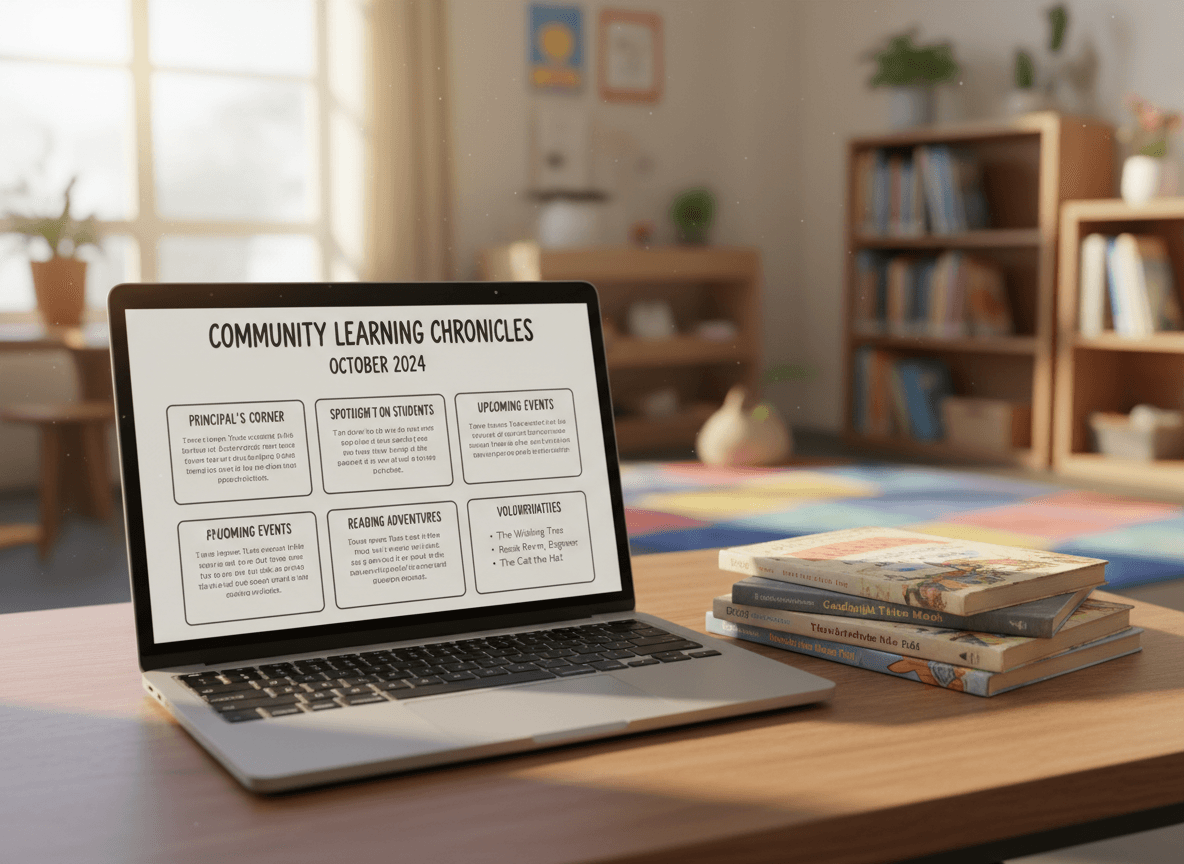
One photo a month. The reading corner. A book display. A stack of class favorites on the rug. No student faces (for privacy). One line of caption. "Our new graphic novel section, restocked this week thanks to a parent donation." The photo does the work the words cannot.
What is coming next month
Two lines. "Next month: we move into nonfiction reading and learning how to spot main idea in informational text. Our read-aloud will be Who Was Jackie Robinson by Gail Herman." Parents who see this paragraph have something to look forward to and a heads-up on what is coming home.
The October survey question
Once a year, in the October newsletter, add one closing line. "Reply to this email and tell me one thing about your child as a reader that I should know." Some parents will skip it. Plenty will reply, sometimes with critical information you would not have learned for months. Read the replies carefully. The answers shape the rest of the year.
One concrete example
In October last year, the survey question came back from a third grade mother: "My son is convinced he is bad at reading. He hides books at home and pretends to read." That sentence reframed how I worked with him for the entire fall. We started him on graphic novels, paired him with a confident reading buddy, and stopped having him read aloud in front of the group until he asked to. By March he was finishing chapter books at home. The whole turnaround started with one newsletter line.
How Daystage helps with the monthly reading newsletter
Daystage holds the five-section monthly template so the structure stays consistent across the year. The photo lives inline, not as an attachment. The send is one click to your full class list. Save the template once in September, swap the content each month, send. Parents learn the rhythm. The September newsletter looks like the May one. That consistency is the whole reason monthly works.
Get one newsletter idea every week.
Free. For teachers. No spam.
Frequently asked questions
Why pick monthly instead of weekly?
Monthly is the right rhythm for teachers who already feel buried. Five sends a year (one per month, September through May, with a few skips for short months) is sustainable. Weekly is 36 sends. If the choice is between a monthly newsletter that runs all year and a weekly one that quits in November, monthly wins. The rule is: pick the rhythm you can keep.
What is the month-in-review format?
Five short sections. What we read this month. What students worked on (one or two skills, in plain language). One real student response, anonymized. What is coming next month. One photo of the classroom reading corner or a book display. The whole email runs about 350 words. Parents read the whole thing because every section earns its space.
What is the once-a-year parent survey question?
One question, asked once a year, in the October newsletter. 'Reply to this email and tell me one thing about your child as a reader that I should know.' That is it. The replies are gold. Some parents tell you their child is dyslexic. Some tell you about a fear of reading aloud. Some tell you their child loves graphic novels and hates fiction. The answers shape how you teach for the rest of the year.
Does the classroom photo line really matter?
Yes. One photo a month, of a book display or the reading corner or a stack of class favorites, does more than a paragraph of description. Parents feel connected to the space their child describes at dinner. The photo does not need to include students (and should not, for privacy). Books and walls are enough.
What is the easiest way to send a monthly reading newsletter with a photo?
Daystage was built for this. The email holds the photo inline (not as an attachment), the structure stays consistent month to month, and the send is one click. No portal, no app, no PDF download. The whole newsletter, including the photo, lands cleanly in every family inbox.

Adi Ackerman
Author
Adi Ackerman is a former classroom teacher and curriculum writer with 8 years in K-8 schools. She writes about school communication, parent engagement, and what actually works in real classrooms.
More for Reading Newsletter
Ready to send your first newsletter?
3 newsletters free. No credit card. First one ready in under 5 minutes.
Get started free