
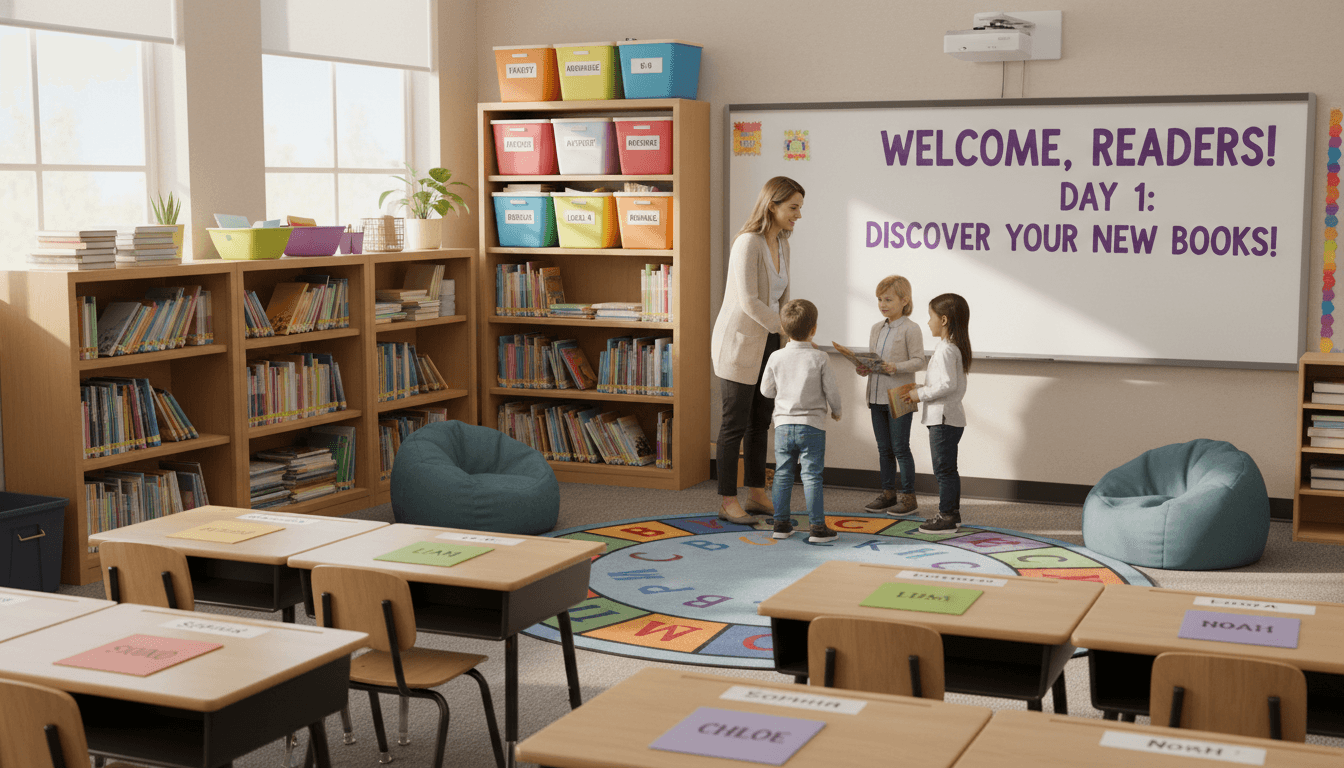
Start-of-Year Reading Newsletter: A Template Parents Will Read
The first reading newsletter of the year sets a tone families will hold onto for months. Done well, it answers the questions parents would otherwise ask one at a time over six weeks. Done poorly, it looks like a flyer and trains parents to skim. Here is what to put in the start-of-year reading newsletter, what to cut, and a working excerpt you can adapt this weekend.
Open with a one-paragraph welcome, not a wall of logistics
Three or four sentences. Who you are, what reading block looks like, and one specific thing you noticed about the class this week. The specificity matters. "This group is already asking strong questions during read-aloud" hits differently than "I am excited for a great year." Parents read past genuine and skim past generic.
Explain how reading homework actually looks
This is the section parents reread. Be concrete. "Twenty minutes of reading a night, Monday through Thursday. Any text counts, including rereads, audiobooks, and comics. No reading log to sign. If your child refuses on a given night, that is fine, just let me know if it becomes a pattern." Five lines, no ambiguity. The whole reason this section works is that nothing is implied.
Classroom library norms in three sentences
Books go home, books come back, lost books happen. "Each student has a gallon ziploc bag that lives in their backpack. Books travel in the bag. If a book gets lost or damaged, please email me. We do not charge for lost books, just want to know so we can find the next copy." That keeps the library open and the books circulating.
Name the single best way to reach you
Pick one channel. "For anything reading-related, email is best. I answer within a school day. Please do not send messages through Class Dojo for reading concerns, they get lost in the activity stream." Naming the wrong channel as well as the right one cuts your email volume by half. Parents follow clear rules.
What is coming in the first four weeks
Three bullets. The first read-aloud, the first phonics or comprehension focus, and the first assessment with its rough date. "Read-aloud: Charlotte's Web, starting next Monday. First phonics focus: short-vowel review for the first two weeks. First assessment: a brief oral reading fluency check during the week of the 22nd, no studying needed." Parents now know the arc, not just the day.
A working excerpt
"Hello families. I am Ms. K and I am teaching the third grade reading block this year. We meet for 90 minutes after lunch. This first week I already noticed how many students reach for nonfiction during independent reading, which is a great sign.
Reading homework: 20 minutes a night, Monday through Thursday. Any text counts. No log to sign. If your child refuses on a given night, that is fine, please just tell me if it becomes a pattern.
Books travel home in a gallon ziploc that stays in the backpack. Lost books happen, just email me so we can find another copy. For anything about reading, email is best and I reply within a school day.
Up next: we start Charlotte's Web on Monday, work on short-vowel review for two weeks, and run a brief fluency check the week of the 22nd. No studying needed for that one."
What to cut
Standards codes. A long bio of yourself. The full year scope and sequence. A list of supplies parents already bought. None of these change what a parent does at home this weekend. The newsletter is for actions, not biography.
How Daystage helps with the start-of-year reading newsletter
Daystage saves the five-section structure once, then carries it across every newsletter that follows. The first send goes to every family in one click, formatted for phones, no portal or PDF. By the second newsletter, parents have already learned where to look for homework notes, library updates, and what is coming next. Consistency from September through May starts with how the first one is built.
Get one newsletter idea every week.
Free. For teachers. No spam.
Frequently asked questions
When should I send the start-of-year newsletter?
The Friday of the first full week, not the night before school starts. By Friday you have met the kids, watched routines settle, and can write with specifics instead of guesses. The night-before send is mostly logistics and never gets reread. The Friday send sets the tone for the rest of the year.
What is the single most important thing to include?
How reading homework actually looks. Most start-of-year newsletters describe the curriculum at a high level and skip the part parents need most. Tell them: how many minutes of reading a night, what counts, whether a reading log is involved, and what to do if their child refuses. That single section answers 80 percent of the questions you would otherwise field by email in September.
Should I name one contact method instead of three?
Yes. Email, Class Dojo, ParentSquare, voicemail, the planner. Pick one and say so. 'For anything about reading, email is best. I answer within a school day.' Parents who have a clear single channel actually use it. Parents who have four channels pick the wrong one and feel ignored.
How do I explain the classroom library without sounding restrictive?
Frame the norms as care for the books, not control of the kids. 'Books go home in a gallon ziploc bag. They come back in the same bag. Lost books happen, just let me know.' That tone keeps the library open and keeps the books coming back. Long lists of rules close the library by October.
What is the easiest way to send the first newsletter?
Save a template you can reuse all year. The start-of-year newsletter and every newsletter after it share four or five sections. Daystage holds the structure once, you swap content each cycle, and the email lands in every family inbox formatted for phones. The first send sets up the rest of the year in one click.

Adi Ackerman
Author
Adi Ackerman is a former classroom teacher and curriculum writer with 8 years in K-8 schools. She writes about school communication, parent engagement, and what actually works in real classrooms.
More for Reading Newsletter
Ready to send your first newsletter?
3 newsletters free. No credit card. First one ready in under 5 minutes.
Get started free