
Reading Newsletter on Vocabulary: Sections That Help at Home
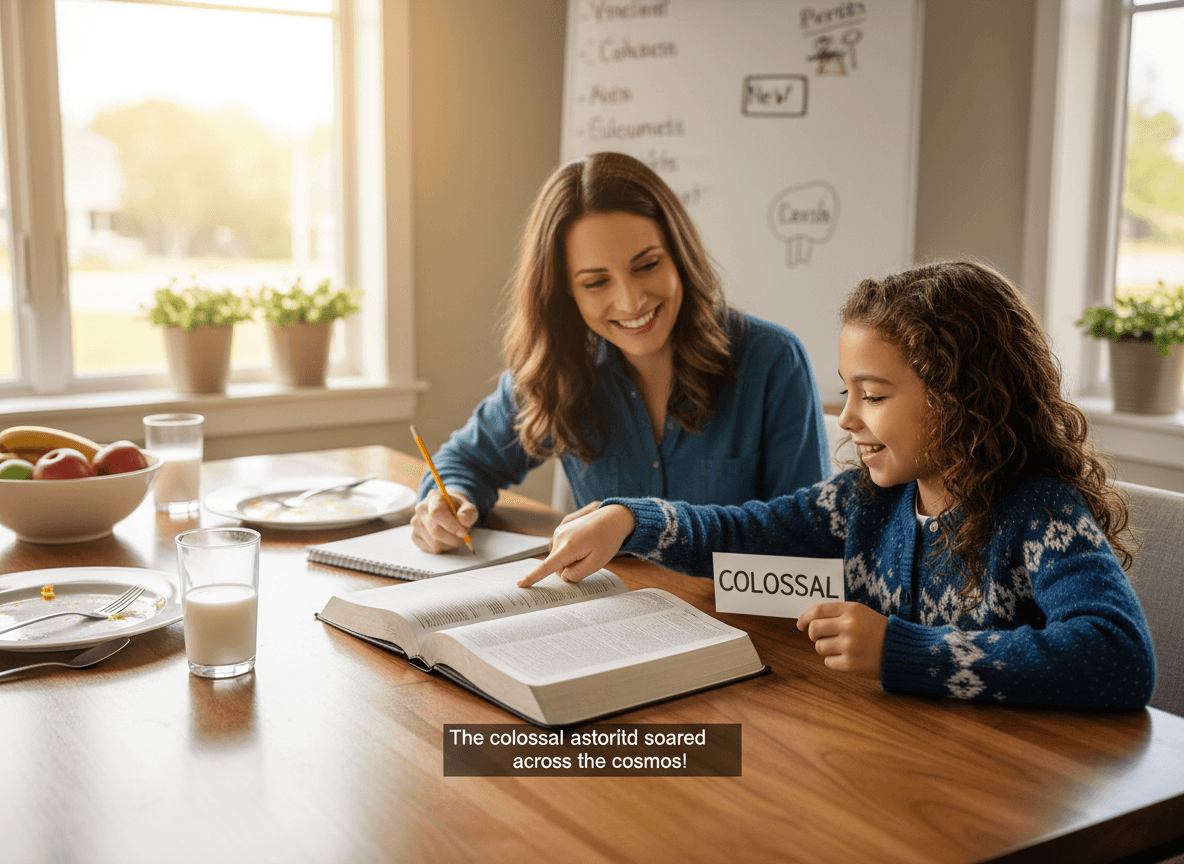
Vocabulary is the part of reading instruction parents most often want to help with and most often help badly. They quiz the definitions and the child forgets the word by Friday. A focused vocabulary newsletter gives parents a better model. Pick a few useful words, use them in real conversation, and let repetition do the work. Here is the template that holds up across the year.
Explain the tier framework once
"Reading vocabulary instruction focuses on tier 2 words. Tier 1 is everyday words your child already knows, like dog and run. Tier 3 is technical words like photosynthesis. Tier 2 sits in the middle: words like reluctant, observe, fortunate. Tier 2 words travel across many books and many grades, which is why we teach them on purpose." That is the whole framework section. One time per year.
Teach the three-encounter rule
"A new word needs to show up in about three different contexts before it sticks. First in the text. Second in conversation. Third in your child's own speaking or writing. That is why you might hear your child slip 'reluctant' into a sentence at dinner. They are practicing the third encounter." This rewires how a parent in Room 22 reacts to a vocabulary list.
List five to seven cycle words
At the bottom of the newsletter, list the words. Plain text. "This cycle: reluctant, observe, fortunate, deliberate, peculiar, weary, hesitate." No definitions underneath, just the words. The definitions live in class. Parents do not need a glossary.
Give three example sentences for home use
Pick three of the words and write a sentence parents can actually say. "You are being reluctant to put on your shoes. Observe how the cat moved when the door opened. We were fortunate the weather held." Parents read these once and slip one into Tuesday's bedtime conversation. That is the whole home practice.
Sample vocabulary newsletter
"Hi families. Our vocabulary work this cycle focuses on tier 2 words, the words that show up across many texts. Words for this cycle: reluctant, observe, fortunate, deliberate, peculiar, weary, hesitate.
A new word needs about three different contexts to stick. Try slipping one into real conversation this week: 'you are being reluctant to put on your shoes,' or 'we were fortunate the weather held.' Three minutes, no flashcards.
Anchor read-aloud is The One and Only Ivan. End-of-cycle vocabulary check on Friday. Mr. C."
What to leave out
Skip the definitions in the newsletter. Skip the part of speech. Skip the etymology. Parents do not need a mini glossary. They need three real sentences they can say at dinner. Anything more dilutes the practice.
How Daystage helps with vocabulary newsletters
Daystage holds the four-section structure for you. Framework explainer (recycled once a year), word list, home sentences, anchor text. Swap the content each cycle, send to every family with one click. The email lands formatted on the family phone, mobile-friendly, short enough to read in the school pickup line.
Get one newsletter idea every week.
Free. For teachers. No spam.
Frequently asked questions
What are tier 1, 2, and 3 words?
Tier 1 is everyday words kids already know: dog, run, happy. Tier 2 is mature words that show up across many texts: reluctant, observe, fortunate. Tier 3 is technical words tied to a subject: photosynthesis, longitude. Reading vocabulary instruction focuses on tier 2 because those words travel across books and grades. Parents who learn the framework start hearing tier 2 words everywhere.
What is the three-encounter rule?
Research suggests a child needs to meet a new word in three different contexts before it sticks. First in the text. Second in a conversation. Third in their own writing or speaking. Telling parents this directly shifts how they react when a new vocabulary word comes home. They look for chances to use it at dinner instead of testing the child on a definition.
How can parents help with tier 2 words at home?
Use the word in real conversation. 'You are being reluctant to put on your shoes.' 'Observe how the cat moved when the door opened.' 'We were fortunate the weather held.' Three sentences across a week, in real moments, builds the word more deeply than any flashcard. The newsletter should give parents three example sentences with the cycle's words.
Should you list the cycle's vocabulary words in the newsletter?
Yes. Five to seven tier 2 words at the bottom in plain text. Parents copy them onto the fridge or read them once in the email. Long lists of fifteen or twenty words overwhelm families and nothing sticks. Five to seven is the sweet spot for a two-week cycle.
How do you send a vocabulary newsletter every cycle?
Save the four-section structure once. Daystage handles the formatting and the send. Swap the words and the home activity each cycle, click send, and the email lands in every family inbox formatted for phones. No portal, no PDF, no parent app. Repeatable from September through May.

Adi Ackerman
Author
Adi Ackerman is a former classroom teacher and curriculum writer with 8 years in K-8 schools. She writes about school communication, parent engagement, and what actually works in real classrooms.
More for Reading Newsletter
Ready to send your first newsletter?
3 newsletters free. No credit card. First one ready in under 5 minutes.
Get started free