
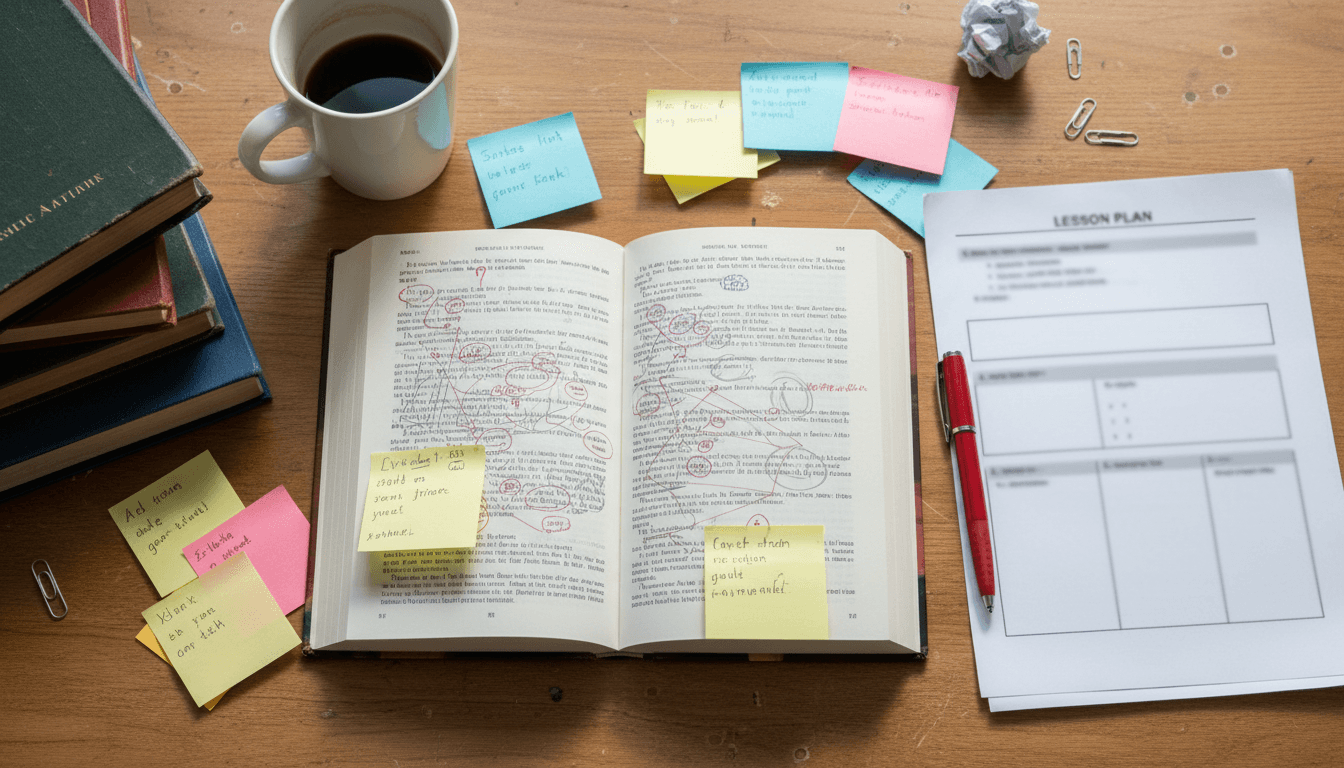
Reading Newsletter on Comprehension: A Working Template
Comprehension is the part of reading parents understand the least and need the most help with. A child can read every word on a page out loud and still have no idea what the page meant. A short, focused comprehension newsletter gives families the language and the one action that closes the gap. Here is the working template.
Open with the strategy in focus
Pick one strategy per cycle. Inferring, summarizing, asking questions, visualizing, identifying main idea. Name it once in plain language. "This cycle we are working on summarizing, which means saying what a story was mostly about in one or two sentences." That is the whole introduction. Skip the academic definition.
Give the before, during, and after questions
Three questions cover most comprehension work at home. "Before reading: what do you think this book will be about? During reading, after each page: what just happened? After reading: what was the most important thing in the story?" Parents who use even one of these once a night raise comprehension more than any worksheet packet ever will.
Highlight the question most parents miss
The during-reading question. Most parents either ask nothing or ask one giant question at the end. "Tell me what just happened on this page" is the check that catches the gap. One question, after one page. Print it in bold in the newsletter.
Name the decoding-comprehension gap
Once per year, devote a paragraph to it. "Some kids read the words beautifully and still miss what the page meant. That is normal in second and third grade. If your child cannot tell you what just happened in one sentence, reread that page together. That is the fix." That single paragraph rewires how a parent in Room 8 listens to their child read.
Sample comprehension newsletter
"Hi families. This cycle our comprehension work is on summarizing, which means saying what a story was mostly about in one or two sentences. We are using The One and Only Ivan by Katherine Applegate as our anchor read-aloud.
At home this week, ask one question after your child reads a page: what just happened? One question, one page. If they cannot answer in one sentence, reread the page together. That is the whole practice.
Mid-cycle comprehension check is on Friday. Reply any time. Mr. T."
Same four sections every cycle
Strategy in focus. The one home question. Anchor text. What is coming up. Same order, every two weeks. Parents learn the rhythm and start opening the email on autopilot. Mixed-up structure trains them to skip.
How Daystage helps with comprehension newsletters
Daystage was built for the cycle a reading teacher actually runs. Save the four-section structure once. Swap the strategy and the home question every two weeks. Send to every family in one click. The email lands in the family inbox formatted, mobile-friendly, and short enough to read between school pickup and dinner on a Tuesday at 5 pm.
Get one newsletter idea every week.
Free. For teachers. No spam.
Frequently asked questions
What are before, during, and after reading questions?
Before: what do you think this book will be about? During: what just happened on this page? After: what was the most important thing that happened? Each one targets a different part of comprehension. Before builds prediction. During checks understanding in motion. After builds summarizing. Parents who learn all three can support reading without becoming a teacher.
Which comprehension question do most parents underuse?
The 'tell me what just happened' question after a single page. Parents either ask nothing or ask a giant 'what was the book about' at the end. The page-by-page check is where comprehension actually gets built. Tell parents this directly. One question, after one page. That is the whole practice.
Should you teach parents the comprehension strategy names like inferring or visualizing?
Name them once, in plain language. 'Inferring means figuring out what the author did not say directly.' 'Visualizing means making a movie in your head.' Then give the parent the action that goes with the strategy. Naming it helps when the child mentions it. Defining it in detail loses the parent.
What if a child reads the words fine but cannot answer comprehension questions?
That is the decoding-comprehension gap, and it is common in second and third grade as decoding becomes automatic. The fix is asking one comprehension question after every page or two. If the child cannot answer in one sentence, reread that page together. Address this directly in a newsletter. It changes how a real share of families listen.
What is the simplest way to send a comprehension newsletter every two weeks?
An email with the strategy, the one home question, and the anchor text. No portal, no PDF, no app push. Daystage was built for this exact rhythm. Save the four-section structure once, drop in the new content every cycle, send to every family in one click.

Adi Ackerman
Author
Adi Ackerman is a former classroom teacher and curriculum writer with 8 years in K-8 schools. She writes about school communication, parent engagement, and what actually works in real classrooms.
More for Reading Newsletter
Ready to send your first newsletter?
3 newsletters free. No credit card. First one ready in under 5 minutes.
Get started free