
Reading Newsletter on Theme: What to Cover Each Week
Theme is the part of reading work that confuses parents most. They remember being asked to find the theme of a story in school and feeling like there was one secret correct answer they could not see. Modern theme instruction is nothing like that. Themes are open, layered, and supported by evidence. A good newsletter explains the shift in two paragraphs and gives parents a question they can actually use.
Open with what theme is and is not
Two sentences. "Theme is the big idea a story keeps circling. Friendship across difference. Growing up means losing some things to gain others. The cost of telling the truth." Then one more. "Theme is not the same as moral. A moral tells you what to think. A theme opens a question for you to think about." That is the entire framing. Parents now have the right mental model.
Teach the story-is-about-but-really-about frame
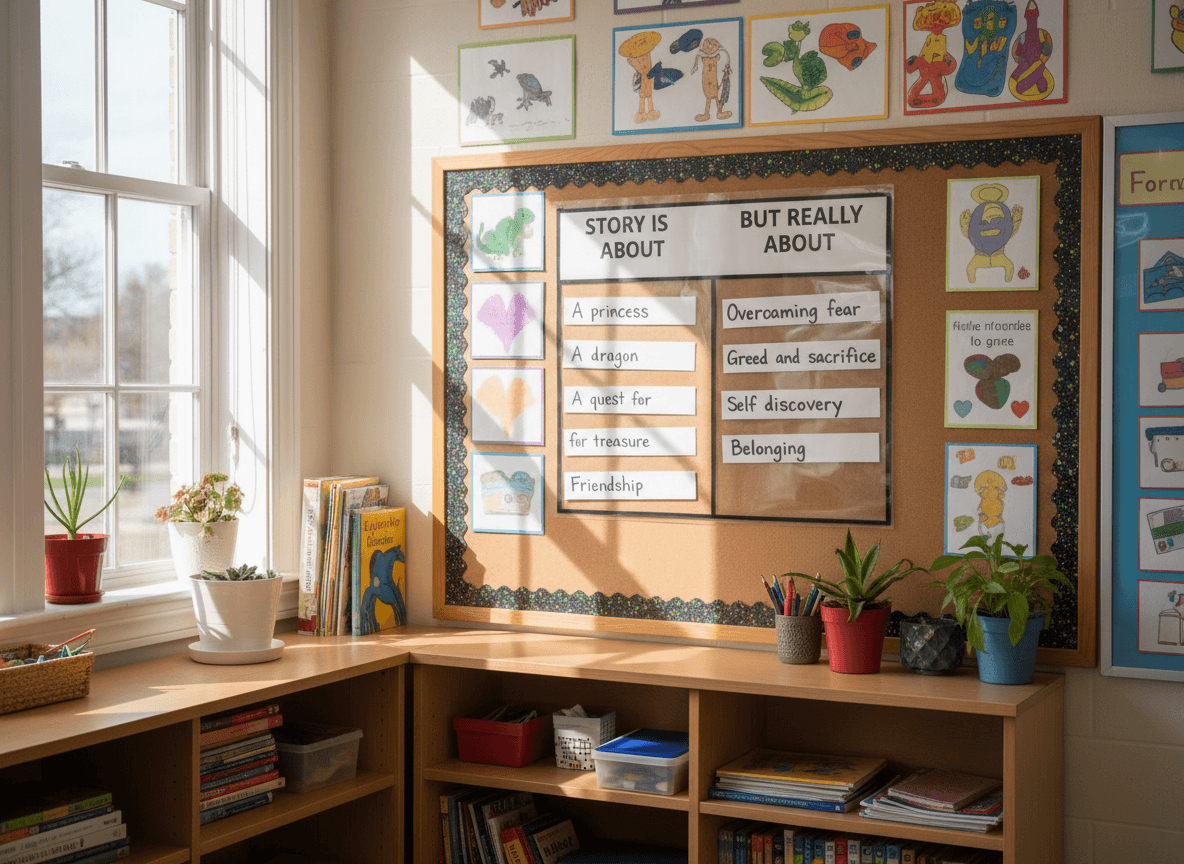
Give parents the move. "This story is about ___, but really it's about ___. The first blank is the plot. The second blank is the theme." Then show one example with a book parents know. "Charlotte's Web is about a pig and a spider, but really it's about friendship and loss." Two sentences and a parent who never studied theme in school can now run this question at the dinner table.
Give the one home question
Ask the two-blank question and stop. Print it in bold. "This week, after your child reads, ask them to fill in two blanks. This story is about ___, but really it's about ___." The parent does not need to know the book. They do not need to follow up. One question, one answer, done. That is the entire home practice for the cycle.
Show that there is no single correct theme
One paragraph. "Two readers can find different themes in the same story and both be right, as long as they can point to evidence in the text. We are not hunting for a hidden correct answer. We are building the habit of noticing what the story keeps coming back to." That paragraph alone fixes a real share of parent anxiety about this unit.
A sample opening for a sixth grade theme cycle
"Hello families. For the next two weeks our reading work is on theme. Theme is the big idea a story keeps circling. Friendship. Growing up. The cost of revenge. We are not hunting for one correct answer. We are building the habit of noticing what a story comes back to again and again.
The frame we are using: this story is about ___, but really it's about ___. The first blank is the plot. The second blank is the theme.
At home this week, after your child reads, ask them to fill in those two blanks out loud. Whatever they say is a starting point."
How Daystage helps with a theme-focused newsletter
Daystage holds the four-section structure for you. What theme is. The story-is-about-but-really-about frame. The home question. A line on how there is no single correct theme. Save it once. Swap the book and the example each send. The email lands clean and short on every parent's phone.
Get one newsletter idea every week.
Free. For teachers. No spam.
Frequently asked questions
What is the difference between theme and moral?
A moral is a lesson the writer wants you to take away. Be kind. Tell the truth. A theme is a bigger idea the story explores without telling you what to think. Friendship across difference. The cost of revenge. Themes are open. Morals are closed. Middle school work mostly lives in theme territory, not moral territory.
What is the story-is-about-but-really-about move?
Ask the kid to fill in two blanks. This story is about ___, but really it's about ___. The first blank gets the plot. The second blank gets the theme. Charlotte's Web is about a pig and a spider, but really it's about friendship and loss. Holes is about a boy at a desert camp, but really it's about how the past shapes the present. That two-blank frame teaches theme without anyone using the word theme.
Do all books have a theme?
Almost every novel does, and most picture books do, too. Themes are not hidden codes the author buried for kids to crack. They are the ideas a story keeps circling. If your child can name one thing the story keeps coming back to, that is a theme. There is no single correct theme. Two readers can land on different themes and both be right, as long as they can point to the text.
How do parents help with theme without giving the answer?
Ask the two-blank question and stop talking. This story is about ___, but really it's about ___. Whatever the kid says is the start. If they get stuck, ask what the main character keeps facing. That usually gets them started. The parent does not need to know the book. They just need to ask the question.
How do you send a theme-focused newsletter parents actually open?
Keep it short, keep the structure the same every cycle, and send it as a real email, not a PDF. Daystage was built for this. Save the four-section structure once, drop in the new book and home question each send, and the email lands on every family's phone formatted and ready to read.

Adi Ackerman
Author
Adi Ackerman is a former classroom teacher and curriculum writer with 8 years in K-8 schools. She writes about school communication, parent engagement, and what actually works in real classrooms.
More for Reading Newsletter
Ready to send your first newsletter?
3 newsletters free. No credit card. First one ready in under 5 minutes.
Get started free