
Reading Newsletter on Characters and Plot: A Template Worth Stealing
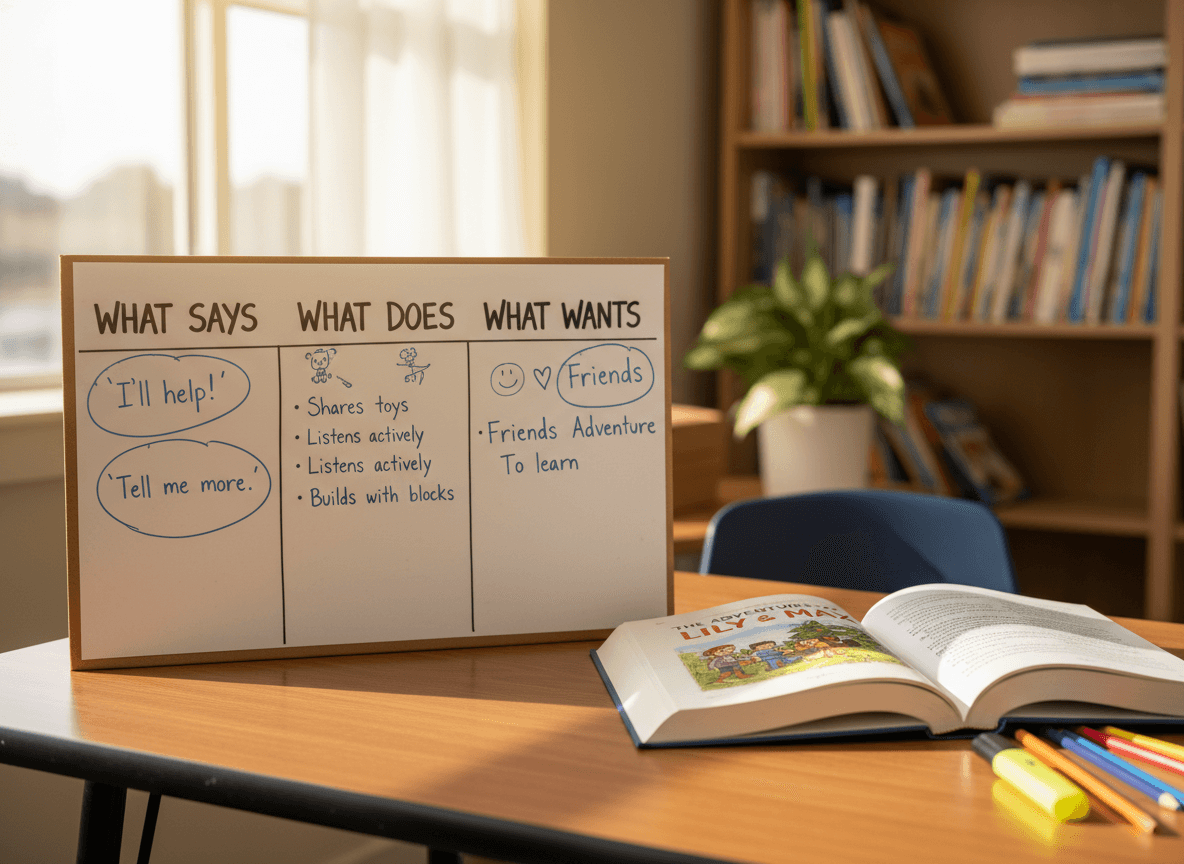
Characters and plot are the parts of a story parents feel most comfortable talking about. Everyone has a favorite character. Everyone has been spoiled on a plot twist. That comfort can hide a gap: most parents have not thought about how characters work since they were in school. A targeted newsletter gives them the language back in three short paragraphs and turns dinner-table chat into real reading support.
Open with the book and the protagonist
Three sentences. Title, author, the protagonist's name and what they want. "We are reading Wonder by R.J. Palacio. The protagonist is Auggie, a fifth grader with a facial difference, starting middle school for the first time. He wants to be treated like everyone else." That opening tells a parent the engine of the story. The plot moves because Auggie wants something. Every plot does.
Explain round and flat characters in plain words
Two sentences. "A round character has depth and surprises you. A flat character is built for one purpose, like the loyal best friend or the bully." Then one example from the current book. "In Wonder, Auggie and his sister are round. The school principal is closer to flat." Parents now have the vocabulary to follow along when their child says a character felt fake or surprising.
Name the conflict types in focus
Pick one or two per cycle. "This week we are tracking two conflicts. Auggie versus the kids at his new school. Auggie versus himself about whether to keep going. Most novels run more than one conflict at the same time. The internal one usually matters most." That is the full conflict update. Parents read it and now have a frame to watch the rest of the book through.
Give the one home question
Print it in bold. "After your child reads this week, ask one question: what changed for the main character from the beginning to where you are now?" That question pulls the kid back into the text to track the protagonist across pages instead of just reacting to the latest scene. One question. One answer. No follow-up needed.
A sample opening for a fifth grade characters and plot cycle
"Hello families. We are reading Wonder by R.J. Palacio. The main character is Auggie, a fifth grader starting middle school. He wants to be treated like everyone else. The story keeps testing that.
Auggie is a round character: complicated, contradictory, growing. The school principal is flatter on purpose, built for a specific role. Both kinds matter.
At home: ask one question after your child reads this week. What changed for Auggie from the beginning to where you are now? Whatever they say is a starting point."
How Daystage helps with a characters and plot newsletter
Daystage holds the five-section structure for you. The book and protagonist. Round and flat characters. Conflict in focus. The home question. Save it once. Drop in the new content each cycle. The email goes out clean and short to every family on your class list, formatted to read on a phone.
Get one newsletter idea every week.
Free. For teachers. No spam.
Frequently asked questions
What is the difference between a round character and a flat character?
A round character has depth, contradictions, and growth. They surprise the reader. A flat character is built for a single purpose: the loyal best friend, the bully, the wise grandparent. Both kinds exist on purpose. The main character of a novel is usually round. The side characters are usually flat. Knowing the difference helps kids notice when a side character suddenly becomes more interesting than expected.
What are the basic conflict types in plot?
Character versus character. Character versus self. Character versus society. Character versus nature. Most stories use more than one. The main conflict is usually the one the protagonist is most aware of. The deeper conflict is usually internal. Naming both helps kids see why the resolution at the end feels earned or unearned.
What is the most useful question about a character to ask at home?
What changed for the main character from the beginning to where you are now? That single question forces a kid to track the character across pages, not just react to the latest event. Growth is the through-line of most novels. The kid who can answer that question is reading the story, not just consuming it.
How is plot different from a story?
A story is what happens. Plot is how the writer arranges what happens. Same events in a different order is a different plot. Same events told from a different perspective is a different plot. Teaching kids that the writer made choices about the order and the pacing turns reading from passive to active.
How do you send a characters and plot newsletter parents will read?
Keep it under 400 words, keep the sections in the same order each cycle, and send it as a real email. No PDFs, no parent portals. Daystage was built for this. Save the structure once, drop in the new book and home question each send, and the email lands on every family's phone in a clean shape.

Adi Ackerman
Author
Adi Ackerman is a former classroom teacher and curriculum writer with 8 years in K-8 schools. She writes about school communication, parent engagement, and what actually works in real classrooms.
More for Reading Newsletter
Ready to send your first newsletter?
3 newsletters free. No credit card. First one ready in under 5 minutes.
Get started free