

Reading Newsletter for Reading Logs: A Working Template
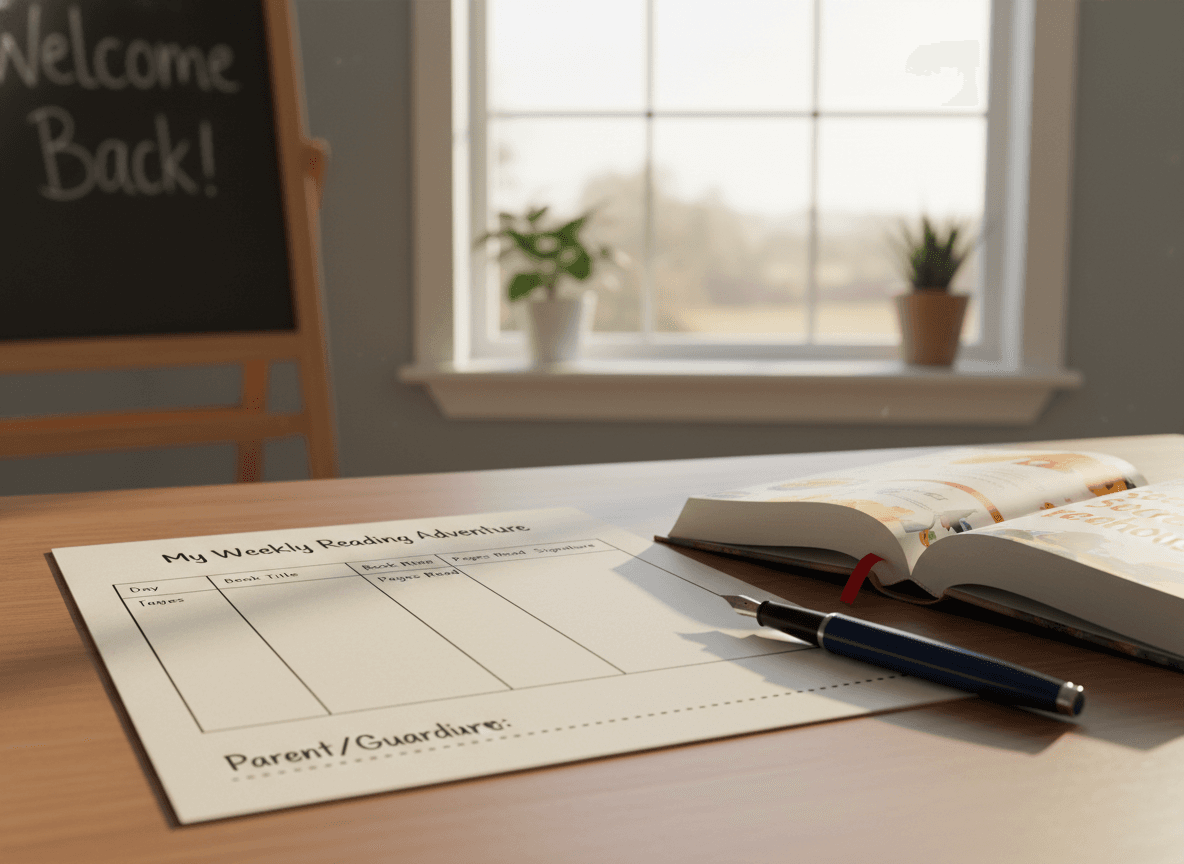
Reading logs are the most disliked artifact in elementary reading instruction. Parents hate them. Kids hate them. Most teachers feel ambivalent about them. They also work, when designed and explained well, because they make a daily reading habit visible. A newsletter that introduces the reading log has to do something most newsletters skip: be honest about the trade-off and give parents a real reason to buy in.
Lead with honesty, not enthusiasm
"Reading logs are imperfect. They can feel like a chore. We use them because the single highest-impact thing for your child's reading growth this year is 20 minutes a night, and the log keeps that habit visible." Parents respect the directness. The buy-in starts there.
Make the log small
A log that asks for a written summary of every session loses every family by week two. A log that asks for date, minutes, title, and one sentence about what was read works for almost everyone. Show the log inline in the newsletter, not as a PDF attachment.
Give parents permission to skip nights
"Skip a night when life is hard. Make it up another night, or do not. Four nights of real reading beat five nights of forced reading every time." That sentence lowers the pressure and raises the compliance.
Address the surveillance feeling directly
"The log is a tool, not a contract. I will not call home about a missing night. I will notice patterns over weeks. The log helps me see which kids are reading at home and which need more support, so I can plan accordingly." That paragraph reframes the log from punitive to diagnostic.
A working introduction newsletter
"Hello families. Starting Monday, your child will bring home a weekly reading log. Here is the honest version of why. The single highest-impact thing for your child's reading growth this year is 20 minutes a night of reading they enjoy. The log makes the habit visible. It asks for date, minutes, title, and one sentence about what was read. Total time per night: 20 seconds of writing. Skip a night when life is hard. Make it up another night, or do not. Four nights of real reading beat five nights of forced reading. The log is a tool, not a contract. I will notice patterns, not missing nights. Questions, reply to this email."
What to send mid-year
Once in the middle of the year, send a check-in. "Halfway through, the logs tell me about 70 percent of the class is reading four-plus nights a week. If you have fallen out of the habit, this is the week to pick it back up. No guilt-trip, just a reset." That single mid-year nudge often pulls families back in.
How Daystage helps with reading log newsletters
Daystage sends the log inline in the email, formatted to read on a phone, with no PDF attachment for parents to print. Save the introduction newsletter, the mid-year check-in, and the weekly log shape once. Send to the whole class list in one click, every cycle, all year.
Get one newsletter idea every week.
Free. For teachers. No spam.
Frequently asked questions
Do reading logs actually work?
Sometimes, with the right design. Logs that track minutes and titles, signed by a parent, work for some families. Logs that ask for written summaries of every session work for almost no one. The research is mixed, but the lived experience is clear: a short, simple log with a one-line response works better than a long, structured one. Be honest with parents about that.
Why do parents hate reading logs?
Three reasons. Logs feel like surveillance. They turn reading from a pleasure into a chore. And on busy nights, the log becomes the thing the parent did, not the child. Acknowledging this directly in the newsletter (instead of pretending parents are excited about logs) builds trust.
What is a good alternative to a reading log?
A one-line response. 'Tonight my child read for about 20 minutes, in this book, and could tell me this one thing about what they read.' That sentence captures everything a long log captures, in 20 seconds. Some classes use a once-a-week book-club-style response. Both work better than nightly minute-tracking.
How do I write the rationale for reading logs so parents accept them?
Be honest about the trade-off. 'Reading logs are imperfect. They can feel like surveillance. We use them because building a 20-minute-a-night reading habit is the single highest-impact thing for your child's reading growth this year, and a log keeps the habit visible. Skip a night when life is hard. Make it up another night. The log is a tool, not a contract.' That paragraph wins most parents over.
What tool sends the reading log newsletter cleanly?
Daystage. Save the template once, send the log alongside the newsletter as a clean inline format, and skip the PDF attachment that no one prints. One click, every family.

Adi Ackerman
Author
Adi Ackerman is a former classroom teacher and curriculum writer with 8 years in K-8 schools. She writes about school communication, parent engagement, and what actually works in real classrooms.
More for Reading Newsletter
Ready to send your first newsletter?
3 newsletters free. No credit card. First one ready in under 5 minutes.
Get started free