
Reading Newsletter for a Poetry Unit: A Template Parents Will Read
Poetry units are the easiest reading work to bring home and the easiest to make parents nervous about. Parents remember a teacher forcing them to find symbolism in a poem they did not understand and bracing for their kid to come home with the same assignment. The modern elementary poetry unit is nothing like that. A good newsletter explains what is actually happening and gives families one low-pressure thing to do.
Open with the poem the class is studying this cycle
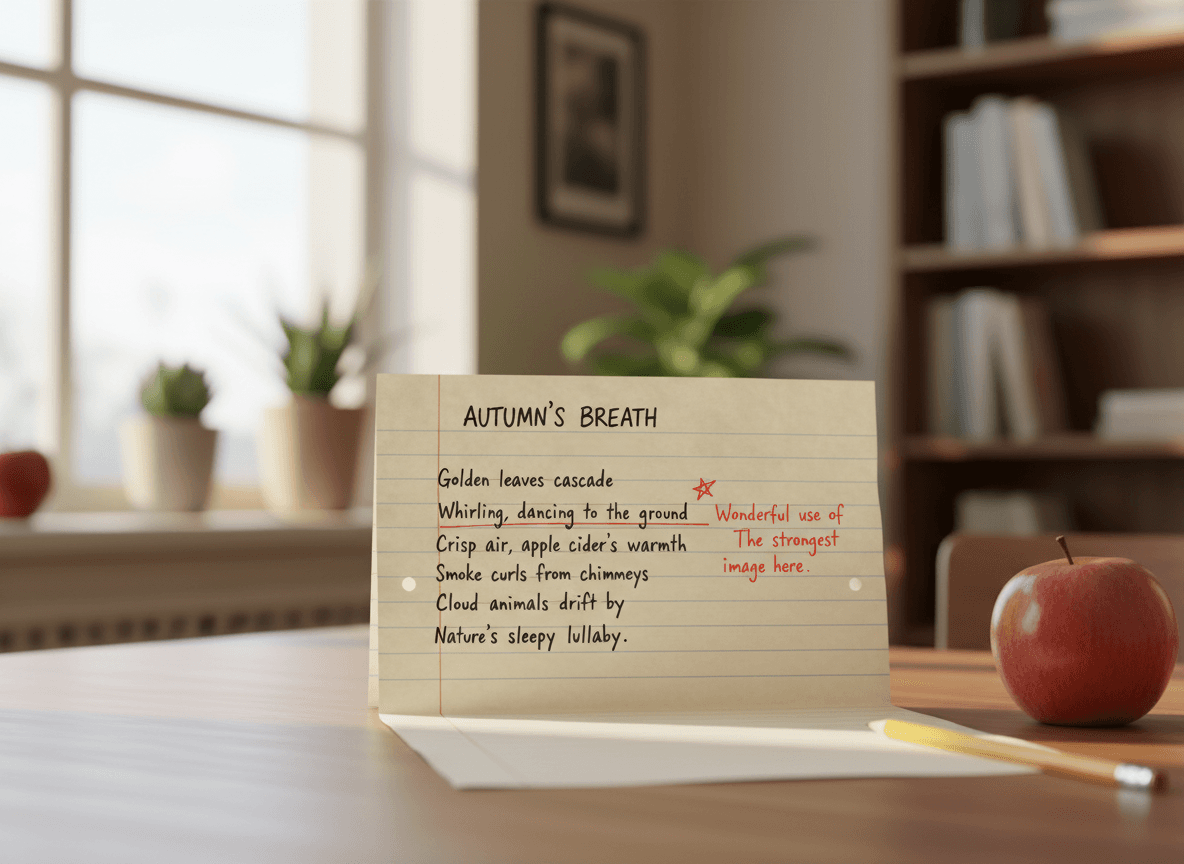
Paste the poem directly into the newsletter. Not a link. Not a PDF. The whole poem, in the body of the email, with the line breaks the poet chose. Parents read it in fifteen seconds. They see what their kid is sitting with. That single move changes how every other sentence in the newsletter lands.
Explain line breaks in two sentences
"A line break is where a poet decides to end a line, even when the sentence keeps going. Line breaks change how fast you read, where you pause, and what feels important." Two sentences. Parents do not need more than that. The example is already sitting above this paragraph in the form of the poem you pasted in.
Name the move kids are practicing this cycle
Pick one. Imagery. Repetition. Strong verbs. Line breaks for effect. Whatever the unit is on this week. "This week students are writing their own poems using strong verbs. Not walked, but stomped, or crept, or wandered. We are tracking the difference one word makes." That is the entire instructional update.
Give one home action and stop
Read one poem out loud at dinner this week. Any poem. The one in this newsletter is fine. That is it. No discussion required, no annotation, no journaling. Parents who already over-do school homework will read this section and exhale. Parents who under-engage will actually do it because it is so easy.
Mention the memorization piece if it is part of your unit
If you have students memorize a short poem at the end of the unit, tell parents now. "By the last week of the unit, every student will be able to recite a short poem they chose from memory. We practice five minutes a day in class. Some kids will want to practice at home, some will not. Both are fine." That removes the pressure and the surprise.
A sample opening for a fifth grade poetry unit
"Hello families. For the next four weeks we are reading and writing poetry. This week's anchor poem is The Red Wheelbarrow by William Carlos Williams. The whole poem is sixteen words. Read it once and you will see why.
We are studying line breaks. A line break is where the poet ends a line, even when the sentence keeps going. It changes how fast you read and what feels important.
At home this week: read one poem out loud at the dinner table. Once. No follow-up needed. The poem above is fine."
How Daystage helps with a poetry unit newsletter
Daystage formats the poem cleanly inside the email, line breaks intact, on every parent's phone. Save the five-section structure once. Paste the new poem each cycle. Send to your whole class list in one click. The poem arrives the way the poet wrote it, not as a screenshot or a PDF that half the parents never open.
Get one newsletter idea every week.
Free. For teachers. No spam.
Frequently asked questions
Why teach poetry at all in elementary school?
Poetry is the fastest way to teach kids that every word in a sentence is chosen on purpose. A short poem packs more decisions per line than a chapter of a novel. Kids who study poetry start noticing word choice in everything else they read. That habit pays off in every grade after.
What is the difference between a line break and a period?
A period ends a thought. A line break shapes how the thought lands. Poets use line breaks to slow a reader down, surprise them, or stack two images next to each other. A poem with the same words and different line breaks is a different poem. That single idea reframes how kids read poetry.
Why ask kids to memorize a poem?
Memorizing one short poem changes how a kid reads. They start hearing rhythm, noticing repetition, and feeling the weight of a strong line. It also gives them a piece of writing they own forever. Pick a short, strong poem. One per unit. Twenty lines or fewer. The benefit lasts decades.
What is the one thing parents can do at home during a poetry unit?
Read one poem out loud at dinner. Any poem. Once. No questions, no discussion required. If a kid wants to talk about it, great. If not, also great. Reading a poem aloud in the home, even once a week, normalizes poetry as a thing humans do. That is the entire home practice.
How do you send a poetry newsletter that parents actually open?
Make it short and visual. Drop in the poem the class is studying so parents see it without clicking anywhere. Daystage was built for this kind of email. Save the structure once, paste the poem in each cycle, send to every family in one click. The email renders cleanly on a phone, which is where most parents read.

Adi Ackerman
Author
Adi Ackerman is a former classroom teacher and curriculum writer with 8 years in K-8 schools. She writes about school communication, parent engagement, and what actually works in real classrooms.
More for Reading Newsletter
Ready to send your first newsletter?
3 newsletters free. No credit card. First one ready in under 5 minutes.
Get started free