
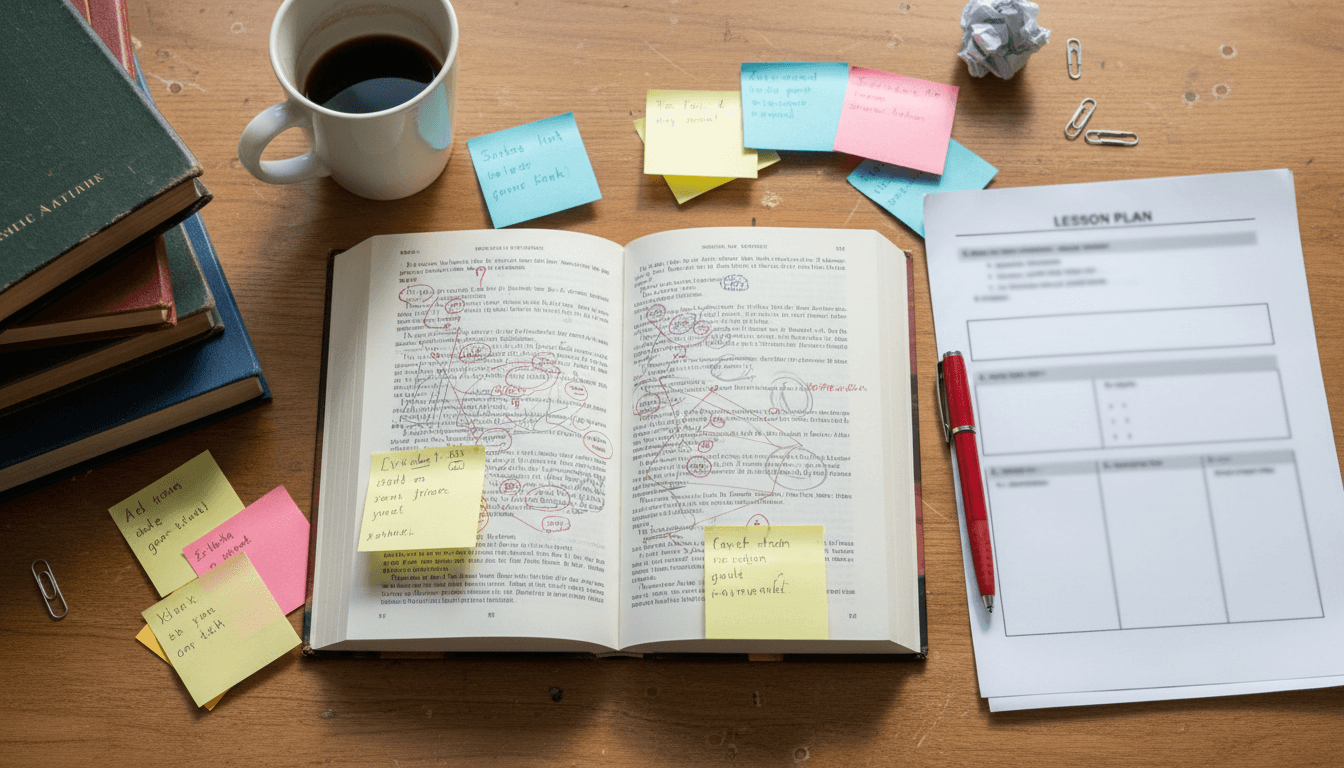
Reading Newsletter on Book Reports: Sections Parents Read
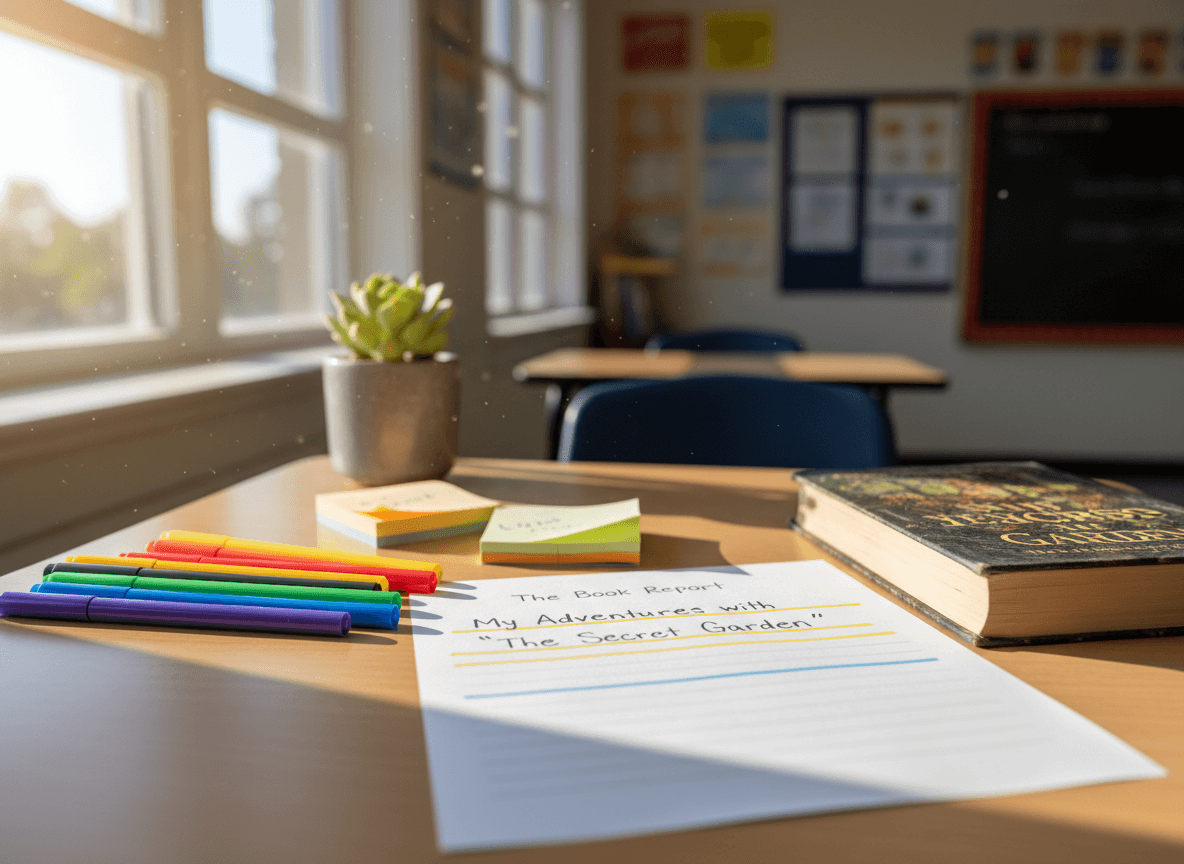
Book reports are the most misread assignment in elementary school. Parents see "report" and think summary. Kids see a blank page and think length. Teachers see neither, because the part of the work that matters lives in the thinking the kid does between page 30 and page 80. A newsletter focused on book reports can fix this in three paragraphs, and most teachers never write one. Here is what to include.
Name the actual goal in one sentence
Open with what the book report is for. Not the format, not the rubric, the goal. "A book report shows me what your child thought about a book, not what happened in it." Eleven words. That sentence retrains every parent who has been quietly retyping summaries for their kid since second grade. The summary is the warm-up. The thinking is the work.
List the four formats and what each one is good for
Traditional written report. One-pager. Sketchnote. Two-minute podcast. Each one targets a different skill. Written reports build formal writing. One-pagers build synthesis (cramming a whole book into one visual page). Sketchnotes pull out the visual learners. Podcasts give kids who think out loud a real surface to show what they know. Rotating these across the year keeps the assignment fresh and keeps every kind of kid in the game.
Clear up the three parent confusions
Three things parents get wrong, every year. One: the summary is not the point. Two: spelling and handwriting are not the grade in third grade book reports. Three: helping by writing it for them is not helping. Address all three in one paragraph, by name. "Please resist retyping your child's draft. The misspelled, slightly rambling first version is the version I am grading, and it is the version that teaches your child to revise."
A concrete example of what 'thinking' looks like
Parents need to see what counts. Drop one short student example, with the name removed: "I think the author wrote the dog dying so early because the rest of the book is really about Opal learning to let go. The dog is not the point of the book even though the title is about the dog." That sentence, from a real fourth grader, shows more thinking than a three-page plot recap. Show it. Parents recalibrate in 30 seconds.
The rubric, in three lines
Strong: at least two ideas about the book that go beyond what happened. Solid: one idea, supported by the text. Needs work: a summary with no ideas of the student's own. Three lines. Parents can read them. Kids can hit them. A 12-row rubric exported as a PDF is technically more accurate and practically invisible.
Heads-up section, every cycle
Book reports are usually due on a specific date. Put the date at the top of the newsletter, not the bottom, the cycle before it is due. "Heads up: book reports are due Thursday October 16. Format for this round is the one-pager (see attached example)." Parents miss the deadline less when the deadline is the first thing they see.
How Daystage helps with the book report newsletter
Daystage holds the five-section book report newsletter template so you build it once and reuse it for each round. The rubric lives in the body of the email, not in a PDF attachment, so parents actually see it. Send to your full class list in one click, formatted clean for phones, with the due date sitting at the top where it belongs.
Get one newsletter idea every week.
Free. For teachers. No spam.
Frequently asked questions
What do parents most often misunderstand about book reports?
That the point is the summary. The summary is the easy part and the smallest part. The real point is the kid's thinking: what they noticed, what they questioned, what surprised them. Parents who help by retyping the summary in cleaner sentences are erasing the part the teacher is grading. One paragraph in the newsletter fixes this.
Should book reports always be written?
No. Written is one of four formats that work. A one-pager mixes drawing and short text. A sketchnote captures the book in visual form. A two-minute podcast lets the kid talk through the book. Each one builds different muscles. Rotating formats across the year keeps reluctant writers in the game and keeps strong writers from coasting.
How long should an elementary book report be?
For third grade, one page or a three-minute video or podcast. For fourth and fifth, one to two pages or four minutes. Longer is not better at this age. A tight, thoughtful one-pager shows more thinking than a four-page summary that lists every chapter in order.
What should parents do if their child picks a book that is too easy?
Let it go once. If the pattern repeats, address it gently in the newsletter, not at the parent. 'For this round, please pick a book that takes more than one sitting to finish.' That sentence does the work without putting the parent in the position of policing the choice. Most kids reset their pick when the floor is named in writing.
What is the easiest way to share a book report rubric with families?
Embed it inside the newsletter, not as a PDF attachment. Three short lines: what you are grading for, what counts as 'meets expectations,' and one example of a strong response. Daystage formats this cleanly inside the email so parents read the rubric on their phone instead of opening a download they never tap.

Adi Ackerman
Author
Adi Ackerman is a former classroom teacher and curriculum writer with 8 years in K-8 schools. She writes about school communication, parent engagement, and what actually works in real classrooms.
More for Reading Newsletter
Ready to send your first newsletter?
3 newsletters free. No credit card. First one ready in under 5 minutes.
Get started free