
Kindergarten Reading Newsletter: A Template You Can Send Home
Kindergarten parents come into the year with two opposite worries. Half think their child will be reading by November. Half think their child is behind because the kid next door knew all 26 letters last June. Neither group is right and both need the same thing: a short, clear newsletter that explains what reading actually looks like at this age. Here is the template.
Open with what kindergarten reading really is
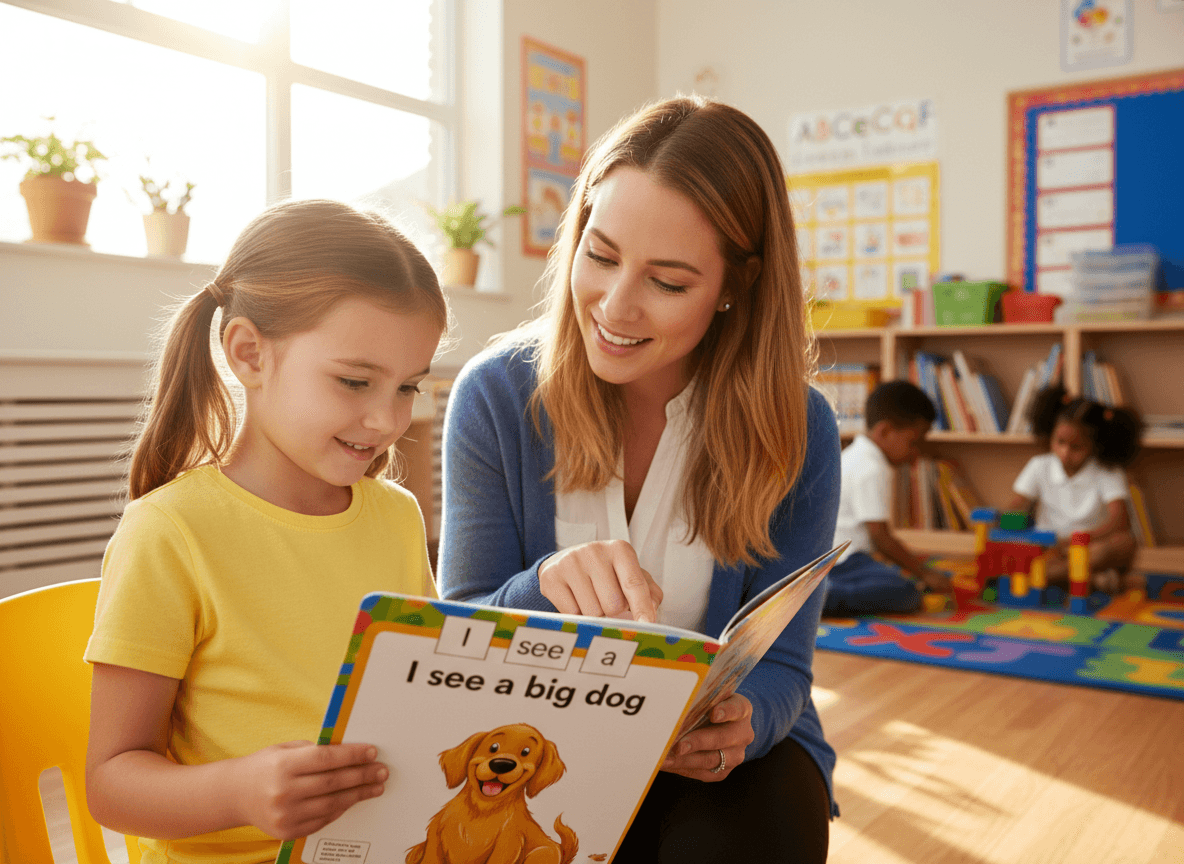
Two sentences. "Reading in kindergarten is a mix of listening, playing with sounds, learning letters, recognizing a small set of sight words, and finger-tracking through beginning readers. Most of the work does not look like sitting and reading a book. It looks like games, songs, and short bursts of practice." That paragraph alone resets parent expectations for the whole year.
Name the five components in plain words
Five short lines, once a year. "Phonemic awareness is hearing sounds in words. Phonics is matching sounds to letters. Fluency is reading smoothly. Vocabulary is knowing what words mean. Comprehension is understanding what was read." That is the entire framing for the year. Parents read those five lines and now have language for everything else you send.
Tell parents the read-aloud title
One sentence. "This week's read-aloud is The Snowy Day by Ezra Jack Keats. Ask your child what Peter did in the snow." Parents who know the title can ask one real question instead of a generic "how was your day." Naming the read-aloud is the highest-value sentence in any kindergarten newsletter.
Explain sight words and decoding
Two sentences. "Sight words are words your child recognizes without sounding out. The, was, said. Decoding is sounding out a word by its letters: cat, sun, hop." That is the full vocabulary lesson parents need for the year. Anything more loses them.
Give one home ask, the same one every time
Read out loud to your child for fifteen to twenty minutes every day. That is the entire home practice for the year. Any book. Any time. Print it in bold once a month. Parents who under-engage need the reminder. Parents who over-engage need permission to relax. Both groups land on the same ask.
A sample opening for an October kindergarten newsletter
"Hello families. Reading in kindergarten is a mix of listening, playing with sounds, learning letters, and recognizing a small set of sight words. Most of the work looks like games and songs, not sitting still with a book.
This week's read-aloud is The Snowy Day by Ezra Jack Keats. Ask your child what Peter did in the snow. This week's sight words: the, and, a, is. We will practice them all week.
At home: read out loud to your child for fifteen to twenty minutes a day. Any book is fine. That one habit matters more than any worksheet."
How Daystage helps with a kindergarten reading newsletter
Daystage holds the five-section structure for you. What kindergarten reading is. The components. The read-aloud. Sight words and decoding. The one home ask. Save it once. Drop in the new content each send. The email lands on every parent's phone, mobile-friendly and short, in a shape they read instead of saving for later.
Get one newsletter idea every week.
Free. For teachers. No spam.
Frequently asked questions
What are the five components of reading?
Phonemic awareness, phonics, fluency, vocabulary, and comprehension. Phonemic awareness is hearing sounds in words. Phonics is matching sounds to letters. Fluency is reading smoothly and at a good pace. Vocabulary is knowing what words mean. Comprehension is understanding what you read. Kindergarten works on all five, with the heaviest weight on the first three.
What does reading actually look like in kindergarten?
A mix of things. Listening to read-alouds, clapping syllables, matching letters to sounds, recognizing sight words, finger-tracking a beginning reader, talking about a story, and acting out parts of books. Most of the reading work in kindergarten does not look like sitting and reading a book. It looks like games, songs, and short bursts of focused practice.
What is the difference between sight words and decoding?
Sight words are words a kid is expected to recognize on sight, without sounding them out. The, was, said, what. Decoding is sounding out a word by its letters. Cat. Sun. Hop. Kindergarten teaches both. Sight words handle the high-frequency words that do not follow the rules. Decoding handles everything else.
What is the most useful thing parents can do at home in kindergarten?
Read out loud to the child every day. That is the single most powerful move at this age. Twenty minutes a day, any book, any time. Hearing fluent reading builds the ear, the vocabulary, and the appetite for stories. Everything else, the sight word flashcards and the decodable books, sit on top of that habit.
How do you send a kindergarten reading newsletter parents will actually read?
Short, formatted, friendly, with one ask. Daystage was built for this. Save the four-section structure once. Drop in the focus, the read-aloud title, and the one home ask each send. The email lands on every parent's phone, mobile-friendly, in a shape they can read between drop-off and the next meeting.

Adi Ackerman
Author
Adi Ackerman is a former classroom teacher and curriculum writer with 8 years in K-8 schools. She writes about school communication, parent engagement, and what actually works in real classrooms.
More for Reading Newsletter
Ready to send your first newsletter?
3 newsletters free. No credit card. First one ready in under 5 minutes.
Get started free