
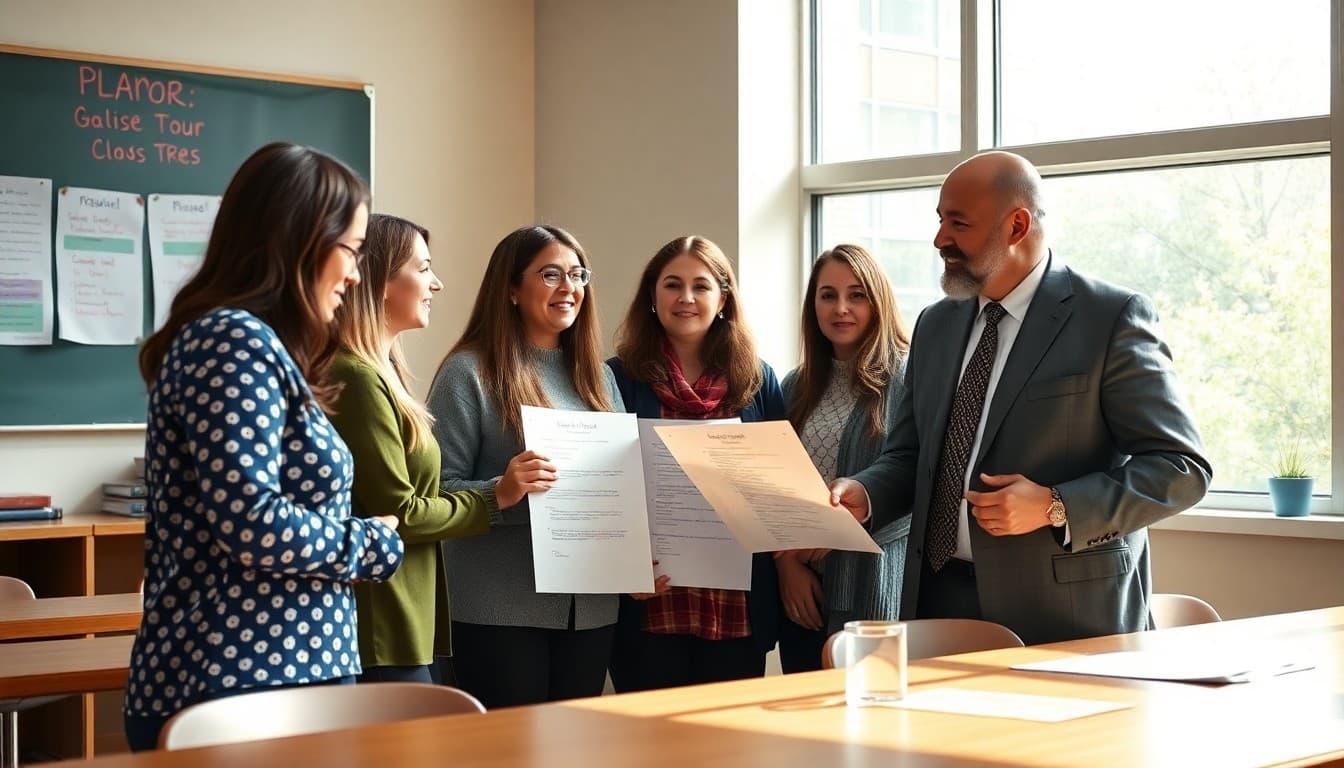
PTA School Improvement Newsletter: How We Support the School

The PTA's school improvement work is often its most visible contribution to the community, but it is also the least systematically communicated. Families donate to walkathons and buy carnival tickets without always knowing what specific improvements their money funded. A school improvement newsletter that documents the full cycle from wish list to completed project closes that loop and makes families feel the direct impact of their participation.
Build the Wish List With Teachers First
The most defensible school improvement priorities come from the people who know what students need daily: teachers. At the start of each school year, send a brief survey to staff asking what one or two classroom or school-wide improvements would most benefit their students. Compile the responses and share the top priorities in your fall newsletter. Families who see that the wish list came from teachers trust that the priorities are real, not invented by a board that does not spend time in classrooms.
Publish the Prioritized Wish List in the Fall
An annual school improvement wish list newsletter, sent in September or October, gives families a clear picture of what the PTA is working toward and why. List each item with the purpose it serves, the estimated cost, and the anticipated timeline. "Outdoor reading benches: 12 benches for the courtyard, $1,800, project approved by Principal Martinez. Goal: give students a comfortable outdoor reading space during lunch and free periods. Target completion: spring semester." That level of detail makes the wish list feel achievable and concrete rather than abstract.
Involve Families in Prioritization
When the wish list has more items than the budget can cover, invite families to vote on priorities through the newsletter. A simple three-question survey: "Which project should we fund first this year?" with three or four options builds investment in the outcome. Families who voted for the playground equipment feel more connected to the playground project than families who just received a newsletter announcing the PTA bought something. Participation builds ownership.
A Sample School Improvement Wish List Section
Here is a template for the wish list section of your fall newsletter:
"2025-26 School Improvement Priorities -- Based on teacher surveys and board review, here are this year's approved improvement projects, in priority order: (1) Library book refresh: 200 new titles in grades 3-5 fiction and nonfiction. Cost: $2,400. All teacher-requested titles. (2) Cafeteria bench cushions: 40 seat cushions for students with sensory needs. Cost: $800. Requested by occupational therapist. (3) Garden irrigation system: automatic drip system for school garden. Cost: $1,100. Current hand-watering takes 45 minutes per day of a teacher's lunch break. (4) Portable shade structure: for playground, needed for hot fall and spring days. Cost: $3,500. Vote at westlakePTA.org/vote by October 10 if you want to weigh in on priority order."
Communicate Progress During Projects
Large improvement projects -- a new playground structure, a school garden, a library renovation -- take months from approval to completion. Families who do not receive any updates during that time assume nothing is happening. A mid-project update newsletter with a photo of the current state keeps families engaged and reinforces that their fundraising is producing a real outcome. "The garden irrigation pipes were installed last week. Planting starts November 15. Photos below."
The Ribbon-Cutting Newsletter
When a project is completed, celebrate it with a newsletter. Include before-and-after photos, the total cost and how it was funded, how long it took from proposal to completion, and a quote from a teacher or student about what the improvement means to them. "Three years of walkathon proceeds funded the outdoor reading garden. The first class used it on Monday. Here is what Ms. Rodriguez's second graders thought." That newsletter validates every donation and every volunteer hour that made the project possible.
Connect Improvements to Fundraising Goals
Every school improvement newsletter should connect backward to how funds were raised and forward to what the next improvement goal is. Families who see the cycle -- we fundraised, we built something specific, here is what it does for students, here is what we are working toward next -- develop a relationship with the fundraising process that is about impact, not obligation. That relationship is what keeps participation rates high year after year.
Get one newsletter idea every week.
Free. For teachers. No spam.
Frequently asked questions
What kinds of school improvements can a PTA fund?
PTAs typically fund improvements that fall outside the school district's operating budget: playground equipment, library books, classroom technology, enrichment programs, garden projects, art supplies, teacher professional development stipends, and facility upgrades like shade structures or benches. PTAs generally cannot fund things that are the district's legal obligation, like building maintenance, staffing, or safety equipment, though the line sometimes requires guidance from the district office.
How should a PTA newsletter communicate about school improvement priorities?
Present the wish list in concrete terms: what the improvement is, what it would cost, what problem it solves, and what students would benefit. Involve families in prioritization by using a newsletter survey. Families who vote on priorities feel ownership of the outcomes. Once a project is funded and completed, report back on it clearly so families can see the tangible result of their donations and volunteer hours.
How does the PTA work with the principal on school improvement projects?
PTAs should never commit funds to a school improvement project without the principal's explicit approval. The principal needs to confirm that the improvement aligns with school priorities, that the district allows the specific kind of improvement, and that the school can maintain whatever is installed. A newsletter that describes a project the principal has already approved builds family confidence that the money will actually be spent.
How do you prioritize school improvement projects when the wish list is longer than the budget?
Start with a needs assessment from teachers and staff: what is most needed in classrooms right now. Layer in student surveys if the school supports it. Bring the prioritized list to a PTA board meeting for a vote, then share the outcome with the full community in a newsletter. Transparent prioritization reduces complaints from families who want different projects funded.
Can Daystage help PTAs communicate school improvement progress to families?
Yes. Daystage lets you send a project update newsletter that shows families what was proposed, what was approved, and what has been completed, with photos of the finished improvements. Documenting the full arc from wish list to ribbon-cutting in a newsletter archive gives families a clear record of what the PTA has accomplished and builds momentum for future fundraising campaigns.

Adi Ackerman
Author
Adi Ackerman is a former classroom teacher and curriculum writer with 8 years in K-8 schools. She writes about school communication, parent engagement, and what actually works in real classrooms.
More for PTA & PTO
Ready to send your first newsletter?
3 newsletters free. No credit card. First one ready in under 5 minutes.
Get started free