
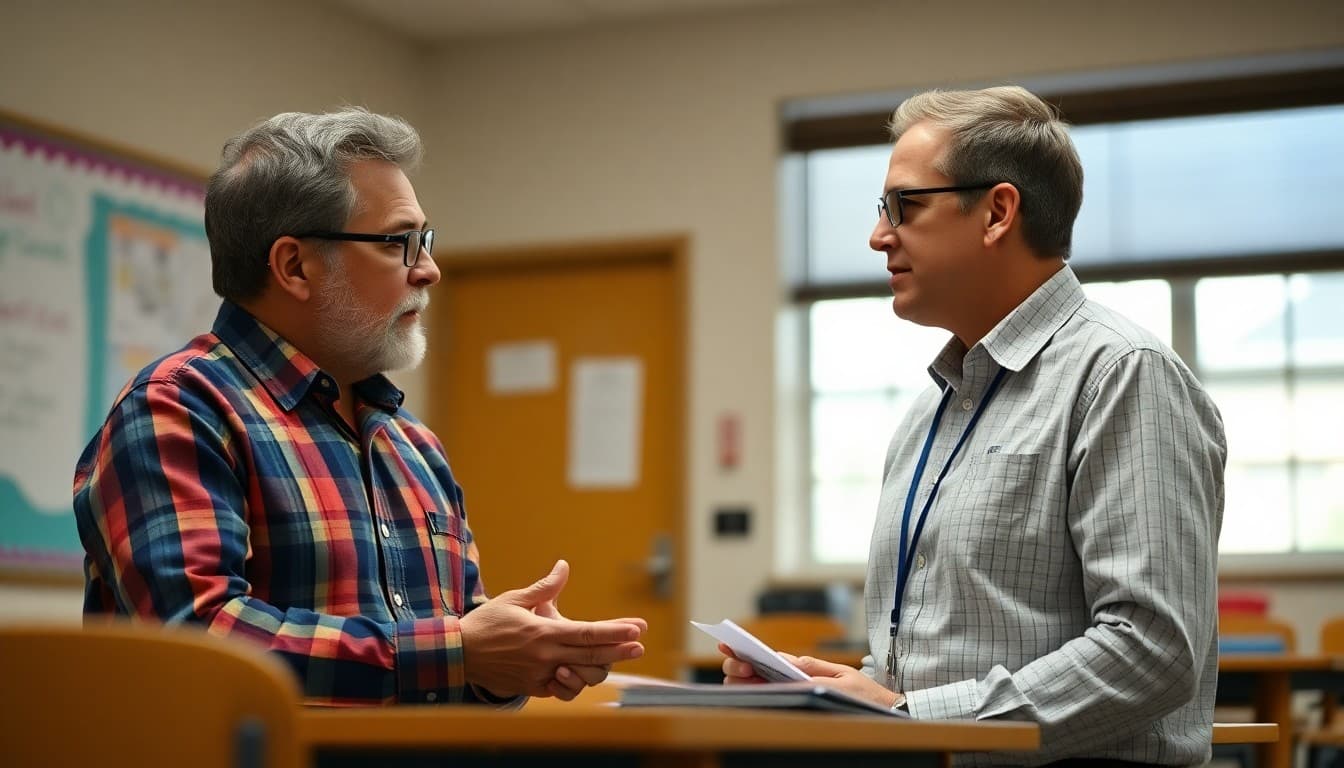
Teacher Mentorship Program Newsletter: Growing Educators Together

New teachers leave the profession at a higher rate than any other public sector workers, and the most common reason is feeling unsupported and isolated in their first years. A well-run mentorship program addresses that directly. A newsletter that communicates the program clearly, recruits the right mentors, and keeps both mentors and new teachers engaged through the year is the communication infrastructure that makes the program work.
Explain what mentorship is and is not
Many teachers, both veterans and newcomers, are uncertain whether mentorship is an evaluative process. The newsletter should be clear: a mentor is not an evaluator. A mentor does not report to the principal what was observed in a classroom visit. A mentor is a professional peer who has agreed to share their experience, answer questions, and support the new teacher in navigating the first year. That distinction, stated early and often, is what makes new teachers willing to be honest with their mentors about struggles.
Recruit mentors with honest appreciation for what the role involves
A mentor recruitment newsletter that oversimplifies the role as just being a friendly colleague will attract volunteers who are not prepared for what mentoring actually requires. An honest newsletter describes the time commitment: monthly structured meetings, informal check-ins, and observation exchanges that take two to four hours per month. It also describes the rewards: the professional sharpening that comes from articulating practice, the relationships that often last across careers, and the direct contribution to new teacher retention.
Give mentors a monthly focus structure
Mentors who are simply told to "meet monthly and be supportive" often find the meetings drifting toward complaint sessions or schedule management. A newsletter that provides a monthly focus, for example September is about classroom routines, October is about family communication, November is about assessment practices, gives mentors and new teachers a shared topic that makes conversations more productive. Include three to five discussion questions for each month's focus in the newsletter.
Send separate newsletters to mentors and mentees
The needs and experiences of mentors and new teachers in the same program are different enough to warrant different newsletters. A mentor newsletter might focus on facilitation skills, common challenges at a particular point in the year, and resources for supporting specific new teacher struggles. A new teacher newsletter might focus on what to expect in the coming month, what questions to bring to the mentor meeting, and where to find key school resources. Two targeted newsletters produce better outcomes than one combined communication that tries to serve both audiences.
Feature a mentor-mentee pair at midyear
A brief story from a mentor-mentee pair at midyear, describing what the relationship has been like and what the new teacher has worked on, builds community and validates the program for everyone who is less engaged. The story should include something specific: "We spent three sessions focused on student discussion facilitation. The new teacher's students now regularly talk to each other rather than only to the teacher." That specificity shows the program produces real professional growth, not just social connection.
Share what the research says about mentorship and retention
A brief paragraph noting that new teachers with mentors are significantly more likely to remain in the profession after three years than those without gives the program's purpose academic grounding. Administrators who see the data understand why the investment in mentor time is justified. New teachers who read this understand that the program they are participating in has a direct connection to their own career trajectory.
Communicate what leadership is doing to support mentors
Mentor recruitment and retention improves when teachers see that leadership takes the program seriously. The newsletter should name specific supports: a monthly mentor meeting with the instructional coach, a stipend for time invested, priority consideration for professional development opportunities, or public recognition at a staff meeting. Mentors who feel supported by leadership are more effective and more willing to commit to the role again the following year.
Close the year with a program reflection
An end-of-year mentorship newsletter that summarizes what the program accomplished, what new teachers said about their mentor experience, and what changes will improve the program next year creates accountability and continuous improvement. Mentors who see that their feedback shapes the next year's program are more invested. New teachers who see their experience documented feel their first year mattered beyond their own survival.
Get one newsletter idea every week.
Free. For teachers. No spam.
Frequently asked questions
What is a teacher mentorship program and how does it differ from instructional coaching?
A teacher mentorship program pairs an experienced teacher with a newer teacher for an extended relationship focused on professional socialization, school culture navigation, and general practice support. Instructional coaching tends to be more specific and skill-focused. Mentorship covers a wider range of needs including navigating staff culture, managing family communication, understanding school-wide procedures, and building the professional identity of a new educator.
What should a mentor teacher do, and what should the newsletter communicate about that role?
The newsletter should describe the specific activities mentors and mentees engage in: regular scheduled check-ins, classroom observation exchanges, collaborative planning sessions, and goal-setting conversations. It should clarify that mentoring is not evaluative and that the mentor's observations remain confidential to the mentoring relationship. Clear role definition makes mentor recruitment easier and sets appropriate expectations for new teachers.
How do you recruit experienced teachers to serve as mentors?
A newsletter that describes the intrinsic rewards of mentoring, names the time commitment honestly, offers any stipend or recognition available, and features a story from a previous mentor about what they gained from the experience is an effective recruitment tool. Teachers who mentor often report that the relationship sharpens their own practice as much as it helps the new teacher.
What support do mentor teachers need from school leadership?
Mentor teachers need protected time to meet with their mentees, clear guidance on what to focus on in each month of the relationship, access to resources they can share, and recognition from leadership that their mentoring work is valued. A newsletter that communicates what the school is doing to support mentors signals that the program is a genuine investment, not an add-on assignment.
How does Daystage support teacher mentorship program communication?
Daystage allows program coordinators to send separate newsletters to mentors and new teachers, each with content tailored to their current experience in the program. The platform's calendar integration lets coordinators embed mentor-mentee check-in schedules and program milestones directly in the newsletter. That structure helps both mentors and new teachers stay on track without requiring coordinator follow-up for every deadline.

Adi Ackerman
Author
Adi Ackerman is a former classroom teacher and curriculum writer with 8 years in K-8 schools. She writes about school communication, parent engagement, and what actually works in real classrooms.
More for Professional Development
Ready to send your first newsletter?
3 newsletters free. No credit card. First one ready in under 5 minutes.
Get started free