

The Wisconsin Principal Newsletter Guide
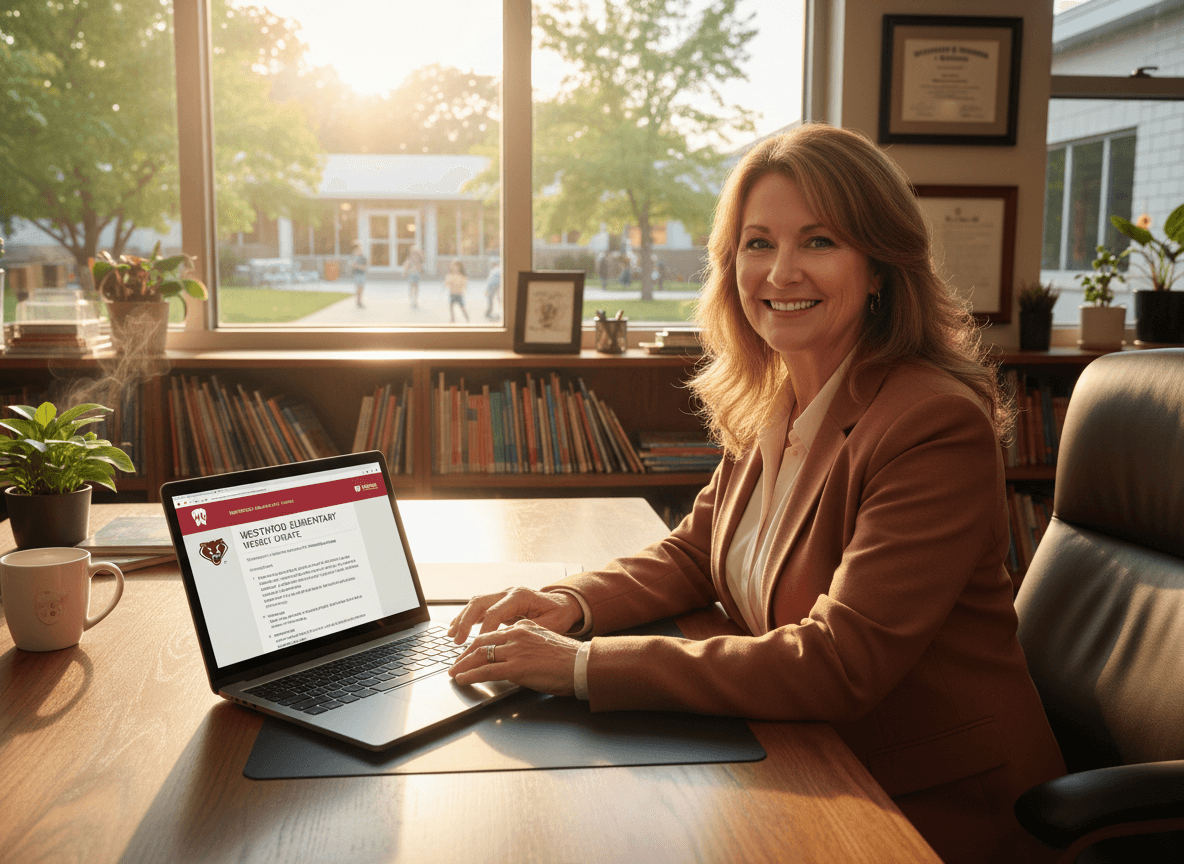
Wisconsin principals work in a state with profound educational contrasts. Milwaukee Public Schools is one of the most challenged urban districts in the country, with a majority Black and Latino student population, high poverty rates, and persistent achievement gaps that have been documented for decades. Madison Metropolitan School District, just 80 miles away, is a university city with high parental education levels, strong civic engagement, and a school community that closely monitors academic outcomes. Green Bay has a large and growing Latino community. Rural Wisconsin has dairy farming communities with deep generational roots and 11 federally recognized tribal nations with their own schools and a significant student presence in surrounding public districts.
The Wisconsin principal newsletter is not one thing across all of these contexts. What it must always be is consistent, honest, and written for the actual community the school serves.
What Wisconsin families expect from school communication
Madison-area families, particularly in the Madison Metropolitan School District and nearby districts like Middleton-Cross Plains and Verona, include a high proportion of university faculty, state government employees, and professionals with strong informational expectations. These parents read the Wisconsin Report Card. They compare school data across the district. They will ask substantive questions about curriculum and instruction. Newsletters that engage with data honestly and explain school decisions with specificity perform better in these communities than those that traffic in positive generalities.
In Milwaukee, the communication challenge is different. MPS serves more than 70,000 students across a district with enormous complexity. Principals in Milwaukee schools serve families under significant economic pressure, and family engagement with school communication varies widely. Clear, plain-language newsletters that are easy to read on a phone, get to the point quickly, and communicate genuine care for students are the baseline. In suburban Milwaukee communities like Wauwatosa, Shorewood, and Whitefish Bay, families expect high-quality communication and will compare notes with neighbors about what the principal is communicating.
DPI requirements and Wisconsin notification obligations
The Wisconsin Department of Public Instruction establishes several annual communication requirements for school principals:
- Annual parent notification: Wisconsin schools must notify families of student rights, the discipline code, and school safety information at the start of each year.
- Act 20 and Read to Lead: Wisconsin's reading legislation requires schools to screen students and notify families of students below grade level in reading. Intervention plans must be communicated to families and updated regularly.
- Wisconsin Act 55 accountability: Schools must communicate their Wisconsin Report Card results and improvement plans to the community. The newsletter is the most practical building-level vehicle for this.
- Title I parent engagement policy: Eligible schools must distribute and document the annual parent engagement policy and demonstrate family involvement activities.
Wisconsin Forward Exam and ACT Aspire communication
Wisconsin uses the Forward Exam for English language arts and mathematics in grades 3 through 8, and ACT Aspire for grade 9. The Dynamic Learning Maps assessment serves students with significant cognitive disabilities. Science and social studies are also assessed at selected grade levels. Results feed directly into the Wisconsin Report Card, which rates schools on multiple dimensions and is publicly accessible.
Before the spring testing window, typically in March and April, send a newsletter explaining the testing schedule, what students should bring to school on test days, how families can help their children prepare without causing anxiety, and what the results will be used for. When Report Card data is released in the fall, send a dedicated newsletter. Share your school's rating, the component scores, the year-over-year change, and your instructional response.
Wisconsin has a well-documented and persistent racial achievement gap, with Black-white and Latino-white gaps among the largest in the nation. Milwaukee principals who address these gaps directly in their newsletters, naming the challenge and explaining specific strategies to close it, communicate more honestly and build more trust than those who present aggregate results without context.
Milwaukee Public Schools complexity and community trust
MPS is one of the most complex urban districts in the country. It operates traditional neighborhood schools, charter schools, and specialty programs simultaneously. Milwaukee also has one of the largest private school voucher programs in the country, which means public school principals are competing for families against a wide range of alternatives.
MPS principals who communicate consistently and honestly, who share both successes and challenges, and who demonstrate genuine investment in their school community are better positioned to retain students and attract families choosing a school. The newsletter is a year-round retention and recruitment tool in Milwaukee's school choice environment.

Wisconsin's tribal nations and rural community communication
Wisconsin has 11 federally recognized tribal nations, including the Ojibwe, Menominee, Ho-Chunk, and Oneida nations. Tribal schools operate under their own governance, but many Native students attend surrounding public schools. Principals in northern Wisconsin districts near reservation communities should ensure their newsletters acknowledge Native history and culture, particularly during Native American Heritage Month in November and around Indigenous Peoples Day.
Rural Wisconsin dairy farming communities have a distinct character. Agricultural families in central and northern Wisconsin have deep ties to their local schools and strong community identity. The farming calendar shapes family availability, with fall harvest and spring fieldwork seasons affecting when families are most reachable. Principals in these communities who communicate with an awareness of the agricultural calendar and genuine respect for the community build relationships that last.
Green Bay and Wisconsin's growing Latino community
Green Bay has seen significant growth in its Latino and Hispanic population over the past two decades, primarily through immigration related to meatpacking and food processing industries. Green Bay Area Public Schools now serves a majority-minority student population in many buildings. Racine Unified and Wausau School District have similar demographic shifts underway.
Principals in these communities who send newsletters only in English are not reaching all of their families. Spanish-language versions of key newsletters, or bilingual subject lines at minimum, meaningfully expand reach. Parent engagement from Spanish-speaking families tends to increase significantly when communication is accessible in the family's primary language.
Using Daystage for Wisconsin principal newsletters
Daystage delivers school newsletters inline in Gmail and Outlook, which means Wisconsin families see the full content when they open the email. No PDF, no link, no additional app. Principals in Milwaukee, Madison, Green Bay, Racine, and rural Wisconsin communities use Daystage to maintain consistent bi-weekly communication without hours of formatting work. The free plan requires no credit card and works for most Wisconsin schools from day one.
Get one newsletter idea every week.
Free. For teachers. No spam.
Frequently asked questions
How often should a Wisconsin principal send a school newsletter?
Bi-weekly is the standard for Wisconsin schools with strong family engagement programs. In Milwaukee Public Schools and Madison Metropolitan School District, where parent populations are diverse and communication complexity is high, consistent bi-weekly newsletters build the ongoing relationships that support attendance, engagement, and trust. In rural Wisconsin dairy farming communities, monthly newsletters may be more realistic given staff capacity, but bi-weekly is worth aiming for during key periods like the Forward Exam window and the Wisconsin Report Card release.
What should Wisconsin principals include in Forward Exam newsletters?
Before the spring Forward Exam window, typically in March and April, send a newsletter covering which grades are tested, the testing schedule, what students should expect on test day, and how families can support preparation at home. After results are released in the fall, send a data newsletter with your school's scores on the Wisconsin Report Card, year-over-year comparisons, and your instructional response. Wisconsin families in suburban Milwaukee and Madison who actively follow school accountability data expect this level of transparency.
What does Wisconsin's Act 20 and Read to Lead require principals to communicate?
Wisconsin's third-grade reading legislation, including Act 20 and the Read to Lead initiative, requires schools to screen students for reading difficulties and notify families when a student is identified. Principals must communicate the screening process, the intervention plan for students below grade level, and the school's overall reading instruction approach. For students at risk of retention under Wisconsin's reading laws, individual family communication is legally required in addition to school-wide newsletter content about the reading program.
How should Wisconsin principals communicate about the Wisconsin Report Card?
The Wisconsin Report Card is published publicly by DPI and rates schools on a scale from Fails to Meet Expectations to Significantly Exceeds Expectations. Families in suburban Milwaukee communities like Elmbrook, Mequon-Thiensville, and Waukesha, as well as in Middleton and Verona near Madison, actively check this data. Principals who send newsletters contextualizing Report Card results before families encounter the data independently are in a stronger communication position. Include your school's overall rating, the subscores by category, year-over-year change, and the specific strategies your school is implementing in response.
What is the best newsletter tool for Wisconsin principals?
Daystage is used by principals across Wisconsin to send consistent, professional school newsletters. Families in Milwaukee, Madison, Green Bay, Racine, and rural Wisconsin dairy and farming communities see the full newsletter content when they open the email, without clicking a link or downloading a file. The free plan requires no credit card and works well for Wisconsin schools from urban MPS buildings to small rural district schools.

Adi Ackerman
Author
Adi Ackerman is a former classroom teacher and curriculum writer with 8 years in K-8 schools. She writes about school communication, parent engagement, and what actually works in real classrooms.
More for Principals
Ready to send your first newsletter?
3 newsletters free. No credit card. First one ready in under 5 minutes.
Get started free