

The Virginia Principal Newsletter Guide
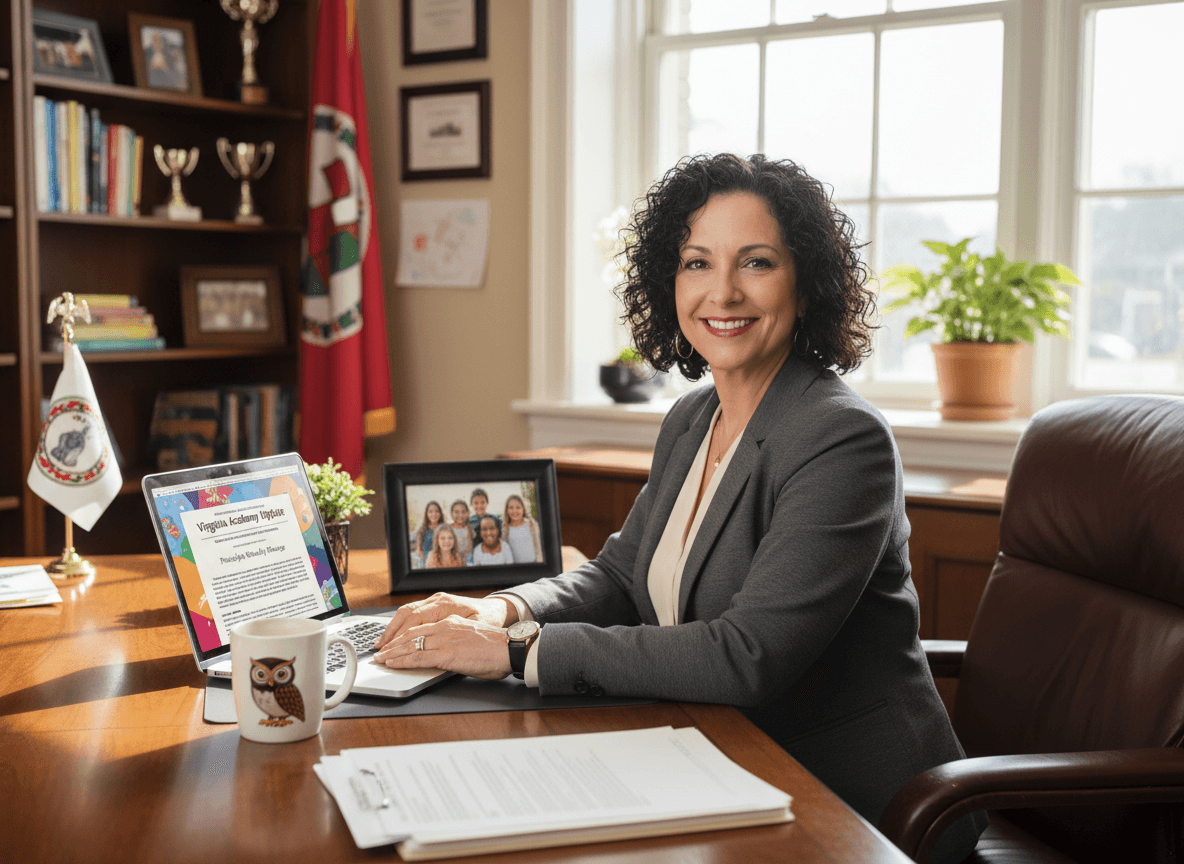
Virginia principals operate in one of the most educationally complex states in the country. Northern Virginia suburbs like Fairfax, Arlington, and Alexandria are among the most diverse and high-performing school communities in the nation. Richmond and the surrounding counties carry the weight of deep history and persistent inequity. Virginia Beach and Hampton Roads serve substantial military family populations with frequent relocations. And the rural districts of southwestern Virginia face the challenges of declining enrollment, geographic isolation, and communities reshaped by economic change in the coalfields.
What all of these communities share is an expectation of clear, honest, and consistent communication from school leadership. The principal newsletter is the single most scalable tool for meeting that expectation.
What Virginia families expect from principal communication
Northern Virginia parents, particularly in Fairfax County, Arlington County, and Alexandria City schools, are among the most engaged and informed school communities in the country. Many work in federal government, policy, research, and technology. They read school communications carefully. They compare what the principal says to what the Virginia Quality Profile shows. They will ask informed questions at back-to-school night that reference specific SOL proficiency rates.
Principals in those communities need newsletters that are substantive, data-honest, and treat families as informed partners rather than passive recipients of good news. In Richmond, the picture is more varied. Richmond City Schools serve a majority-Black, lower-income student population with a history of disinvestment that many families are aware of. Trust there is built slowly and through consistency. A Richmond principal who shows up with honest, plain-language communication every two weeks builds more goodwill than one who communicates only when something notable happens.
In Hampton Roads, military families are accustomed to adjusting to new schools and new communication systems. They value efficiency and clarity above all. A newsletter that tells them exactly what they need to know without requiring them to navigate multiple platforms is a meaningful service.
VDOE requirements and Virginia notification obligations
The Virginia Department of Education establishes several communication obligations that shape what Virginia principals must communicate each year:
- Annual parent notification: Virginia schools must distribute student rights, discipline policies, and safe school information at the start of each academic year.
- Virginia Literacy Act notifications: For students in kindergarten through third grade identified with a reading deficiency, schools must notify families of the deficiency and the specific intervention plan. Progress updates are required at defined intervals.
- HB 2491 parent rights: Virginia's parent rights law requires schools to notify families about curriculum content and provide opt-out mechanisms for certain materials. Principals should communicate the school's process for handling these requests clearly at the start of each year.
- Title I parent engagement policy: Eligible schools must distribute the policy annually and provide documentation of family involvement activities.
SOL testing communication for Virginia principals
Virginia's Standards of Learning assessments cover English reading and writing, mathematics, science, and history and social science for grades 3 through 8 and high school. SOL pass rates determine school accreditation status under the Virginia Quality Profile, which is publicly accessible and actively monitored by engaged families in high-performing communities.
Before the spring testing window, typically running from April through June, send a newsletter that covers which grades and subjects are tested at your school, exact testing dates, logistics for testing days, and how families can best support their students at home during the testing period. Avoid the temptation to communicate only positive expectations. Families who are given accurate information about what the tests measure and why they matter are better prepared to help.
When SOL results are reported in late summer, send a dedicated data newsletter. Include your school's pass rates by subject and grade, year-over-year comparisons, comparison to the state average where useful, and a clear description of what the school is doing in response. Virginia parents in Fairfax, Arlington, and Loudoun County will see this data in the Virginia Quality Profile regardless of whether you send it. A principal who sends it first and provides context is always in a stronger position.
Northern Virginia's diverse communities and multilingual families
Northern Virginia is one of the most ethnically diverse regions in the United States. Fairfax County Public Schools, the largest school district in Virginia and the tenth-largest in the country, enrolls students who speak more than 200 languages at home. Arlington and Alexandria have significant El Salvadoran, Vietnamese, Korean, and Ethiopian communities, among many others.
Principals in these communities face a real question about language accessibility. A newsletter sent only in English will not reach a meaningful portion of the school community in parts of Northern Virginia. At minimum, subject lines in Spanish for newsletters carrying critical information will improve open rates significantly. For schools with high concentrations of speakers of a particular language, bilingual newsletters or key-section summaries are worth the translation investment.

Rural Virginia and Appalachian district communication
Southwestern Virginia includes some of the most rural and economically challenged school communities in the state. Districts in the coalfield region, including Buchanan, Dickenson, Lee, and Wise Counties, have faced decades of population decline as the coal industry has contracted. Enrollment in many of these districts has dropped significantly, and school consolidations have been common.
In rural Appalachian Virginia, school communication carries weight that goes beyond logistics. The local school is often one of the central institutions in the community. A principal who communicates consistently and with genuine respect for the community's history and identity builds a relationship that sustains the school through difficult periods. Rural families in these communities are often skeptical of institutional communication that feels generic or impersonal. Write for your specific community, not for a statewide template.
Military family communication in Hampton Roads
Hampton Roads is home to the largest concentration of military installations in the world, including Naval Station Norfolk, Joint Base Langley-Eustis, and Quantico. Military families relocate frequently, often mid-year, and need school communication that is efficient and complete. A new military family arriving at your school in October should be able to read three months of principal newsletters and have a solid understanding of the school's academic expectations, calendar, culture, and communication patterns.
For principals in military-connected communities, the newsletter archive is as important as the current issue. Make sure your newsletters are consistently formatted and stored somewhere accessible to new families. A welcome email with links to the two or three most recent newsletters is a small gesture that military families in particular will notice and appreciate.
Using Daystage for Virginia principal newsletters
Daystage delivers school newsletters inline in Gmail and Outlook, which means Virginia parents see the full content as soon as they open the email. No PDF attachment, no external link to click, no app to download. Principals in Fairfax County, Arlington, Richmond, Virginia Beach, and rural Virginia districts use Daystage to manage consistent weekly and bi-weekly communication without spending hours on formatting. The free plan requires no credit card and works for most Virginia schools from day one.
Get one newsletter idea every week.
Free. For teachers. No spam.
Frequently asked questions
How often should a Virginia principal send a school newsletter?
Bi-weekly is the most effective cadence for Virginia principals. Weekly newsletters can be maintained with a reusable template, but bi-weekly is realistic for most building leaders balancing SOL testing cycles, VDOE reporting requirements, and daily school operations. Monthly newsletters leave too many gaps in critical communication windows, particularly around the spring SOL testing season and when Virginia Quality Profile data is released.
What should Virginia principals include in SOL testing newsletters?
Send a dedicated newsletter before the spring SOL testing window covering which grades and subjects are tested, the exact testing dates for your school, what students should bring, arrival and dismissal changes during testing, and how families can support their children at home. Virginia parents in high-performing districts like Fairfax County and Arlington closely track SOL proficiency rates and accreditation status, so plain-language communication about testing is expected and appreciated.
What does the Virginia Literacy Act require principals to communicate to families?
The Virginia Literacy Act requires schools to notify families of kindergarten through third grade students when their child is identified with a reading deficiency, provide the specific reading intervention plan being implemented, and share progress updates at regular intervals. These notifications are legally required and should not be delivered only through the main school newsletter. Use dedicated, individual communication for literacy intervention notices, and use the newsletter to inform all families about the literacy supports available school-wide.
How should Virginia principals communicate school accreditation status?
Virginia school accreditation is determined by SOL pass rates and is public through the Virginia Quality Profile. Parents in Northern Virginia and other high-expectation communities will check this data independently. Principals who proactively communicate accreditation status in their newsletters, including context about what the ratings mean and what instructional strategies the school is using, build more trust than those who wait for families to find the data on their own. If your school is in a turnaround status, transparent communication is especially important.
What is the best newsletter tool for Virginia principals?
Daystage is used by principals across Virginia to send consistent, professional school newsletters that deliver inline in Gmail and Outlook. Families in Northern Virginia, Richmond, Virginia Beach, and Roanoke see the full content as soon as they open the email, without clicking a link or downloading a file. The free plan requires no credit card and includes templates that work well for weekly and bi-weekly communication across Virginia's diverse school communities.

Adi Ackerman
Author
Adi Ackerman is a former classroom teacher and curriculum writer with 8 years in K-8 schools. She writes about school communication, parent engagement, and what actually works in real classrooms.
More for Principals
Ready to send your first newsletter?
3 newsletters free. No credit card. First one ready in under 5 minutes.
Get started free