
Title I School Principal Newsletter: Transparency and Community Trust
Title I schools serve communities that have historically had less access to the kinds of resources that make school success easier. That context shapes what a principal newsletter needs to do: communicate clearly to families who may have complicated relationships with institutions, build trust across cultural and linguistic differences, connect families to resources they may not know exist, and celebrate the genuine strengths and accomplishments of a community that deserves that recognition.
Write for the Reader You Actually Have
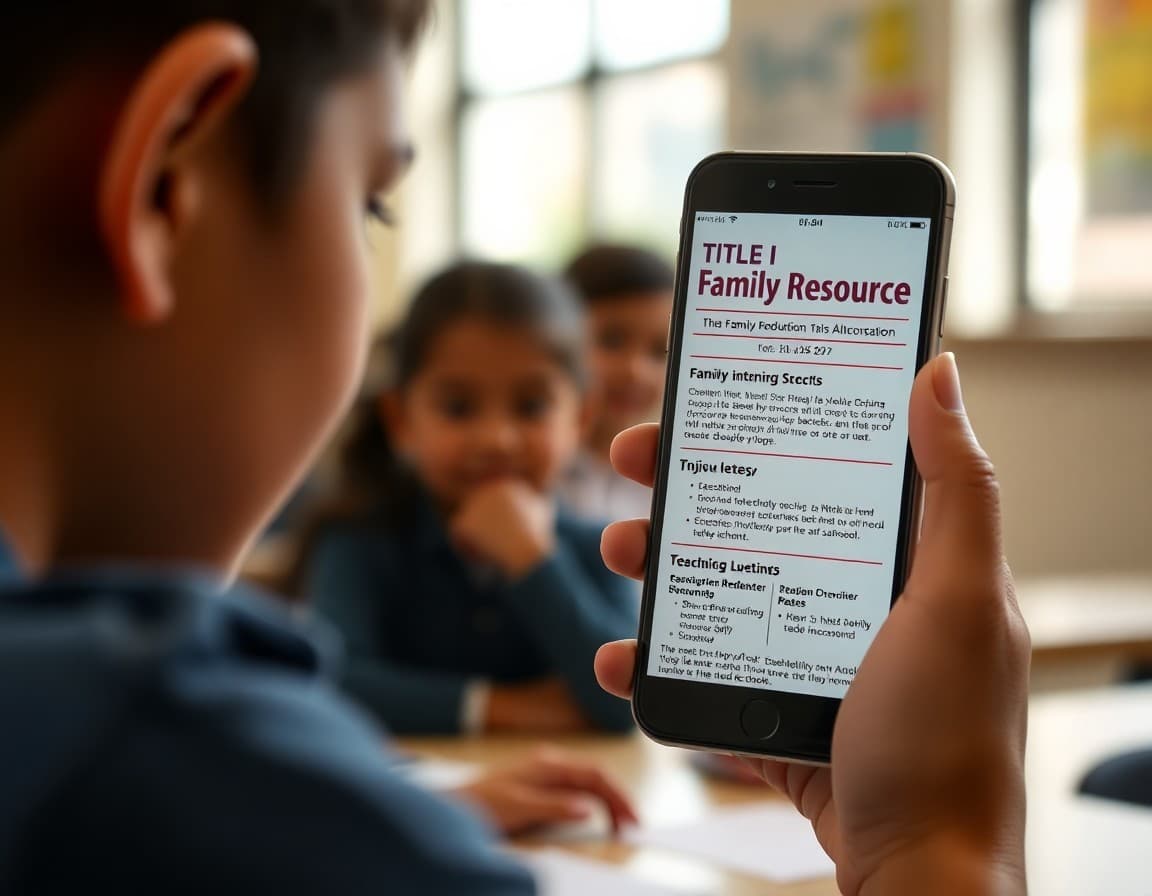
The most common mistake in Title I school communication is writing as if all families have the same background knowledge, literacy levels, and relationship with schools that educators do. Many Title I families had difficult school experiences themselves. Many read English as a second language. Many access newsletters on a smartphone during a brief break at work. Write every sentence as if the reader is smart, busy, and deserves to understand what you are saying without having to work for it. Short sentences. Plain words. No jargon.
Lead with Accomplishments, Not Deficits
Title I schools are often framed in deficit language: achievement gaps, underperforming students, communities in need. That framing is not useful in a family newsletter and it is not accurate. Your school has genuine accomplishments every single month. Lead with them. "This month, 84 students in our after-school program attended all 18 sessions. Our 3rd-grade reading data shows 12 students who started the year below benchmark are now reading at grade level. That is the result of consistent work by students, teachers, and families." Celebrate specific accomplishments with real numbers.
Connect Families to Resources Directly
Title I families often have more urgent life logistics than families in more affluent communities: housing instability, food access, immigration questions, healthcare access. A principal who connects families to school and community resources in the newsletter, without condescension, provides genuine value. "Free dental screenings for school-age children are available at the Riverside Health Center through the end of November. Call 555-0123 to schedule. No insurance required. Our school counselor can also connect families with resources for food, clothing, and emergency assistance. Call the front office and ask for Ms. Reyes."
Fulfill Title I Communication Requirements Clearly
Federal Title I requirements include annual notifications, family engagement events, and the school-parent compact. The newsletter is an efficient place to announce these requirements and invite participation: "Our annual Title I Family Engagement Night is November 7 at 5:30pm. Dinner and childcare are provided. We will share our school's academic data and our plan for this year, and we will sign our school-parent compact together. Your attendance matters. We are required to hold this event, but more importantly, the conversations we have there shape what we do next."
A Template Excerpt for a Title I Newsletter
"Hello from Jefferson Elementary. Here is what happened this month: our 2nd graders completed their first independent reading unit. Thirty-one students read a full book on their own. That is 31 more than we had in September. Our food pantry distribution on October 14 served 48 families. Thank you to the parent volunteers who organized it. Resources: free tutoring every Tuesday and Thursday from 3-5pm in Room 7. No signup needed. ESL night classes for adults resume November 4 at 6pm in the library. Free. Open to all community members. Coming up: report cards go home November 8. Our parent conference sign-up opens November 1 at school.edu/conferences."
Build Consistent Communication Rhythms
Inconsistent communication from a school reinforces the distrust that some Title I families carry from previous school experiences. A newsletter that arrives on the same day every week or month builds a predictable relationship. Families who know to expect communication from you on Fridays are more likely to look for it than families who receive sporadic messages at unpredictable intervals. Consistency signals that the school is organized and that families matter to it.
Honor the Community's Strengths
Title I communities have enormous strengths: resilience, extended family networks, cultural richness, and a deep investment in children's futures. A principal newsletter that honors those strengths, that celebrates family contributions specifically and names the community as a strength rather than a challenge, builds the kind of trust that makes everything else in the school work better.
A Title I school newsletter that is accessible, specific, and honest builds the family trust that is the foundation of school improvement. Families who feel respected, informed, and connected to a school support it with their presence, their advocacy, and their effort at home. That support is the most powerful resource any principal has.
Get one newsletter idea every week.
Free. For teachers. No spam.
Frequently asked questions
What are the Title I family communication requirements?
Title I schools are required by federal law to notify families of their child's school's Title I status, provide an annual school-parent compact, offer family engagement events, and share qualification status for programs like the right to request a teacher's qualifications. The principal newsletter is not a substitute for those requirements, but it supports and reinforces them.
How do I write a newsletter that reaches families in a Title I school?
Prioritize clarity, brevity, and accessibility. Use short sentences, plain language, and section headers. If your community includes families who speak languages other than English, translate or summarize the newsletter in those languages. Avoid educational jargon entirely. Assume families are reading on a phone with limited time. Make every sentence earn its place.
Should a Title I school newsletter address poverty or economic challenges directly?
Address resources and opportunities directly, without framing the community as a problem. 'We have free tutoring available after school on Tuesdays and Thursdays' is useful. 'For families struggling economically' is othering. Connect families to resources clearly and respectfully, treating them as capable adults who benefit from knowing what is available.
How do I build family trust in a Title I school through newsletters?
Be consistent. Send newsletters on a predictable schedule so families come to expect them. Be specific about what students are accomplishing, not just what challenges exist. Invite participation in ways that are genuinely accessible, evening events with childcare, weekend opportunities, phone-based engagement. Families who feel respected and included trust the school more over time.
What newsletter platform helps Title I schools reach families on mobile devices?
Daystage is a strong fit for Title I school communication because the mobile-first design ensures newsletters look clean and readable on the phones that most families in these communities use as their primary internet access. The ability to track open rates also helps principals understand which communication formats are reaching families and which are not.

Adi Ackerman
Author
Adi Ackerman is a former classroom teacher and curriculum writer with 8 years in K-8 schools. She writes about school communication, parent engagement, and what actually works in real classrooms.
More for Principals
Ready to send your first newsletter?
3 newsletters free. No credit card. First one ready in under 5 minutes.
Get started free