
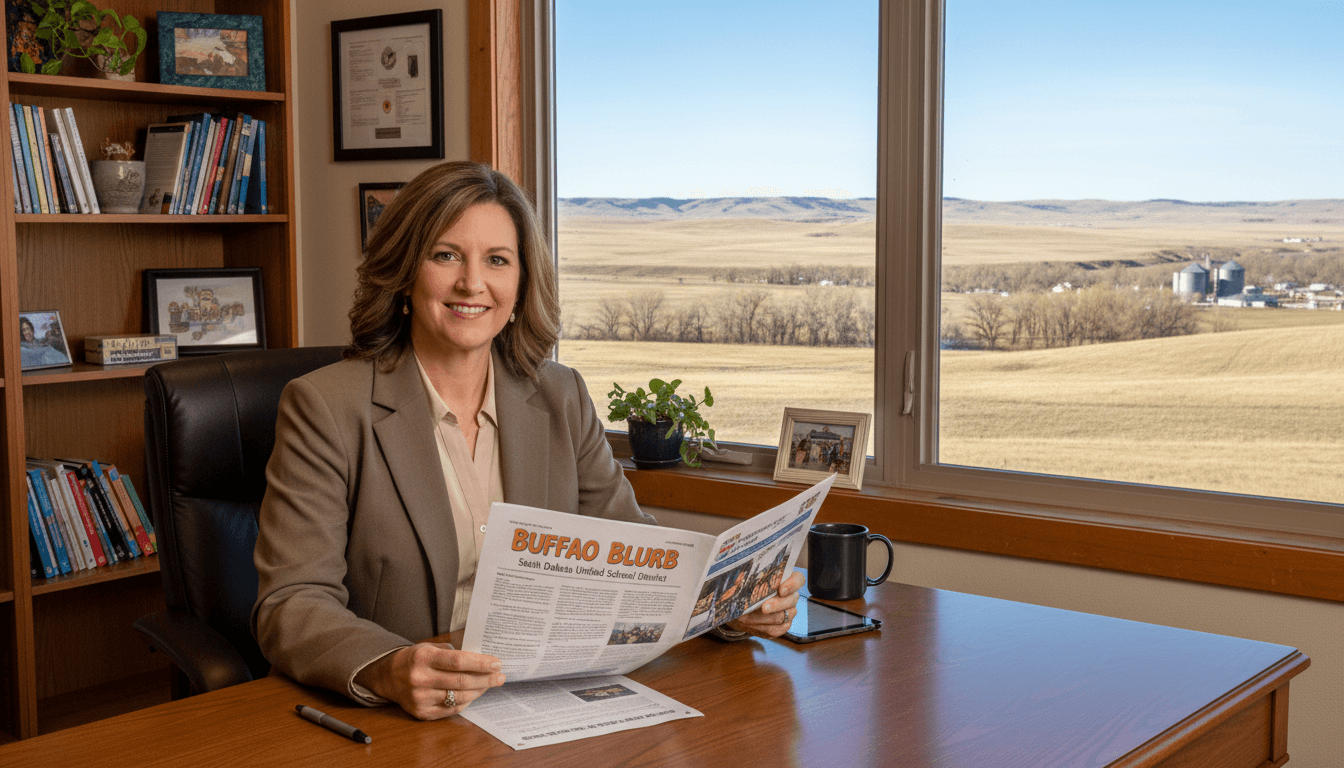
The South Dakota Principal Newsletter Guide

South Dakota principals serve one of the most geographically and culturally diverse K-12 landscapes of any state its size. Sioux Falls has grown into a mid-sized city with suburban school demographics. Rapid City sits at the edge of the Black Hills with a school district that serves both urban and reservation-adjacent communities. The Pine Ridge, Rosebud, Standing Rock, Cheyenne River, and other Lakota and Dakota communities are served by both Bureau of Indian Education schools and South Dakota public school districts. And across the vast agricultural counties of central and western South Dakota, rural principals serve communities where the school is the heart of the town. Each setting demands a different approach to the principal newsletter.
What South Dakota parents expect from principal newsletters
Sioux Falls parents in the Sioux Falls School District, the state's largest, expect professional communication that reflects the district's growth and educational quality. Sioux Falls has grown significantly in recent years and now has a more diverse community than it did a decade ago, including a substantial refugee and immigrant population in some neighborhoods. Principals serving those communities benefit from multilingual communication.
Rapid City Area Schools principals serve a population that includes a significant Native American student population, one of the highest shares in any non-reservation South Dakota district. Rapid City parents from both Native and non-Native communities expect transparent communication about school performance and available supports. Rural South Dakota parents want newsletters that reflect the community's agricultural identity and that schedule communication around the realities of planting and harvest seasons.
South Dakota education compliance communication requirements for principals
- Smarter Balanced pre-testing communication: Before the spring Smarter Balanced window, principals must communicate testing dates for grades 3 through 8 and grade 11 in English language arts and math, and science assessments at applicable grade levels. Parent rights related to testing must be communicated annually.
- Smarter Balanced results distribution: When South Dakota DOE releases results in the fall, principals must distribute individual student score reports with explanatory materials to families.
- Title VI Indian Education notifications: Principals serving schools with Native American students must communicate annually about Indian Education program opportunities, Title VI eligibility, and parent committee rights.
- Title I family engagement obligations: Title I principals must hold annual meetings, distribute school-parent compacts, and communicate the family engagement policy.
- Graduation requirements (high school only): South Dakota high school principals must communicate credit requirements and senior milestone deadlines annually.
- Attendance and discipline policies: South Dakota law requires annual communication of attendance requirements and student discipline policies to families.
- School accountability report: When South Dakota DOE releases school accountability ratings, principals should communicate their school's performance level to families with appropriate context.
Understanding South Dakota's Smarter Balanced assessments
South Dakota uses Smarter Balanced assessments for English language arts and math in grades 3 through 8 and grade 11. Science is assessed at grades 5, 8, and high school using NGSS-aligned tools. Smarter Balanced results use four achievement levels, where Level 3 represents the standard threshold that South Dakota DOE uses for accountability purposes.
When communicating Smarter Balanced results, present the four levels in concrete language. A student at Level 3 is performing at grade-level expectations. A student at Level 1 or 2 is below those expectations and benefits from additional support. When writing about your school's overall results, put them in the context of what the school is doing instructionally and what supports are available. Rural South Dakota parents who have never attended a state assessment briefing benefit from clear, straightforward explanation far more than from technical accountability language.
Tribal education and reservation-adjacent schools
South Dakota has nine federally recognized tribes, and their communities are among the most educationally underserved in the United States. For principals in districts like Todd County (Rosebud Sioux Tribe), Shannon County in the Pine Ridge area, or districts that serve significant Standing Rock and Cheyenne River Sioux populations, the newsletter must do more than distribute school logistics. It must signal that the school is a genuine partner in the community's future.
This means acknowledging tribal holidays and events in the school calendar section of the newsletter. It means communicating about Indian Education programs, cultural programs, and Native language support when they are available. It means framing assessment communication in a way that describes opportunity and support rather than deficit. The most effective principals in reservation-adjacent schools treat the newsletter as a relationship document, not a compliance document.
Rural agricultural communities and seasonal communication
South Dakota's agricultural districts in the Missouri Coteau, the James River Valley, and the western ranch country have school calendars that intersect with planting and harvest seasons in ways that urban principals do not have to consider. Families during fall harvest and spring planting have less time to engage with newsletters. Keep editions during those windows shorter and focus on the most critical information. In contrast, winter months when agricultural activity slows are a good time for longer community-building content.
Rural principals should also consider that not all families have reliable broadband. Mobile data is often the primary internet access in rural South Dakota counties. A newsletter that loads as a direct email rather than requiring a click-through to a website serves these families better.
South Dakota school calendar events to always cover in newsletters
- Smarter Balanced testing window (spring, grades 3-8 and grade 11)
- Science assessment window (spring, grades 5, 8, and high school)
- Smarter Balanced results release and score report distribution (fall)
- South Dakota DOE school accountability rating release
- Indian Education program enrollment and parent committee dates
- Report card distribution dates
- Parent-teacher conference schedule and sign-up process
- Professional development days and school closure dates
- Title I annual meeting (Title I schools)
- Graduation requirement milestones and senior deadlines (high school)
Building a newsletter system for South Dakota's diverse communities
South Dakota's combination of urban growth, tribal community complexity, and rural agricultural identity makes a single-size newsletter strategy inadequate. The most effective South Dakota principals build their template with the state's predictable communication moments pre-scheduled and then adapt the tone and content to their specific community each week. Daystage supports that approach with school-specific templates that are easy to customize, direct-to-inbox delivery that works on mobile data, and an AI writing assistant that helps draft Smarter Balanced and Indian Education content in plain language. Free plan at daystage.com.
Get one newsletter idea every week.
Free. For teachers. No spam.
Frequently asked questions
How often should a South Dakota school principal send a newsletter?
Weekly is the right cadence for most South Dakota principals. The Smarter Balanced testing window in spring, results in the fall, and the communication demands specific to tribal schools and rural agricultural communities all benefit from consistent weekly communication rather than monthly bursts. For rural South Dakota principals, the weekly newsletter is often the primary channel for reaching families who may not attend school events regularly due to distance or agricultural work schedules.
What must a South Dakota principal include in the back-to-school newsletter?
The first newsletter should cover school schedule, staff introductions, Smarter Balanced testing windows for the applicable grades, report card dates, parent-teacher conference dates, and your communication plan for the year. For principals on or near reservations, the opening newsletter is also an appropriate place to acknowledge the school's commitment to serving the tribal community and to communicate any tribal education programs or Native American student services available at the school.
How should South Dakota principals communicate about Smarter Balanced results?
South Dakota DOE releases Smarter Balanced results in the fall. Send a dedicated newsletter when results are available, explaining the four achievement levels in plain language, sharing your school's overall proficiency rates, and describing what instructional supports are in place for students who did not reach Level 3. For schools serving significant Native American populations, contextualize results honestly and describe the culturally responsive supports and tribal education partnerships that are part of the school's approach to student success.
What South Dakota-specific compliance requirements must principals communicate?
South Dakota principals must communicate Smarter Balanced testing dates and parent rights annually before the spring window. Principals serving schools with Native American students must communicate Indian Education program opportunities and parent committee rights under Title VI. Title I principals must hold annual meetings and distribute family engagement policies. High school principals must communicate graduation requirements and any changes to South Dakota's credit requirements. All principals must communicate attendance and discipline policies annually under South Dakota state law.
What is the best newsletter tool for principals in South Dakota?
Daystage works well for South Dakota principals because it delivers newsletters directly into parent inboxes without requiring a click-through to a separate webpage. In rural South Dakota where internet connectivity may be limited to mobile data, direct-to-inbox delivery loads faster than link-based newsletter tools that redirect to external websites. The platform has school-ready templates that South Dakota principals can use to build a consistent weekly communication workflow in under 30 minutes. Free plan available at daystage.com, no credit card required.

Adi Ackerman
Author
Adi Ackerman is a former classroom teacher and curriculum writer with 8 years in K-8 schools. She writes about school communication, parent engagement, and what actually works in real classrooms.
More for Principals
Ready to send your first newsletter?
3 newsletters free. No credit card. First one ready in under 5 minutes.
Get started free