

Annual Planning for Your School Newsletter: Map the Whole Year in August
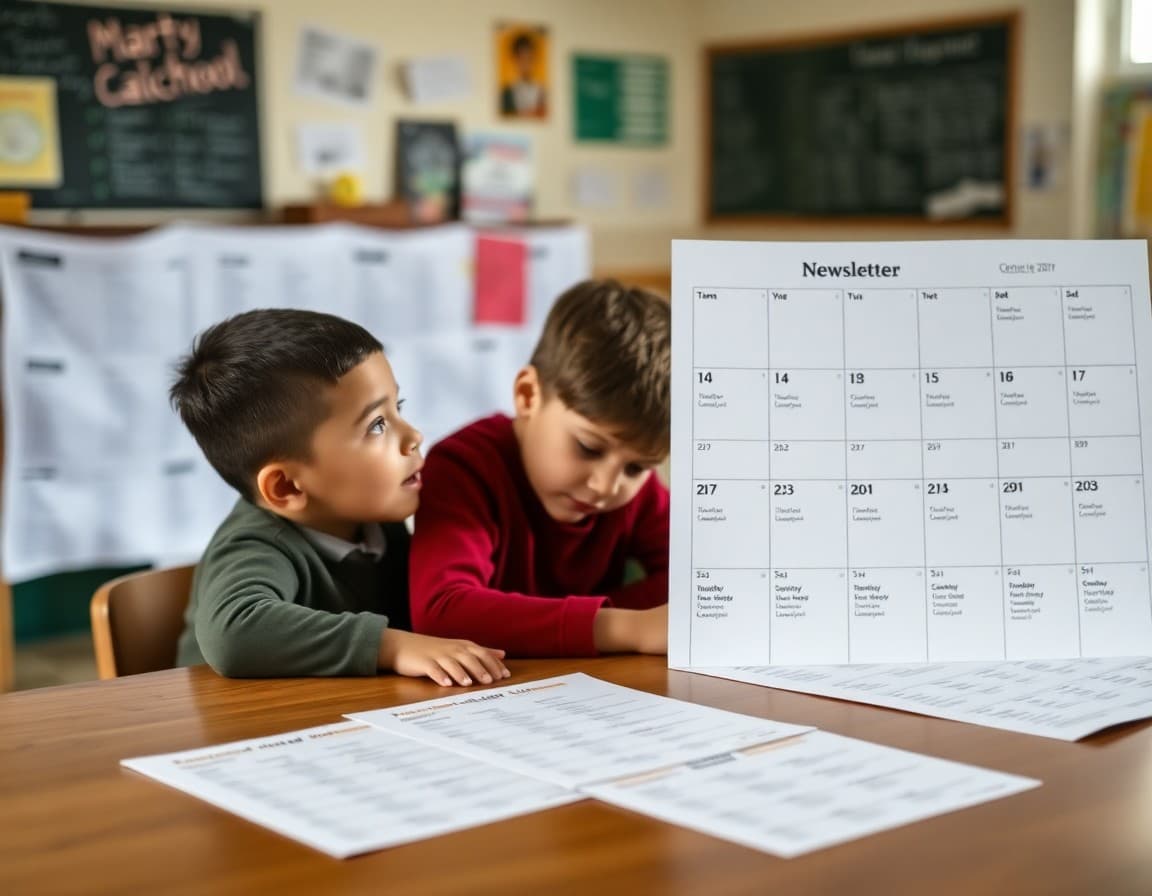
The principals who send the most consistent, useful newsletters are not the ones who find the most time to write. They are the ones who planned ahead. An August morning with a blank calendar, a list of school year milestones, and 45 minutes is all you need to build a newsletter content calendar that makes every monthly send predictable.
The August planning session
Before school starts, open your school year calendar and your newsletter planning document side by side. For each month, identify:
- The send date (first Tuesday, last Wednesday, whichever you chose and announced)
- The main theme or focus: what is happening in this month that families need to know about?
- Non-negotiable sections: what specific content must be in this month's newsletter? (Testing dates in March, spring events in April, summer programs in May)
- Any special newsletters that month: pre-break, post-break, survey results
The predictable content calendar by month
Most of your newsletter content maps directly to the school year rhythm:
- August / pre-school: Welcome back, new staff, policy changes, first-day logistics
- September: First observations from the building, October calendar, attendance expectations, back-to-school night
- October: First progress report context, fall events, family survey launch (if applicable)
- November: Food drive, Thanksgiving break logistics, survey results (if applicable), conference recaps
- December: Winter performance, winter break resources, year-end semester reflection, January logistics
- January: New semester goals, second-semester calendar, attendance data
- February: Black History Month content, spring program previews, testing window preview
- March: Testing preparation guide, spring break logistics, summer program pre-announcement
- April: Spring return, end-of-year event calendar, senior milestones (high school)
- May: Summer programs, graduation prep, final calendar
- June: Year-end reflection, summer resources, first day of next year preview
Building in flexibility
The annual plan is a skeleton, not a script. Every month will have content from the building that you could not have anticipated in August: a problem that needed to be addressed, an achievement worth celebrating, a policy change triggered by external events. The plan does not eliminate that content. It just ensures that the predictable content is already mapped, so you are only writing the new material each month.
The time investment is front-loaded
The August planning session takes 45 minutes to an hour. Every monthly newsletter after that takes significantly less time because you already know what the section headers are, what dates belong in the events section, and what the core theme is. You are not starting from scratch. You are filling in a structure.
Daystage supports this approach by letting you save and duplicate templates, maintain consistent structure across newsletters, and schedule sends in advance. The August plan maps the year. Daystage handles the delivery.
Get one newsletter idea every week.
Free. For teachers. No spam.
Frequently asked questions
Why should principals plan newsletters a full year in advance?
Annual planning removes the last-minute scramble from newsletter creation. When you know in August that your February newsletter will focus on testing preparation and your May newsletter will cover end-of-year events, you can prepare content in advance, coordinate with teachers, and block calendar time without guessing what you need to cover. The newsletter becomes a system rather than a monthly emergency.
How detailed does the annual newsletter plan need to be?
A one-page grid is enough. Twelve rows, one per month. Each row has the send date, the main theme, the non-negotiable sections (events specific to that month), and any special content (transition information, testing guides, survey results). The detailed content is drafted monthly. The planning document is just the skeleton.
What content is predictable enough to plan a year in advance?
Seasonal themes (back to school, testing season, end of year), recurring sections (attendance data, student spotlight, principal message), annual events (fall conferences, spring performances, graduation), and the newsletter that accompanies each major school milestone. About 60 to 70 percent of your newsletter content can be planned in August.
What should I leave flexible in the annual plan?
The principal message, the specific observations from the building, any response to school-wide incidents or unexpected events, and any mid-year policy changes. The annual plan creates the structure. What happens in the school fills the structure with real content.
What tool helps principals send newsletters efficiently?
Daystage supports scheduled sends, which means you can draft newsletters in advance and schedule them to go out on specific dates. The annual planning approach works best with a tool that lets you prepare content ahead of time.

Adi Ackerman
Author
Adi Ackerman is a former classroom teacher and curriculum writer with 8 years in K-8 schools. She writes about school communication, parent engagement, and what actually works in real classrooms.
More for Principals
Ready to send your first newsletter?
3 newsletters free. No credit card. First one ready in under 5 minutes.
Get started free