

The South Carolina Principal Newsletter Guide
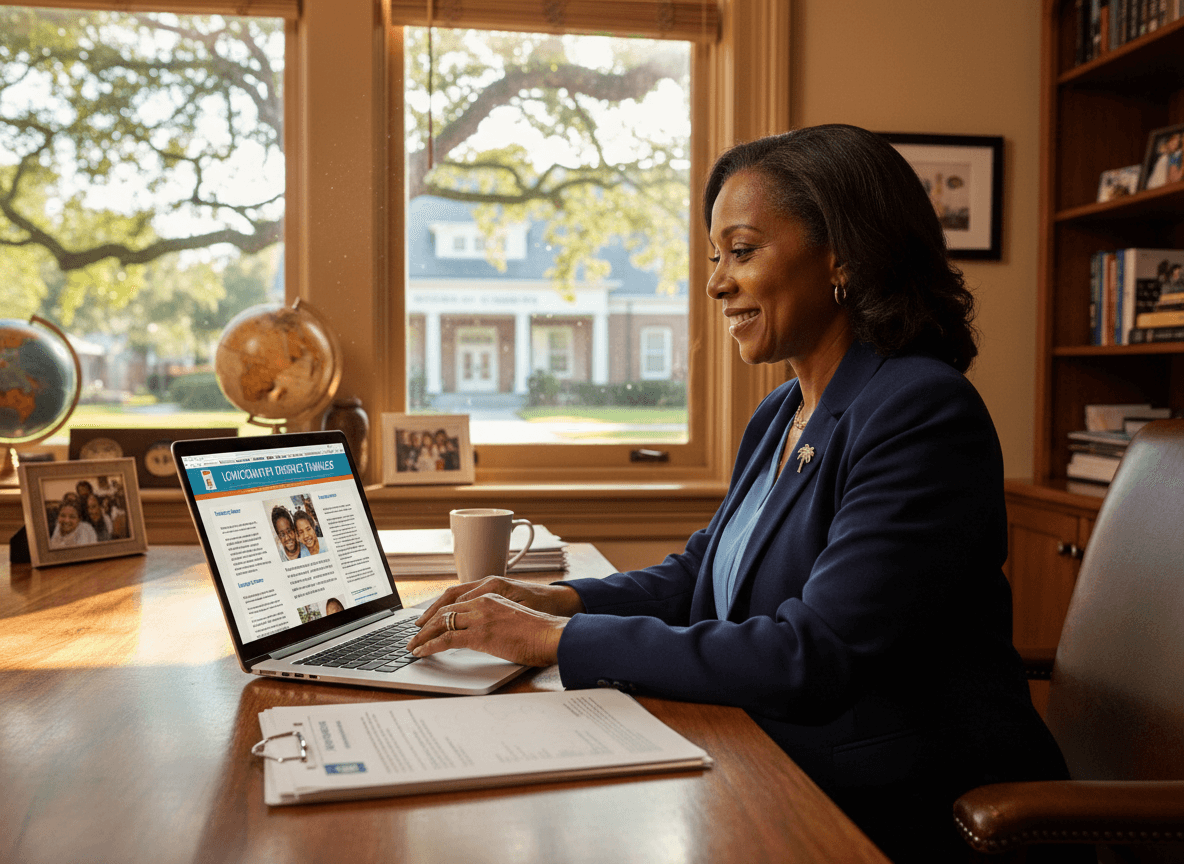
South Carolina principals operate inside an accountability system that puts school performance information directly in front of families every year. SCDE's school report cards use A-F letter grades, SC READY and SC PASS results are publicly accessible, and the Read to Succeed literacy law creates specific intervention and communication obligations for principals with K-3 grades. In this environment, the principal newsletter is not optional. It is the tool that puts your school's story in your own voice before a rating system tells it for you.
What South Carolina parents expect from principal newsletters
Columbia parents in Richland and Lexington County districts use school performance data actively when making enrollment choices. A principal who communicates transparently about assessment results, improvement efforts, and school culture builds the kind of trust that a report card grade alone cannot sustain. Families in Columbia's suburban corridors expect professional, substantive communication that reflects academic rigor.
Charleston County School District parents in the Lowcountry span a wide range of communities, from the affluent neighborhoods of the Charleston Peninsula to Title I schools in North Charleston and the Sea Islands. Greenville County Schools is the state's largest district and serves communities from affluent suburban neighborhoods to rural upstate communities and a growing Hispanic population in Greenville city schools. Each of these communities has different expectations, and the most effective principals adjust their newsletter tone and emphasis to match their specific community, not a generic South Carolina school.
South Carolina education compliance communication requirements for principals
- Read to Succeed screening notifications: Principals with grades K-3 must communicate reading screening results to parents of students not meeting grade-level benchmarks, along with the individualized reading plan and available interventions.
- Third-grade retention communication: Principals must communicate the Read to Succeed promotion and retention criteria to families with students in grade 3, including all good cause exemption categories, no later than the fall of the third-grade year.
- SC READY and SC PASS pre-testing communication: Before the spring testing window, principals must communicate testing dates, which grades and subjects are assessed, and parent rights related to the state assessments.
- SC READY and SC PASS results distribution: When SCDE releases results, principals must distribute individual student score reports with explanatory materials to families.
- School report card communication: When SCDE releases the annual school report card with A-F ratings, principals must communicate their school's rating to families along with context about what the rating measures and the school's improvement plan.
- Title I family engagement obligations: Title I principals must hold annual meetings, distribute school-parent compacts, and communicate the family engagement policy.
- Graduation requirements (high school only): South Carolina high school principals must communicate credit requirements and senior milestone deadlines annually.
Understanding SC READY, SC PASS, and how to explain them to parents
SC READY assesses English language arts and math in grades 3 through 8. SC PASS assesses science and social studies in grades 4, 5, 6, and 7. Results use four performance levels: Not Met, Approached, Met, and Exceeded. "Met" is the grade-level proficiency threshold. When communicating results, explain that "Met" means the student is performing at grade level expectations for that subject, and that "Not Met" or "Approached" means targeted support is available and needed.
The SCDE school report card uses a weighted formula combining multiple performance indicators into an A-F rating. Principals who communicate the report card rating in their own voice on the day it is released shape the narrative before local media does. A strong communication explains what went well, where the school is focused on improvement, and what families can do to support the school's goals. Silence on the day of release leaves the interpretation entirely to others.
Read to Succeed: turning compliance into partnership
The Read to Succeed literacy law creates mandatory screening, intervention, and communication obligations for South Carolina principals with K-3 grades. The law also creates an opportunity. Families who receive clear, timely communication about their child's reading development are better positioned to provide at-home support. The principals who get the most out of Read to Succeed use the required communications as a foundation for a genuine reading partnership with families, not just a compliance checkbox.
When you send a reading screening result, include specific strategies the family can use at home. When you communicate an individualized reading plan, explain what the school will do and what the family's role is. When you discuss retention criteria in the fall, be clear and calm, not alarming. Most Read to Succeed students who receive effective early intervention do not face retention. Parents who understand that from the start are far easier to partner with than those who are surprised by retention conversations in the spring.
Columbia, Charleston, and Greenville: regional communication nuances
Greenville County Schools has seen rapid demographic growth in Greenville city, including a significant and growing Hispanic community. Principals in Greenville city schools who serve Spanish-speaking families should produce bilingual newsletters as a baseline. The growth of Hispanic families in Spartanburg County and the upstate region more broadly means this consideration extends beyond Greenville city limits.
Charleston County principals in North Charleston and the Sea Islands serve communities with Gullah Geechee heritage, one of South Carolina's most distinctive cultural communities. Newsletters that acknowledge and celebrate that heritage build a different quality of family connection than generic school communication. Columbia and the Midlands region serve a broad mix of urban and suburban families, and principals there have the most flexibility in tone, ranging from professional and academic to warm and community-focused depending on their school's identity.
South Carolina school calendar events to always cover in newsletters
- Read to Succeed reading screening windows (fall, winter, spring for K-3)
- SC READY and SC PASS testing window (spring)
- SC READY and SC PASS results release and score report distribution (fall)
- SCDE school report card release and your school's A-F rating
- Third-grade retention and promotion criteria communication (fall)
- Report card distribution dates
- Parent-teacher conference schedule and sign-up process
- Professional development days and school closure dates
- Title I annual meeting (Title I schools)
- Graduation requirement milestones and senior deadlines (high school)
Building a newsletter system for South Carolina principals
South Carolina's combination of Read to Succeed obligations, SC READY and PASS communication requirements, and the A-F school report card release creates a predictable set of high-stakes communication moments each year. Building your newsletter calendar in August with those moments pre-scheduled means you are updating content in a pre-built framework when the dates arrive, not writing from scratch under pressure. Daystage helps South Carolina principals build that system once and run it efficiently all year. Direct-to-inbox delivery, school-specific templates, and an AI writing assistant that handles Read to Succeed plain-language communication make the weekly newsletter something that gets done rather than pushed back. Free plan at daystage.com.
Get one newsletter idea every week.
Free. For teachers. No spam.
Frequently asked questions
How often should a South Carolina school principal send a newsletter?
Weekly is the recommended cadence for South Carolina principals. The SC READY and SC PASS testing windows, Read to Succeed screening and intervention checkpoints, and the SCDE annual school report card release all create specific communication moments throughout the year. A monthly newsletter cannot address these events adequately without becoming overloaded. Weekly newsletters also build the family engagement habit that Read to Succeed's family literacy components are designed to support.
What must a South Carolina principal include in the back-to-school newsletter?
The opening newsletter should cover school schedule, staff introductions, SC READY and SC PASS testing windows for the applicable grades, Read to Succeed reading screening dates for K-3, your school's report card rating from the prior year with brief context, report card dates, and your family communication plan for the year. Families who understand the assessment and accountability calendar from August are far better prepared for testing season and less likely to be surprised by accountability results.
How should South Carolina principals communicate about SC READY results?
SCDE releases SC READY results in the fall. Send a dedicated newsletter when results are available, explaining the four performance levels (Not Met, Approached, Met, Exceeded) in accessible language, sharing your school's proficiency rates in context, and describing what intervention and enrichment supports are in place. For Read to Succeed principals, a separate communication about reading screening results and any reading intervention plans is required for families of students not reading at grade level by the end of third grade.
What South Carolina-specific compliance requirements must principals communicate?
South Carolina principals must communicate Read to Succeed reading screening results and individualized reading plans to families of students not meeting grade-level reading benchmarks. Third-grade principals must communicate the promotion and retention criteria under Read to Succeed, including the good cause exemptions. All principals must communicate the SCDE annual school report card when released. High school principals must communicate graduation requirements and the state's updated assessment and credit requirements. Title I principals must hold annual meetings and distribute family engagement policies.
What is the best newsletter tool for principals in South Carolina?
Daystage works well for South Carolina principals because it delivers newsletters directly into parent inboxes without requiring a click-through to a separate webpage. Columbia, Charleston, and Greenville principals serving communities with lower digital engagement see measurably better open rates with direct-to-inbox delivery. The platform's AI writing assistant helps principals explain Read to Succeed requirements in plain language and draft individualized reading plan communications that are clear and supportive rather than clinical. Free plan at daystage.com, no credit card required.

Adi Ackerman
Author
Adi Ackerman is a former classroom teacher and curriculum writer with 8 years in K-8 schools. She writes about school communication, parent engagement, and what actually works in real classrooms.
More for Principals
Ready to send your first newsletter?
3 newsletters free. No credit card. First one ready in under 5 minutes.
Get started free