

Student Goal-Setting Newsletters: Helping Families Reinforce What School Starts
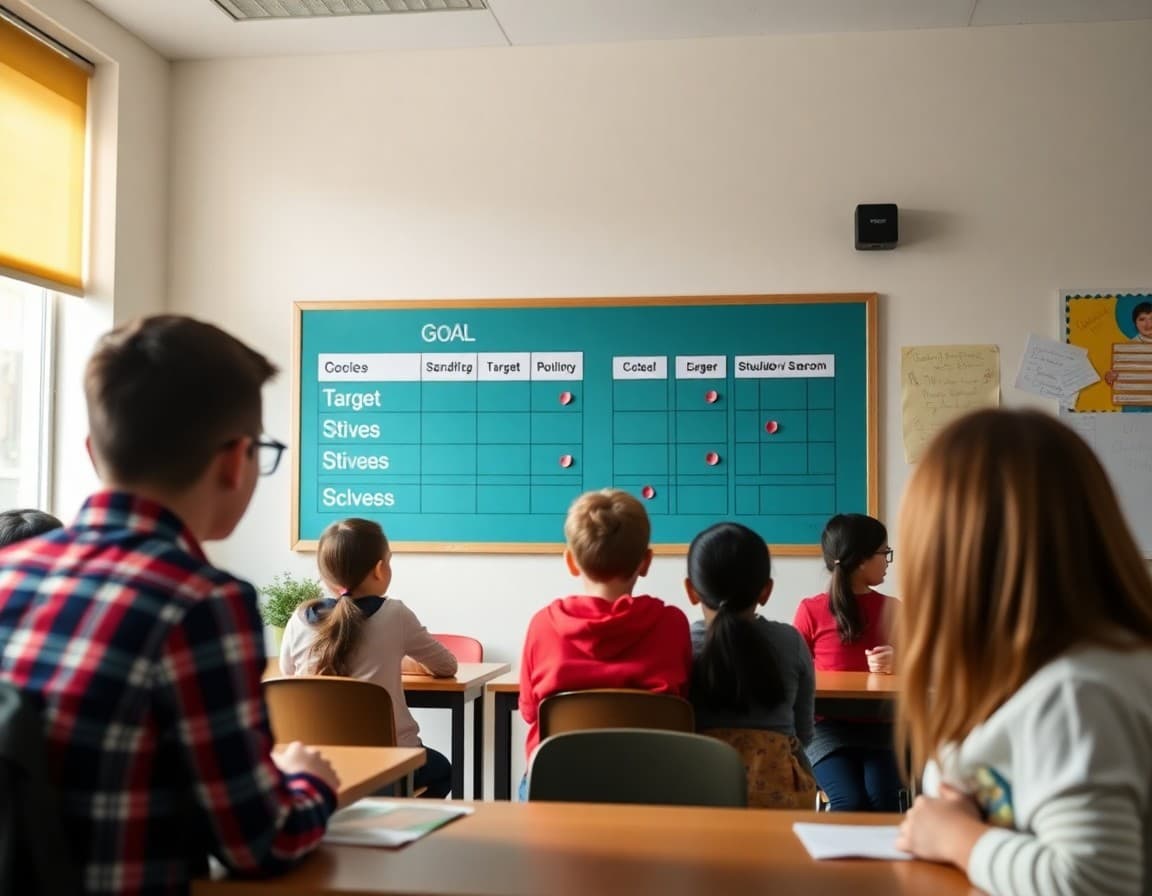
Student goal-setting is one of the most powerful tools in a school's instructional toolkit, and one of the most underexplained to families. When families understand how goal-setting works at school and have specific language to reinforce it at home, students get twice the practice at half the cost. The newsletter is how you give families that language.
Explain what student goal-setting looks like at your school
Goal-setting programs vary enormously. The newsletter should describe what is actually happening at your school:
- Do students set goals at the beginning of each quarter, semester, or grading period?
- Are goals academic, behavioral, or both?
- Who is involved in the goal-setting conversation: the student alone, the teacher, or the student and family together?
- How is progress tracked and when is it shared?
Families who know the structure can ask meaningful questions. Families who only know 'they set goals' cannot.
Describe what good goals look like
Share a brief example of the difference between a vague goal and a useful one:
Vague:'I want to do better in reading.'
Useful:'I will finish one chapter book by October 30 and be able to describe the main character's motivation.'
Families who see this distinction can encourage their child to make the same distinction at home. A parent who asks 'what is your goal?' in October and hears the vague version can redirect toward the useful version without a lesson plan.
Give families three conversation starters
The newsletter should give families specific language they can use at the dinner table:
- 'What is one goal you are working on at school right now?'
- 'What did you do today that moved you closer to that goal?'
- 'What is one thing you could do differently tomorrow?'
These three questions build the reflection habit that makes goal-setting transfer from a school exercise to a genuine life skill.
Connect goal-setting to how teachers use the data
Families who understand that goal-setting is not just a motivation exercise but an instructional tool are more likely to take it seriously. Describe briefly how teachers use student goals to differentiate instruction: groups are formed, conferences are scheduled, and assignments are adjusted based on where students are relative to their targets.
Share a goal-setting milestone at the end of the period
At the end of each grading period, include a brief summary of what students accomplished. Not individual data, but collective: what percentage of students met their reading targets, what the class average improvement was in a specific skill, or a general description of the kinds of growth that happened. This closes the loop for families who invested in the goal-setting conversation at home.
Daystage makes it easy to send goal-setting newsletters at the right moment in the school calendar and include home-practice prompts that families can save and reference across the grading period.
Get one newsletter idea every week.
Free. For teachers. No spam.
Frequently asked questions
What should I tell families about student goal-setting in the newsletter?
What kind of goals students are setting, how goals are tracked, how progress is shared with students and families, and what families can do at home to reinforce the habit. Families who understand the structure of goal-setting at school can ask better questions than families who only hear that their child set a goal.
What is the difference between an academic goal and a behavioral goal for the purposes of the newsletter?
Both belong in the newsletter with different framing. Academic goals are skill-focused: finishing books at a certain level, improving math fluency, completing writing drafts. Behavioral goals are habit-focused: arriving prepared, asking for help, completing work on time. Families benefit from understanding which type their child is working on and why.
How do I help families talk about goals at home without turning it into nagging?
Give them specific questions rather than general encouragement. 'What did you do today that moved you toward your goal?' is more productive than 'How is your goal going?' The specificity shifts the conversation from compliance to reflection.
When is the best time to send a student goal-setting newsletter?
At the beginning of each grading period, when students are setting or resetting goals, and after a mid-period check-in. Three goal-focused newsletters per year keep families connected to the process without overwhelming them.
What tool helps principals send newsletters efficiently?
Daystage makes it easy to send timely goal-setting newsletters aligned to the school calendar with home conversation guides formatted for families to keep and use across the grading period.

Adi Ackerman
Author
Adi Ackerman is a former classroom teacher and curriculum writer with 8 years in K-8 schools. She writes about school communication, parent engagement, and what actually works in real classrooms.
More for Principals
Ready to send your first newsletter?
3 newsletters free. No credit card. First one ready in under 5 minutes.
Get started free