

Principal Newsletter: Communicating School-Wide Goals to Your Community
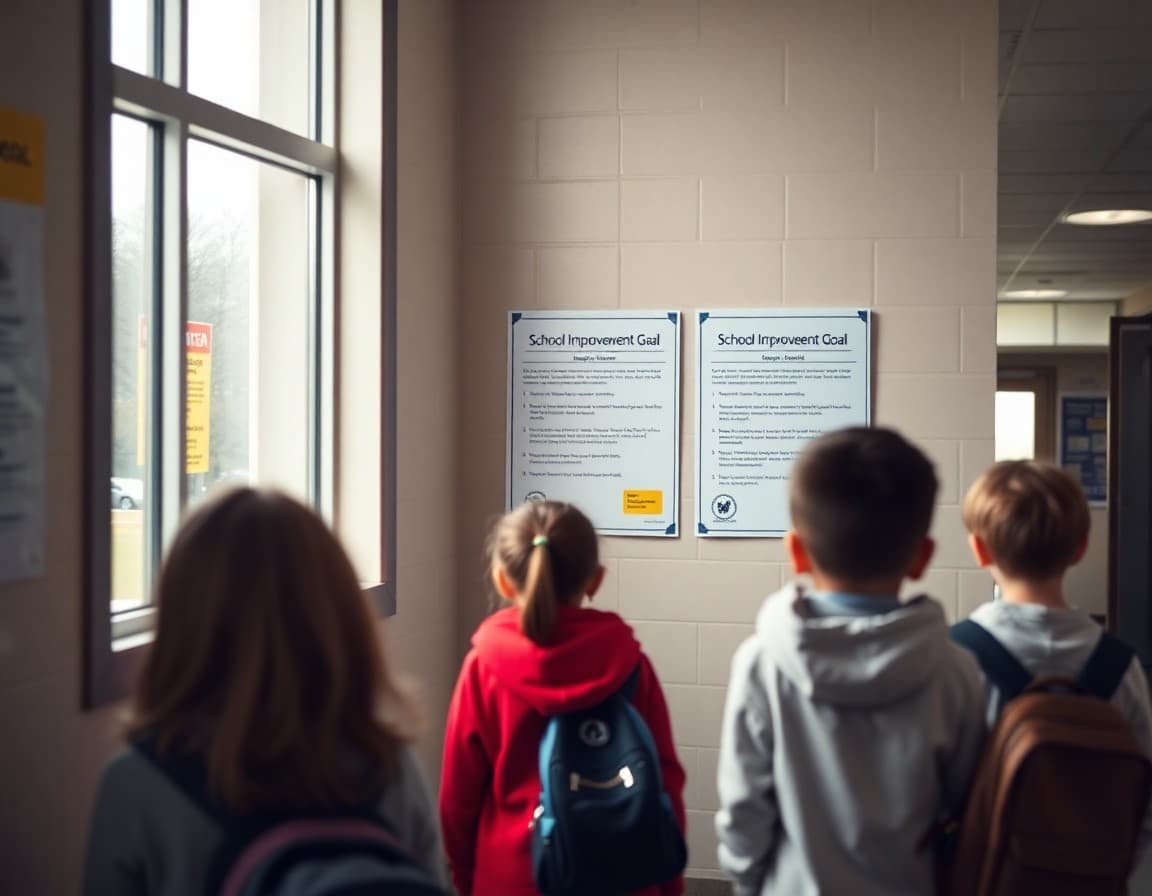
School-wide goals newsletters are typically sent at the start of the year and then never referenced again. That pattern makes goals feel like an annual ritual rather than a real commitment. The newsletter that launches your goals should be designed with the intention of referencing those goals again in October, January, and May.
Connect This Year's Goals to Last Year's Results
Families who receive a goals newsletter without context do not know whether the goals are ambitious, routine, or remedial. Connect each goal to a specific piece of prior-year data. "Our reading benchmark showed that 34% of students in grades K-3 ended the year below proficiency in phonics. Our first goal this year addresses that directly." That context makes the goal meaningful rather than declarative.
Name the Goals as Measurable Outcomes
Write each goal as a specific, measurable outcome. The current baseline, the target, and the timeline. "We will increase the percentage of third graders meeting the reading benchmark from 66% to 78% by June" is a goal. "We will improve reading achievement" is a wish. Families who see specific targets hold the school accountable. That accountability is useful, not threatening.
Describe the Strategies You Are Using
For each goal, name the specific changes in practice that will drive the result. New curriculum. Additional intervention time. Professional learning for teachers. A new family engagement strategy tied to the goal area. Without naming the strategies, goals float in the abstract. With strategies attached, families can see how the school expects to move the number.
Give Families a Specific Role
For each goal, tell families what they can do at home that directly contributes. For an attendance goal: establish a consistent morning routine and a homework completion habit before the sleep window. For a literacy goal: read aloud with their child three times per week and visit the library once a month. Specific family actions that connect to school goals create partnership rather than parallel effort.
Name How Progress Will Be Reported
Tell families when they will hear about progress toward each goal. The six-week update in October. The midyear check-in in January. The year-end report in June. When families know the reporting schedule, they expect accountability and ask about it. That expectation drives follow-through.
Keep It to One to Three Goals
If you share seven school-wide goals, families will remember zero. If you share two or three, focused and described well, those become the conversational frame for the year. School improvement plans often contain multiple goals, but a community-facing newsletter should surface the priorities most relevant to families. Daystage makes it easy to build a clean, focused newsletter that covers two goals with real depth rather than seven goals with none.
Get one newsletter idea every week.
Free. For teachers. No spam.
Frequently asked questions
How many school-wide goals should a principal communicate to families?
One to three. More than three dilutes focus and communicates that the school does not know how to prioritize. If your school improvement plan has six goals, pick the two or three that are most actionable for families and describe those. Save the full list for the board presentation.
Should goals be framed as outcomes or activities?
Outcomes. 'We will reduce chronic absenteeism from 22% to 16% this year' is a goal. 'We will focus on attendance' is an activity. Families who hear outcomes-based goals can evaluate progress over the year. Families who hear activity language cannot tell whether anything changed.
How do I communicate school-wide goals without making it feel like a corporate report?
Connect each goal to something specific that families already care about. Attendance is not a number; it is the hours of learning their child will have or miss. Reading proficiency is not a benchmark; it is whether their child has access to everything that follows from being a reader. Ground the goal in the concrete experience it describes.
How do I explain the connection between last year's results and this year's goals?
Name the prior year data that informed the goal. 'Last year, 24% of our students were chronically absent. This year's attendance goal responds directly to that.' Families who see the data connection trust that the goal is diagnostic rather than aspirational.
What tool helps principals send newsletters efficiently?
Daystage is designed for school newsletters. A school-wide goals announcement with data context, family action items, and a year-ahead preview can be formatted and sent to all families in one step.

Adi Ackerman
Author
Adi Ackerman is a former classroom teacher and curriculum writer with 8 years in K-8 schools. She writes about school communication, parent engagement, and what actually works in real classrooms.
More for Principals
Ready to send your first newsletter?
3 newsletters free. No credit card. First one ready in under 5 minutes.
Get started free