
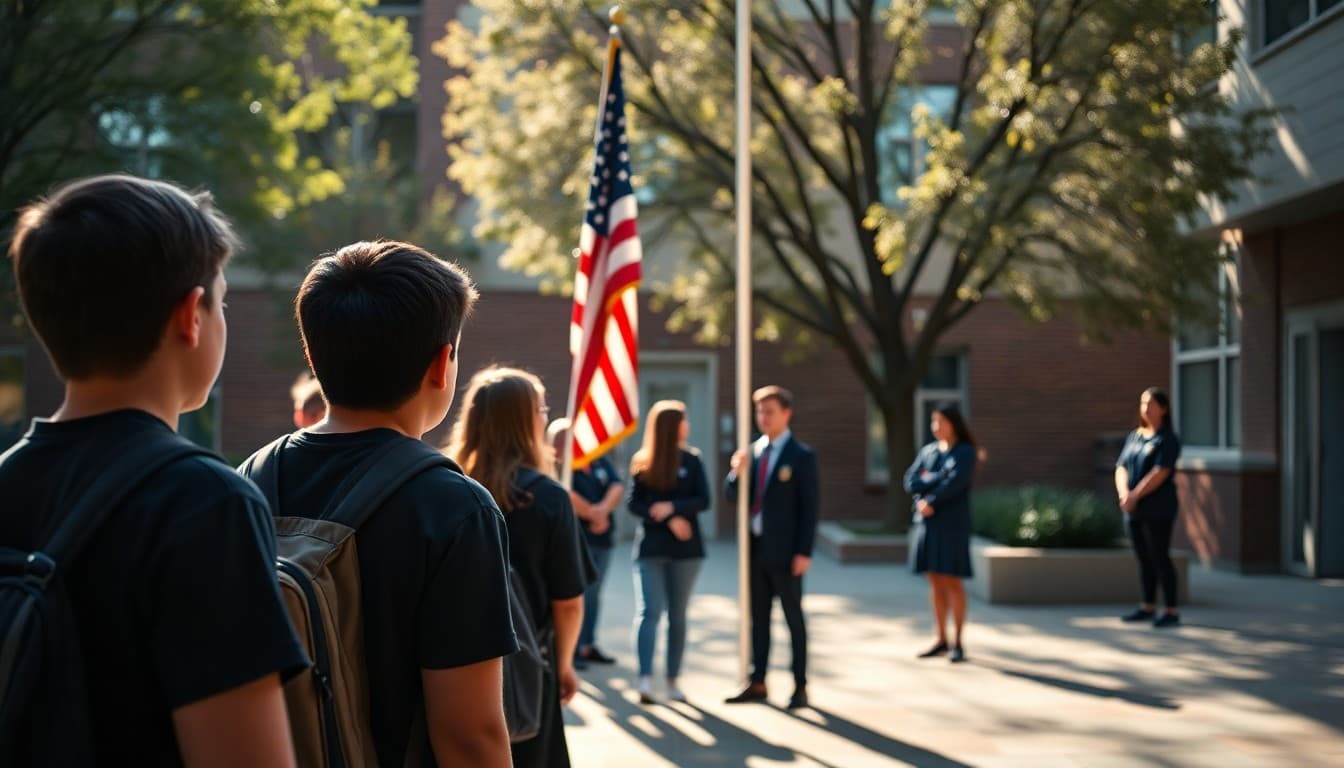
Principal Newsletter: Announcing a School Flag Ceremony to Families
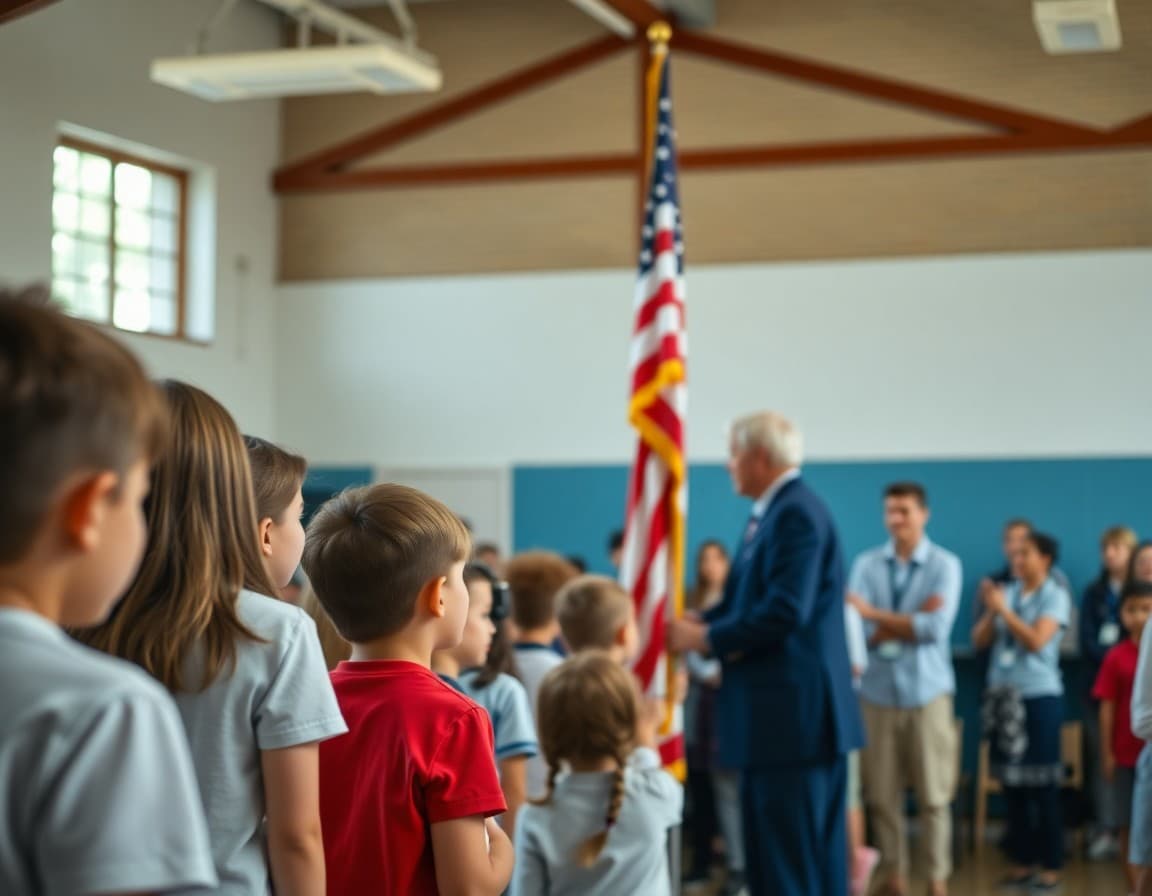
A flag ceremony newsletter does not need to be long. But it should do more than announce the date and time. The best flag ceremony communications explain the ceremony's context, connect it to something students are learning, and give families a reason to care about the event beyond logistics.
Name the Occasion
Start with the specific occasion the ceremony marks. Veterans Day. Memorial Day. The return from a break with a community-gathering purpose. The launch of a civics unit. A celebration of a school milestone. The occasion gives the ceremony meaning. A ceremony without a named occasion reads as a routine check-box rather than an intentional community moment.
Describe What Will Happen
Give families a clear picture of the ceremony itself. Who will lead it. Whether students are participating actively or observing. Whether there will be a speaker, a student performance, a moment of silence, or a specific pledge or pledge equivalent. The duration. Whether families are invited to attend.
Families who know what the ceremony involves are more likely to prepare their student for it and to attend if invited.
Connect to the Curriculum if Applicable
If the ceremony connects to a unit students are currently working on in social studies, history, or civics, name that connection. "Our ceremony on Friday aligns with the civics unit our fifth graders are finishing this week, which explored the history of civic participation rituals in the United States" gives the ceremony educational grounding and gives families a specific topic to follow up on at home.
Handle Participation Expectations Clearly
If attendance or participation is expected, say so. If students who observe without participating are treated differently, name the school's policy. If there are any symbolic elements that students are expected to perform or that they can opt out of, describe both the expectation and the process for opting out. Clarity prevents the kinds of conflicts that arise when families find out about expectations after the fact.
Use Inclusive Language
Schools serve families from many national, cultural, and civic backgrounds. A flag ceremony newsletter that frames participation as a test of loyalty rather than an invitation to a shared community moment will alienate some families. Framing it as "a moment where our school community gathers to acknowledge" rather than "an expression of our patriotism" is inclusive without diluting the ceremony's significance.
Invite Family Presence
If families are welcome to attend, note the time, location, and duration clearly. A brief community gathering that families can join for fifteen minutes before their own workday begins often gets better attendance than longer events requiring a bigger time commitment.
Get one newsletter idea every week.
Free. For teachers. No spam.
Frequently asked questions
Why would a school have a dedicated flag ceremony and newsletter about it?
A flag ceremony can mark a specific occasion: Veterans Day, Memorial Day, the return from a school break, or the launch of a civics unit. Schools that treat these moments intentionally use them to teach civic values, build community, and create shared experiences. A newsletter that explains the ceremony's purpose helps families understand why their student is participating.
What should the newsletter say if student participation is expected?
Be clear that this is a school-scheduled event. Name what students are expected to do, what they should wear if there are any expectations, and how long the ceremony will last. If students are performing or speaking, give their families as much notice as possible.
How do I handle families from diverse backgrounds who may have different relationships with patriotic ceremonies?
A brief, inclusive framing in the newsletter is appropriate. Flag ceremonies can be described as civic participation rituals, moments of shared acknowledgment, or community traditions, depending on the context. Avoid language that frames participation as a loyalty test or that assumes all families share the same civic relationship to national symbols.
Should the newsletter mention any historical or civic education context?
Yes if the ceremony is tied to a curriculum unit. A sentence connecting the ceremony to what students are studying in social studies gives it educational grounding and gives families a conversation starter at home.
What tool helps principals send newsletters efficiently?
Daystage is built for school newsletters. A ceremony announcement with schedule details and educational context can be formatted and sent to all families in one step.

Adi Ackerman
Author
Adi Ackerman is a former classroom teacher and curriculum writer with 8 years in K-8 schools. She writes about school communication, parent engagement, and what actually works in real classrooms.
More for Principals
Ready to send your first newsletter?
3 newsletters free. No credit card. First one ready in under 5 minutes.
Get started free