
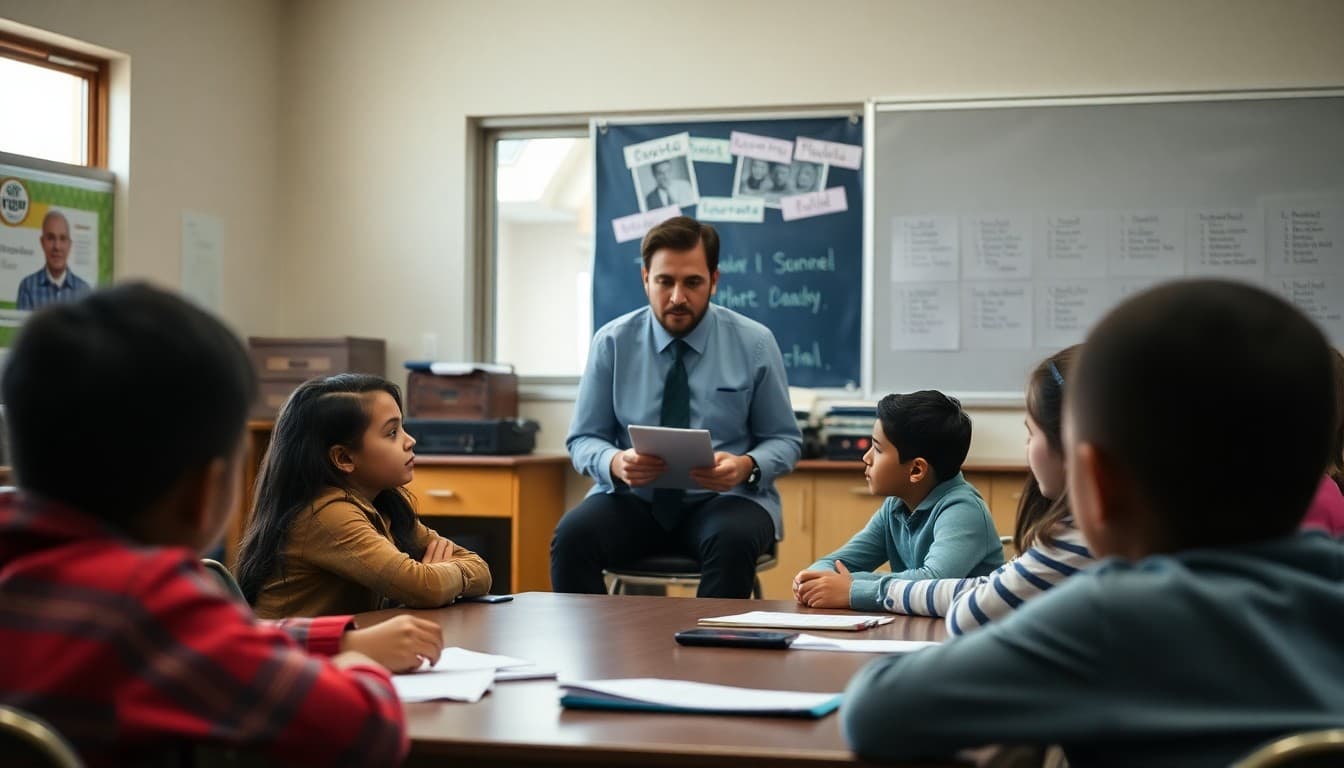
Principal Newsletter: Explaining Restorative Conferences to School Families

Families who receive an invitation to a restorative conference often do not know what they are being invited into. If the school has never explained the process in advance, the invitation itself can feel alarming. A newsletter that explains how restorative conferences work, what families can expect, and why this process is used turns an anxious invitation into a comprehensible one.
Define the Restorative Conference
Start with a plain description. A restorative conference is a structured meeting where everyone affected by a harmful incident comes together to talk about what happened, how it affected them, and what needs to happen to repair the harm. A trained facilitator guides the process using specific questions. The conference is not a hearing, a punishment, or a mediation. It is a conversation designed to produce understanding and agreement on repair.
Describe the Process Step by Step
Tell families what actually happens. Before the conference, the facilitator meets individually with each party to explain the process and check readiness. During the conference, participants sit in a circle. The facilitator asks structured questions in a specific order: What happened? What were you thinking at the time? Who has been affected? How have they been affected? What needs to happen to make things right? An agreement is documented if reached.
Families who understand the sequence are less nervous about the event itself.
Explain Who Attends
A restorative conference typically includes the student who caused harm, the student or students who were harmed, supportive adults for each party (usually a parent or guardian), the school facilitator, and sometimes a teacher or administrator depending on the nature of the incident. Name these roles clearly so families understand who will be in the room.
Address Participation and Voluntary Involvement
Participation for affected parties is typically voluntary. No family should feel required to participate in a conference that they are not ready for. Explain that the school will discuss alternatives if a family or student is not comfortable with the process. For students who caused harm, the conference is often part of the accountability response and may be expected, though the form and specifics can be discussed.
Explain What Happens With the Agreement
If the conference produces an agreement, describe how it is documented and what happens if it is not honored. Who follows up, what the timeline is, and what the school's role is in supporting the commitments made in the room. Families who understand the accountability structure behind the conference trust that the process has teeth.
Tell Families How to Prepare Their Student
Give families concrete guidance. For families supporting a student who caused harm: prepare your student to speak honestly about their actions, not to explain them away. The facilitator will ask what they were thinking and what they can do to repair the harm. For families supporting a harmed student: prepare your child to share their experience in their own words, only as much as they are comfortable sharing. The conference moves at their pace.
Get one newsletter idea every week.
Free. For teachers. No spam.
Frequently asked questions
What is a restorative conference and how is it different from a parent meeting?
A restorative conference is a structured meeting where all parties affected by a harmful incident, including the student who caused harm, those affected, and supportive adults, participate in a guided process. The facilitator asks specific questions to surface what happened, who was affected and how, and what needs to happen to repair the harm. A parent meeting is informational. A restorative conference is participatory.
How do families prepare for a restorative conference?
Families who are coming as support for their child who caused harm should prepare their student to speak honestly about what happened, not to minimize or deflect. Families coming as support for a harmed student should prepare their child to share their experience if they choose. Facilitators typically do a pre-conference check-in with each party before the meeting.
Is a restorative conference required or optional?
Participation is typically voluntary, especially for affected parties. Students who caused harm may be required to participate as part of a discipline response. Families should understand both the voluntary nature for affected parties and the role of the conference in the accountability process for students who caused harm.
What happens if an agreement is not reached during the conference?
Name the process for when a conference does not produce an agreement. The facilitator may schedule a follow-up session, propose specific actions outside the conference setting, or the school may determine that other consequences are appropriate. Families should know the conference is not the only tool available.
What tool helps principals send newsletters efficiently?
Daystage is built for school newsletters. A sensitive process explanation like a restorative conference guide requires careful formatting. Daystage lets you write and send it professionally in one step.

Adi Ackerman
Author
Adi Ackerman is a former classroom teacher and curriculum writer with 8 years in K-8 schools. She writes about school communication, parent engagement, and what actually works in real classrooms.
More for Principals
Ready to send your first newsletter?
3 newsletters free. No credit card. First one ready in under 5 minutes.
Get started free