
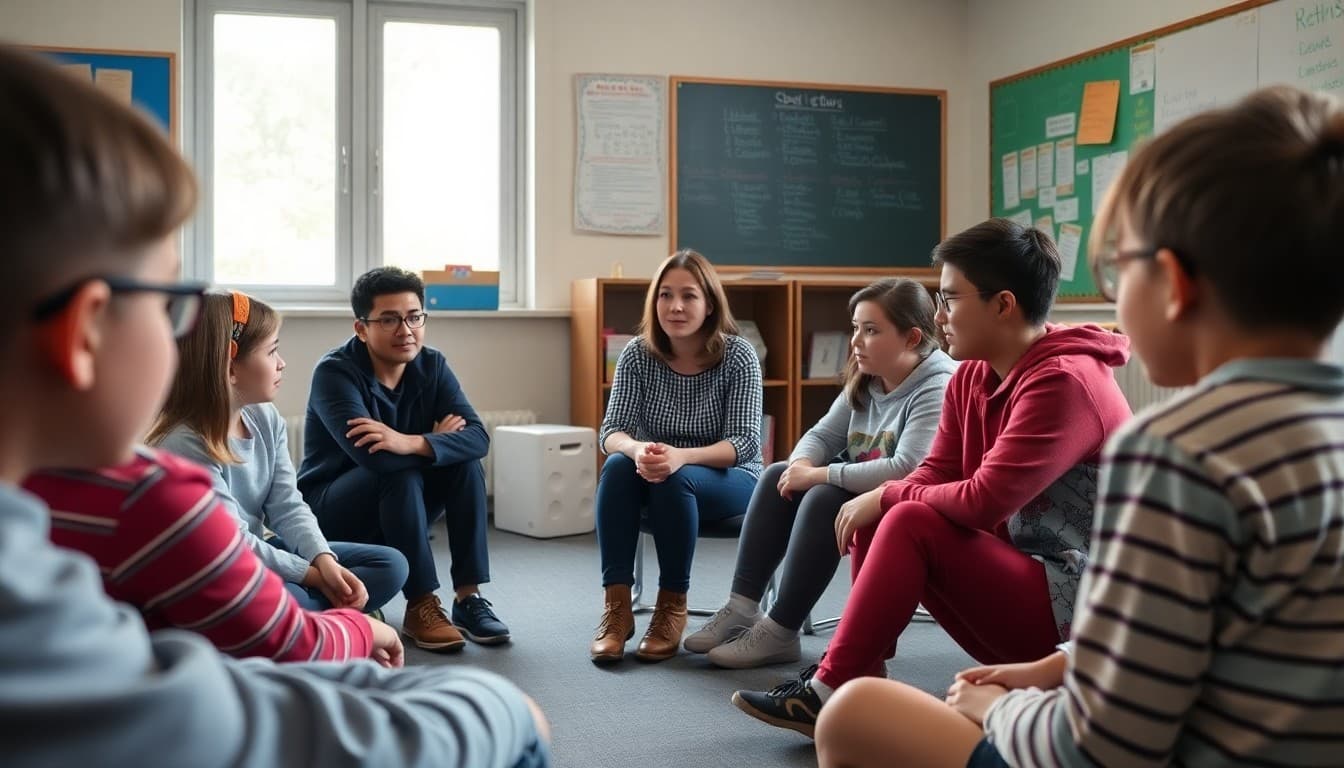
Writing a Newsletter That Explains Restorative Circles to Families

Restorative circles are gaining ground in schools across the country. But most families have never heard the term, and the ones who have often have the wrong idea. Your newsletter is the bridge between what you are doing and what families understand about it.
Define the Term in Plain Language
Do not assume families know what a restorative circle is. Start by explaining it simply: a structured conversation, usually in a circular seating arrangement, where the people involved in a conflict or community concern take turns speaking and listening. A trained facilitator guides the process. The goal is to surface what happened, how it affected people, and what needs to happen to repair the situation.
That is it. You do not need to introduce the history of restorative justice or cite Scandinavian prison reform. Keep it concrete and school-specific.
Explain Why You Are Using This Approach
Families deserve a clear answer to "why." If your school moved toward restorative practices because suspension rates were not reducing repeat incidents, say that. If data showed that a specific group of students was disproportionately referred to the office, say that too. Honest reasoning builds more trust than abstract commitment language.
You might also share what you observed when traditional consequences were the only tool: students returning to the same conflicts, relationships staying broken, kids who felt punished but not changed. That context makes the shift make sense.
Address the Accountability Question Directly
The most common concern families have is that restorative circles let students avoid consequences. Get ahead of it. Explain that a circle is not a substitute for accountability. It is a different form of it. Students are expected to name what they did, hear the impact firsthand from the person affected, and commit to specific repair. That process is uncomfortable. It requires something a detention does not: genuine reflection and responsibility.
Describe When Circles Are Used
Not every situation leads to a circle. Your newsletter should clarify the spectrum: community circles used proactively to build relationships, problem-solving circles for low-level conflicts, and formal restorative conferences for more serious incidents. Families need to understand that this is a toolkit, not a single response applied to everything.
Also clarify what circles do not replace. If a student commits a serious safety violation, consequences still apply. Circles may run alongside that process, not instead of it.
Explain the Role of Families
Some families will want to know whether they are involved. Be clear about when parents are contacted, whether participation is voluntary, and how the school communicates outcomes. If a student was harmed in a conflict that goes to a circle, families should know they can opt out if the affected student is not comfortable participating.
Share What You Expect to See
Give families a picture of what success looks like. Fewer repeat referrals. Conflicts that get resolved rather than simmering through the year. Students who learn how to repair relationships instead of just avoiding each other. You may not have data yet, but you can name what you are watching for.
Make It Easy to Ask Questions
Restorative practices often invite more questions than standard discipline policy does. That is actually a sign that families are engaging with the concept. Give them an easy way in: an email address, an informational session, or a brief video link if your district has one. Daystage newsletters make it simple to embed links and contact details right alongside the content so families do not have to search for the next step.
Get one newsletter idea every week.
Free. For teachers. No spam.
Frequently asked questions
What is the right way to introduce restorative circles to skeptical parents?
Acknowledge the skepticism directly. Some families worry that circles replace consequences with conversation and let students off the hook. Explain that circles are not a substitute for accountability but a process that requires students to confront the impact of their behavior and make it right. That is often harder than a detention.
Do parents participate in restorative circles?
It depends on the situation. For minor peer conflicts, circles typically involve only the students and a facilitating adult. For more serious incidents, a family circle may include parents or guardians. Your newsletter should clarify which situations involve families and how they will be contacted.
How do I explain restorative circles without education jargon?
Use plain language and a concrete example. Instead of 'restorative conferencing aims to repair relational harm', say 'when two students have a conflict, they sit down together with an adult, each person shares how the situation affected them, and they decide together what needs to happen to repair the relationship.' The plain version communicates the same thing with far less confusion.
What if a family does not want their child in a circle with the student who harmed them?
This is a legitimate concern and your newsletter should name it. Participation is voluntary for affected parties. No student is forced into a circle. Families should know they can opt out and that other resolution pathways remain available.
What tool helps principals send newsletters efficiently?
Daystage is built for school newsletters. Write your message once, format it clearly with sections, and send it to all families in a single step. No printing, no reformatting.

Adi Ackerman
Author
Adi Ackerman is a former classroom teacher and curriculum writer with 8 years in K-8 schools. She writes about school communication, parent engagement, and what actually works in real classrooms.
More for Principals
Ready to send your first newsletter?
3 newsletters free. No credit card. First one ready in under 5 minutes.
Get started free