

Principal Newsletter: Announcing a School Mental Health Walk
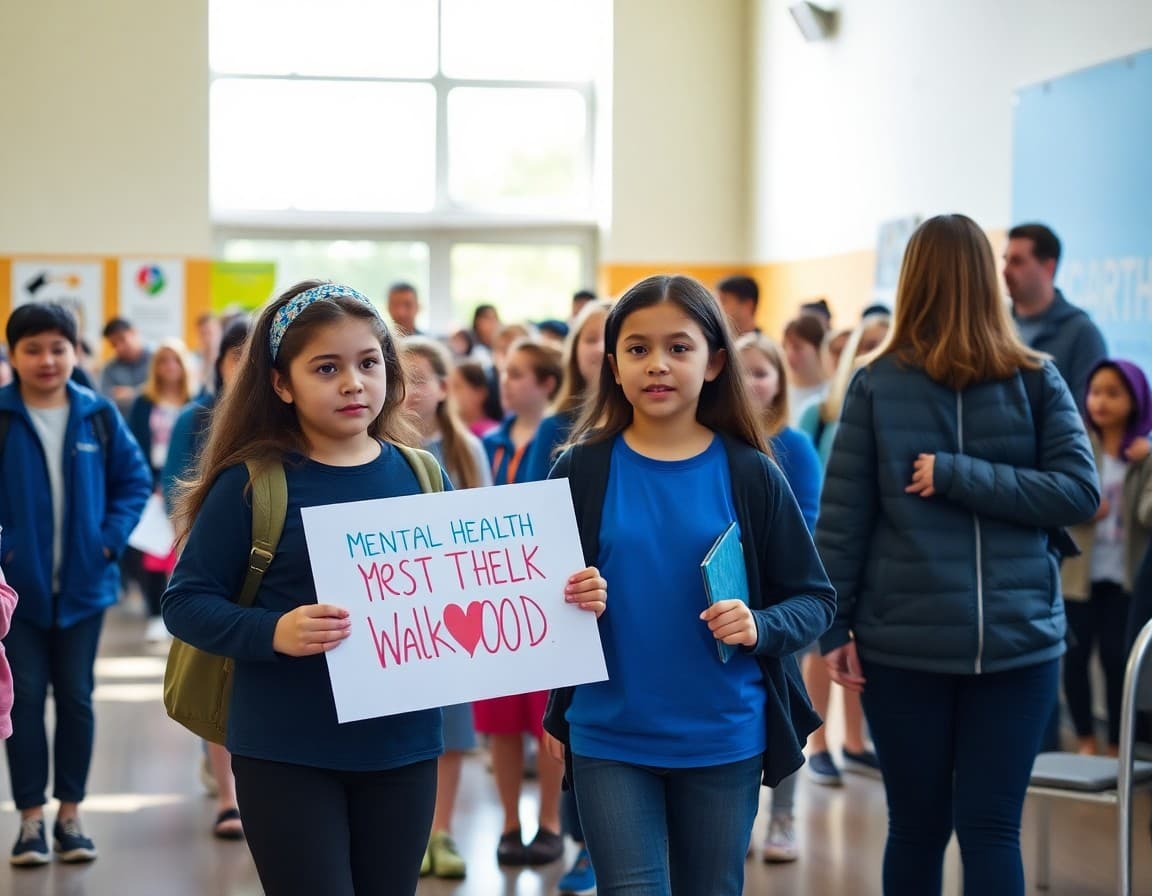
A mental health walk is one of those events that can go in two directions: it becomes a meaningful community moment, or it becomes a well-intentioned thing that nobody quite understood. The newsletter you send before the event determines which it is.
Say What the Walk Is, Clearly
Not every family will know what a mental health walk is. Write a sentence or two that makes it concrete: a community walk around the school grounds where students, staff, and families walk together to show that mental health matters, that no one is alone, and that asking for help is something we celebrate rather than stigmatize. Keep it simple. You can add more context in later sections but give families the basic picture upfront.
Connect It to What You Are Already Seeing
The newsletter lands better when it starts from something real. You might share that counselor referrals have gone up across the district, that your social-emotional curriculum is new this year, or simply that you have heard from students and staff that stress is something worth addressing together. Grounding the event in your school's actual experience makes it feel purposeful rather than performative.
Give the Full Event Details
Date, time, location. Whether families are welcome to join (they usually are). What students should wear. If there is a shirt color or a theme. Whether there is a fundraising component and where any money collected goes. A short bullet list works well here. Parents should be able to skim this section in thirty seconds and have everything they need to know.
If there are classroom activities tied to the walk, mention those too. Some schools spend the day on wellbeing lessons, journaling, or guest speakers before the walk itself. Families who know the full picture are more engaged on the day.
Name the Support Resources Available
A mental health awareness event is a natural place to remind families that support exists year-round. Include the school counselor's name and how to reach them. If your district has a crisis line or a student support hotline, list it. If you recently added staff or services in this area, this is a good time to mention it.
Families who are quietly worried about their child may use this as the nudge they needed to ask for help. Make the next step visible.
Acknowledge That Mental Health Is Personal
Some families carry their own complicated relationships with mental health. A short acknowledgment that this topic matters to families too, not just students, sets a tone of shared humanity. You are not asking anyone to disclose anything. You are saying that the school sees this as part of the whole child, and that extends to the families who are showing up every day alongside you.
Invite Participation at Every Level
Not every family can join on a school day. Give families multiple ways to participate: come to the walk, share a message of encouragement, wear the event color, or simply ask their child how they are doing tonight. Low-barrier participation keeps more families engaged than events that require a full morning off work.
Follow Up After the Event
Send a follow-up newsletter with a photo and a line about what you observed. How many people walked. A student quote if you have one. Where the fundraised money will go. Daystage makes it easy to send that follow-up the same day with a photo attached, while the energy is still fresh.
Get one newsletter idea every week.
Free. For teachers. No spam.
Frequently asked questions
How do I explain the purpose of a mental health walk without overpromising?
Be honest that the walk is about visibility and community, not a clinical intervention. It signals to students that mental health is something the school takes seriously and talks about openly. That cultural signal matters, even if it is not a program or a service.
What should the newsletter include about the event logistics?
Date, start time, route or location, whether families are invited, and what students should wear or bring. If there is a fundraising component, explain where the money goes and how families can contribute. Keep the logistics section scannable with a short list.
How do I address families who are sensitive about mental health topics?
Use inclusive, non-clinical language. Focus on the physical activity, community, and connection aspects rather than leading with crisis or illness framing. You can acknowledge that students experience stress and that the school cares about their overall wellbeing, which most families will readily agree with.
Should I mention the school counselor in the newsletter?
Yes. A mental health walk is a natural moment to remind families that the school counselor is available, introduce a new counselor if you hired one recently, and share how students access support. Connecting the event to real resources makes it more than symbolic.
What tool helps principals send newsletters efficiently?
Daystage is designed for school newsletters. You can write the announcement, add event details, include a photo, and send to all families in one step. It also makes follow-up easy after the event.

Adi Ackerman
Author
Adi Ackerman is a former classroom teacher and curriculum writer with 8 years in K-8 schools. She writes about school communication, parent engagement, and what actually works in real classrooms.
More for Principals
Ready to send your first newsletter?
3 newsletters free. No credit card. First one ready in under 5 minutes.
Get started free