

Reaching Hispanic Families With Your Principal Newsletter
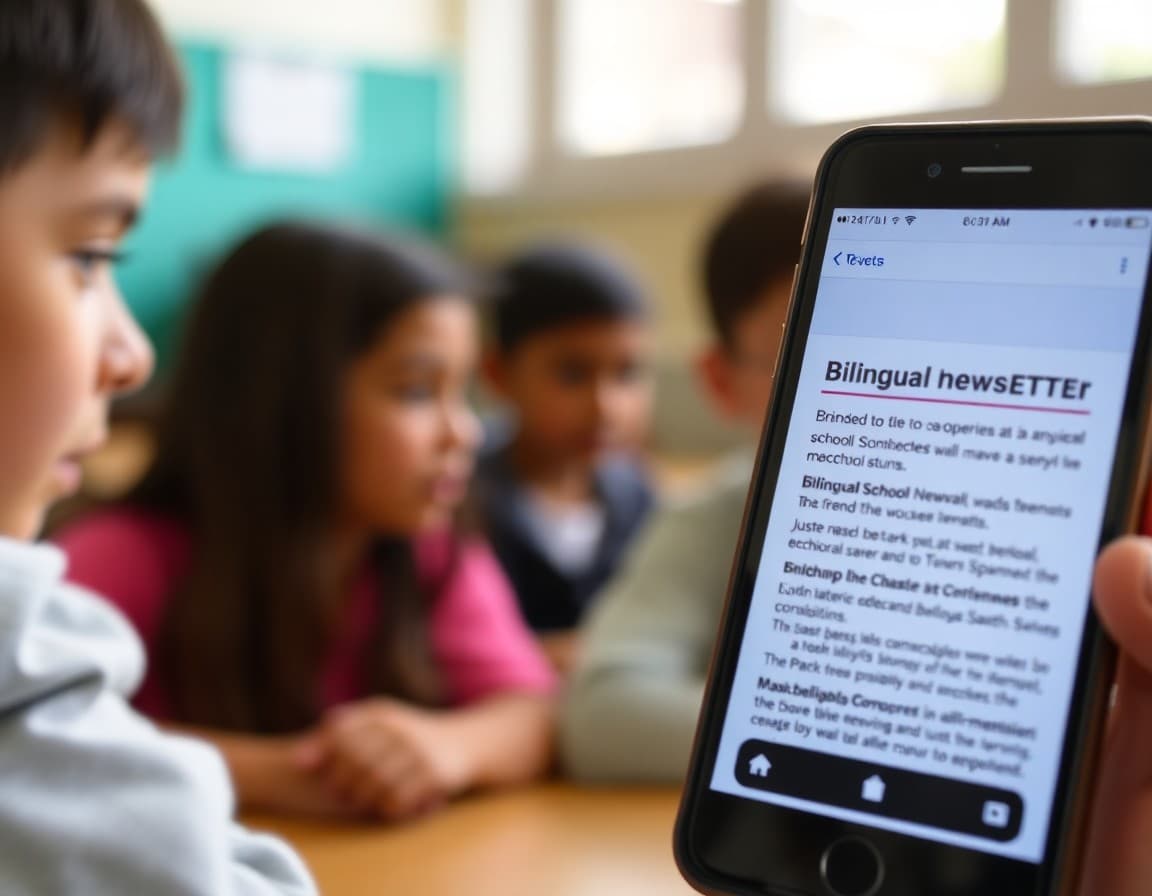
Hispanic and Latino families are the fastest-growing demographic in American public schools. Schools that communicate effectively with Hispanic families outperform those that do not in parent engagement, attendance, and student outcomes. The newsletter is a starting point, not a complete solution, but it is a visible signal of whether the school values this community's participation.
Translation: the foundation, not the ceiling
The most immediate barrier for many Spanish-speaking families is language. A newsletter that only arrives in English is inaccessible to families whose primary language is Spanish, regardless of its quality in English.
The translation question is not if but how. For most schools, the sustainable approach is:
- Draft the newsletter in English as usual
- Run it through DeepL (which produces better Spanish translations than Google Translate for most school contexts)
- Have a Spanish-speaking staff member or parent volunteer do a five-minute review for accuracy and cultural appropriateness
- Send both versions, either in one email with both languages or as a separate send to the Spanish-language list
This process, once established, adds about 20 minutes to your newsletter production time.
WhatsApp and SMS: reaching families email misses
In many Hispanic communities, WhatsApp is the primary digital communication channel. Families who check WhatsApp every hour may only open email a few times a week.
Schools with significant Hispanic enrollment benefit from a supplementary WhatsApp strategy: a shared group or broadcast list where brief newsletter summaries and time-sensitive announcements are shared. This is not a replacement for the newsletter. It is a pointer to it. 'The monthly newsletter is out. Key dates and the principal's message: [link].'
What Hispanic families need most from school communication
Research on Hispanic family engagement in schools consistently identifies these priorities:
- Information about how the US educational system works, especially for families who attended school in a different country with different structures
- Clear explanations of their rights as parents (to request records, to participate in IEP meetings, to request language assistance)
- Communication that does not conflate immigration status with school participation. Families should feel safe accessing school resources regardless of documentation status.
- Recognition of cultural events and contributions, not as a special feature but as part of the regular school community
Avoid language that creates distance
Some newsletter language inadvertently signals that Hispanic families are guests in the school community rather than members of it:
- Framing engagement as attendance at formal events only, rather than acknowledging home-based involvement
- Using language that implies assimilation is required for participation
- Acknowledging Hispanic heritage only during Hispanic Heritage Month
A newsletter that integrates Hispanic cultural references and student contributions naturally across the year signals belonging more powerfully than a single month of recognition.
Daystage supports bilingual newsletter production and delivery to separate language-specific contact lists. Once the workflow is established, the Spanish-language newsletter runs alongside the English version without doubling your production time.
Get one newsletter idea every week.
Free. For teachers. No spam.
Frequently asked questions
Do I need to translate my school newsletter into Spanish?
If a significant portion of your school community is Spanish-speaking, yes. Under Title VI and ESSA, schools have obligations to provide meaningful access to school communications for families with limited English proficiency. Even where not strictly required, a translated newsletter signals respect and dramatically increases engagement from Spanish-speaking families.
What is the best way to translate a school newsletter into Spanish?
A bilingual staff member or community volunteer reviewing a machine translation is better than machine translation alone, and significantly faster and cheaper than professional translation for a monthly newsletter. Run the newsletter through DeepL or Google Translate, have a Spanish-speaking staff member review and correct it, and send both versions. The quality improves quickly once the routine is established.
What communication channels work best for Hispanic families?
WhatsApp has significantly higher engagement rates in many Hispanic communities than email or school apps. If a significant number of Hispanic families use WhatsApp as their primary communication channel, a class or school WhatsApp group (managed carefully for privacy and appropriate content) can reach families that email misses. Ask families directly at enrollment what channel they prefer.
How do I address Hispanic family cultural values in a school newsletter?
Respect for familismo, the centrality of family in decision-making and child-rearing, means that communication that addresses the whole family rather than just the 'parent' resonates more. Acknowledging cultural holidays (Dia de los Muertos, Three Kings Day) without requiring families to explain them signals that the school sees them. Avoid assumptions about immigration status or documentation that make families feel surveilled.
What tool helps principals send newsletters efficiently?
Daystage supports sending newsletters in multiple languages to different list segments. You can send the Spanish version to your Spanish-language contact list and the English version to the rest, without managing two completely separate communication workflows.

Adi Ackerman
Author
Adi Ackerman is a former classroom teacher and curriculum writer with 8 years in K-8 schools. She writes about school communication, parent engagement, and what actually works in real classrooms.
More for Principals
Ready to send your first newsletter?
3 newsletters free. No credit card. First one ready in under 5 minutes.
Get started free