

Promoting Family Reading Night in Your Principal Newsletter
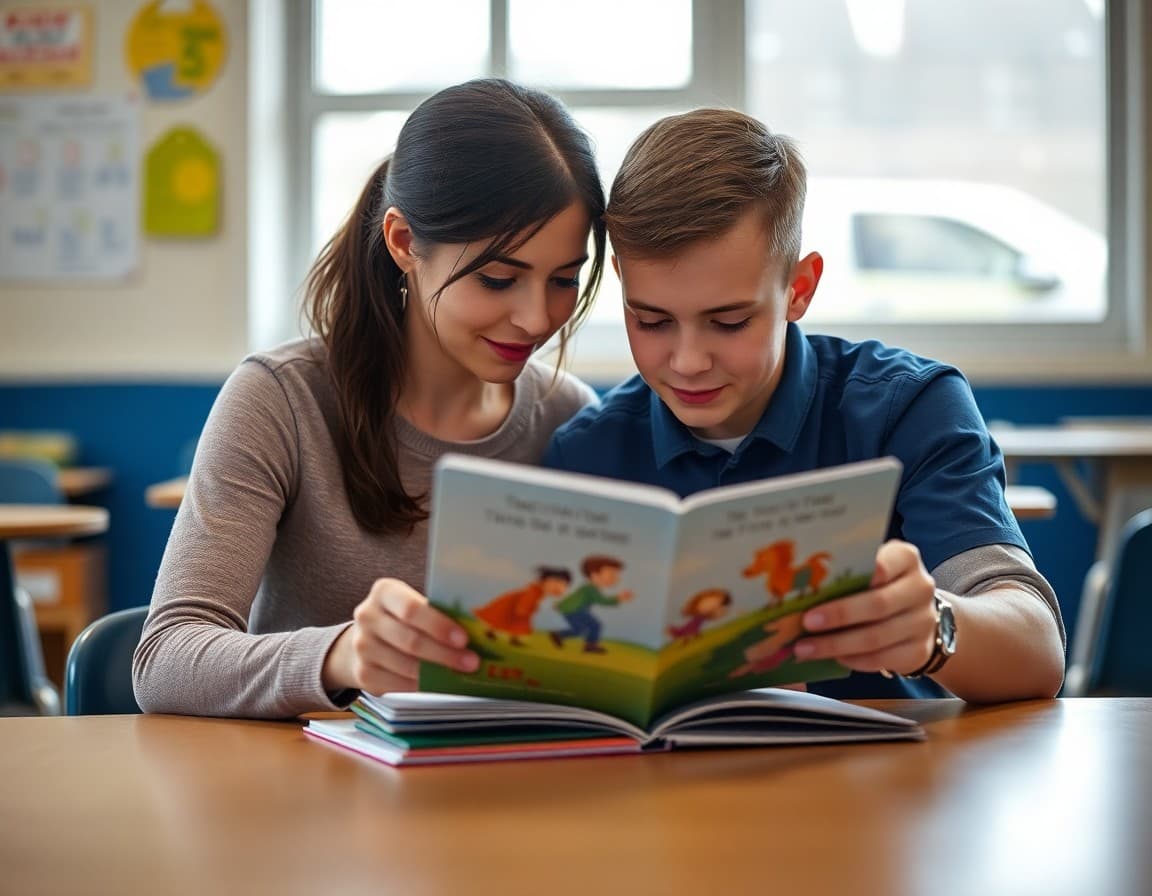
Family reading night is one of the highest-impact literacy events a school can host. When parents sit down with their child and a book, in a school environment that has made that accessible and enjoyable, reading becomes something families do together -- not just something school assigns. Your newsletter is how that evening gets launched.
Tell Families What Will Actually Happen
Generic invitations produce generic response. Tell families specifically what they will experience. "Family Reading Night on Thursday, February 20 from 5:30 to 7:00 PM will include six reading stations: a live read-aloud with our librarian, a poetry station led by fourth graders, a book character scavenger hunt, a family book-making activity, a librarian recommendation table, and a cozy free-reading corner. Your child has been preparing for one of the stations. Come and see what they have been working on." That invitation answers the question families ask themselves before deciding to attend: will this be worth our time?
Make the Free Book Offer Front and Center
If families take home a free book, say so prominently. "Every family who attends will choose one free book from our selection of 200 titles, organized by reading level and interest. Books are new. No cost." That offer is the detail that converts maybes to yes. Book fairs and Scholastic donate titles for these events regularly -- it is worth making the ask before planning the event.
Address Access Barriers Directly
The families least likely to come to family reading night are often the families with the most to gain from it. Identify the barriers and remove them in the newsletter. "No childcare for younger siblings? We have supervised play in the art room during the event. No English? Translation support available. No way to get there? Call the main office -- we may be able to help." Each of those lines is written for one group of families. Each one might bring a family in the door who would not otherwise have come.
A Template Family Reading Night Invitation
Here is a newsletter section that earns attendance:
"Family Reading Night is Thursday, February 20 from 5:30 to 7:00 PM in the library and gymnasium. Come read with your child. Our librarian has curated six interactive reading stations. Every family leaves with a free book. Light refreshments provided. Childcare available for children under 5. No RSVP required -- just come. This event is for every family in our school."
Connect the Event to Your Literacy Goals
When families understand that reading night is part of a real academic strategy, not just a fun evening, they engage with it differently. "Our school goal is for every student to read 20 minutes per day outside of school. Research is clear that family involvement in reading is the single strongest predictor of that habit. Reading night is our one evening per year when we model that together." That framing gives the event weight without making it feel like homework.
Feature Student Involvement
Students who have a role in family reading night -- as station leaders, as read-aloud performers, as book recommenders -- bring their families. A student who tells their parent "I am running the poetry station" creates a different motivation than a principal newsletter. Use both. "Students in grades 3-5 have been preparing short read-alouds that they will share at the event. Your child may have something prepared -- ask them tonight."
Send a Follow-Up That Celebrates Turnout
After the event, send a brief thank-you newsletter. Share the attendance number. Include a photo. Name what happened. "321 families came through the library on Thursday. We ran out of books in the first hour. Teachers are still talking about the poetry station. Thank you." That recap honors the families who came and gives the families who missed it a picture of what they are looking forward to next year.
Build the Event Into the Annual Calendar
Family reading night becomes a school tradition when it happens every year at a predictable time. Put it on the school calendar in August. Announce it in September. The families who attended last year will talk about it to new families, and your attendance will grow year over year. Daystage makes it easy to maintain consistent event communication that builds community memory over time.
Get one newsletter idea every week.
Free. For teachers. No spam.
Frequently asked questions
What should the principal newsletter say when inviting families to reading night?
Describe specifically what families will do, not just that the event exists. 'You and your child will rotate through six reading stations: a read-aloud with our librarian, a poetry slam led by fifth graders, a book-making activity, and more.' Families who can picture the event are far more likely to attend than families who receive a generic invitation.
How do I make family reading night feel inclusive for families with limited English?
Specify language support in the invitation. 'Translation support available in Spanish and Somali.' Include books in multiple languages at the event. Have family liaisons at welcome stations. The newsletter invitation is where families decide whether this event is for them -- make sure the answer is clearly yes.
What incentives work for increasing family reading night attendance?
Simple, tangible, and connected to the event. 'Every family who attends will take home a free book.' Or: 'Students who attend receive a reading certificate and 100 bonus minutes toward our reading challenge.' Light refreshments help. Free childcare for non-school-age siblings is the single most effective attendance barrier to remove.
How early should I announce family reading night in the newsletter?
Two to three weeks before the event. One reminder five to seven days before. A day-before note if you have room for it. For an event that requires families to arrange childcare or evening schedules, the two-week announcement is essential.
How can Daystage help with reading night invitations and RSVPs?
Daystage's event block lets you include the reading night invitation with date, time, program highlights, and an RSVP button all in one newsletter section. Collecting RSVPs in advance helps you plan books, stations, and staffing.

Adi Ackerman
Author
Adi Ackerman is a former classroom teacher and curriculum writer with 8 years in K-8 schools. She writes about school communication, parent engagement, and what actually works in real classrooms.
More for Principals
Ready to send your first newsletter?
3 newsletters free. No credit card. First one ready in under 5 minutes.
Get started free