
Principal Newsletter: Announcing a Community Listening Session

Community listening sessions have a credibility problem. Families have attended enough "listening" events that turned into information sessions to be skeptical. Your newsletter needs to do real work to convince them that this one will be different. The way you write the invitation is the first test of whether you mean it.
Name the Specific Questions You Are Trying to Answer
Families who see a vague "community conversation about our school" invitation do not know why they should attend. Families who see "we are asking for input on three specific decisions we have not made yet" have a reason to show up. Be explicit: What is still open? What are you deciding? What do you genuinely want to hear? The more specific the questions, the more credible the invitation.
Commit to How You Will Use the Input
This is the line that determines whether families believe you. "Your input will help us" is vague. "We will share a summary of what we heard within two weeks, and we will explain how each theme influenced our final decision" is a commitment. Name the timeline, the format of the feedback summary, and what happens to the input after the session ends.
Describe the Format
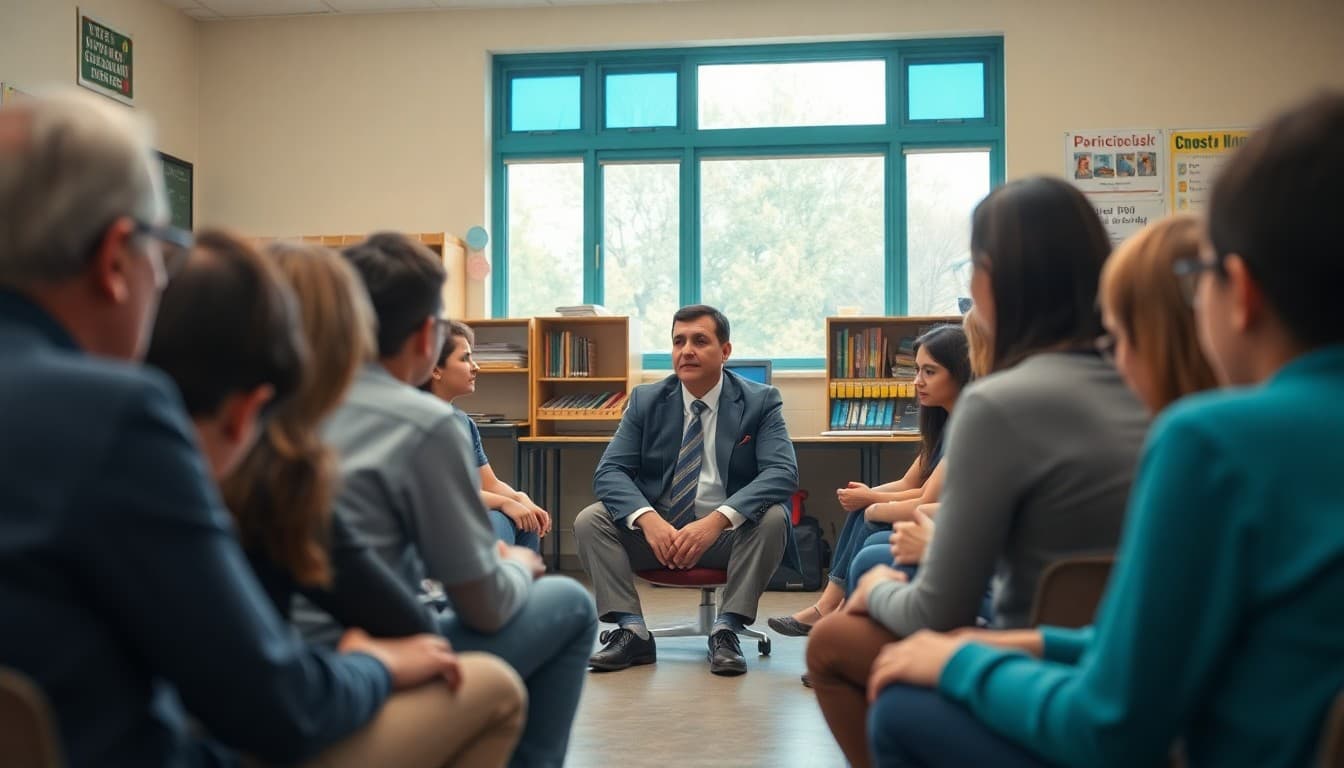
Tell families how the session will work. If it is small-group discussions with a facilitator, say so. If there will be two or three structured questions that groups respond to in turn, say that. Families who know the format show up ready to participate. Families who do not know whether they will be sitting in rows being talked at, or sitting in circles talking with each other, have a lower baseline expectation for how it will go.
Remove Access Barriers
State the access features directly. Interpretation available in [languages]. Childcare provided. No prior registration required. Light refreshments. Duration. All of these details affect whether families in your more constrained situations actually attend. Families who can show up when they want to but face one practical barrier will often not solve that barrier on their own.
Give Families a Way to Submit Input if They Cannot Attend
Not every family can attend an evening session. A link to a brief survey that covers the same questions gives those families a voice. Note it in the newsletter: "Can't attend? Submit your input here by [date]." Families who know they can participate asynchronously are more likely to do so than families who see no option except showing up in person.
Close the Loop After the Session
The newsletter you send two weeks after the listening session is as important as the invitation. What did you hear? What were the recurring themes? How will each theme influence the decision you were making? Families who see that the school actually listened, and can point to a decision that changed as a result, are more likely to show up the next time you ask.
Get one newsletter idea every week.
Free. For teachers. No spam.
Frequently asked questions
What is the difference between a community listening session and a regular school meeting?
A regular school meeting is information-delivery. The school presents, families listen. A community listening session is input-gathering. The school asks questions, families respond, and the school commits to using what it hears. The distinction matters because families who show up expecting to be heard and instead sit through a presentation feel misled.
How do I show families that their input will actually matter?
Be specific in the newsletter about what decisions are still open and how input will inform them. 'We are gathering input before finalizing our family communication plan for next year. Your responses will directly shape how, how often, and in what format we communicate.' When families can see the connection between their input and a specific decision, participation feels worthwhile.
How do I handle families who come to a listening session to complain rather than contribute?
Acknowledge concerns and redirect. 'I hear that. That is exactly why we are here. Let me ask the group to respond.' The format of a listening session should include structured prompts that keep the conversation productive, not just an open microphone.
What format works best for a community listening session?
Small group discussions with a designated facilitator in each group, followed by whole-group reporting, produces more voices than a single open forum. Rotating through two or three structured questions keeps the session focused. A summary document sent to all families after the session closes the loop.
What tool helps principals send newsletters efficiently?
Daystage is built for school newsletters. A listening session invitation with agenda details, RSVP functionality, and a follow-up summary can all be sent from the same platform.

Adi Ackerman
Author
Adi Ackerman is a former classroom teacher and curriculum writer with 8 years in K-8 schools. She writes about school communication, parent engagement, and what actually works in real classrooms.
More for Principals
Ready to send your first newsletter?
3 newsletters free. No credit card. First one ready in under 5 minutes.
Get started free