

The Pennsylvania Principal Newsletter Guide
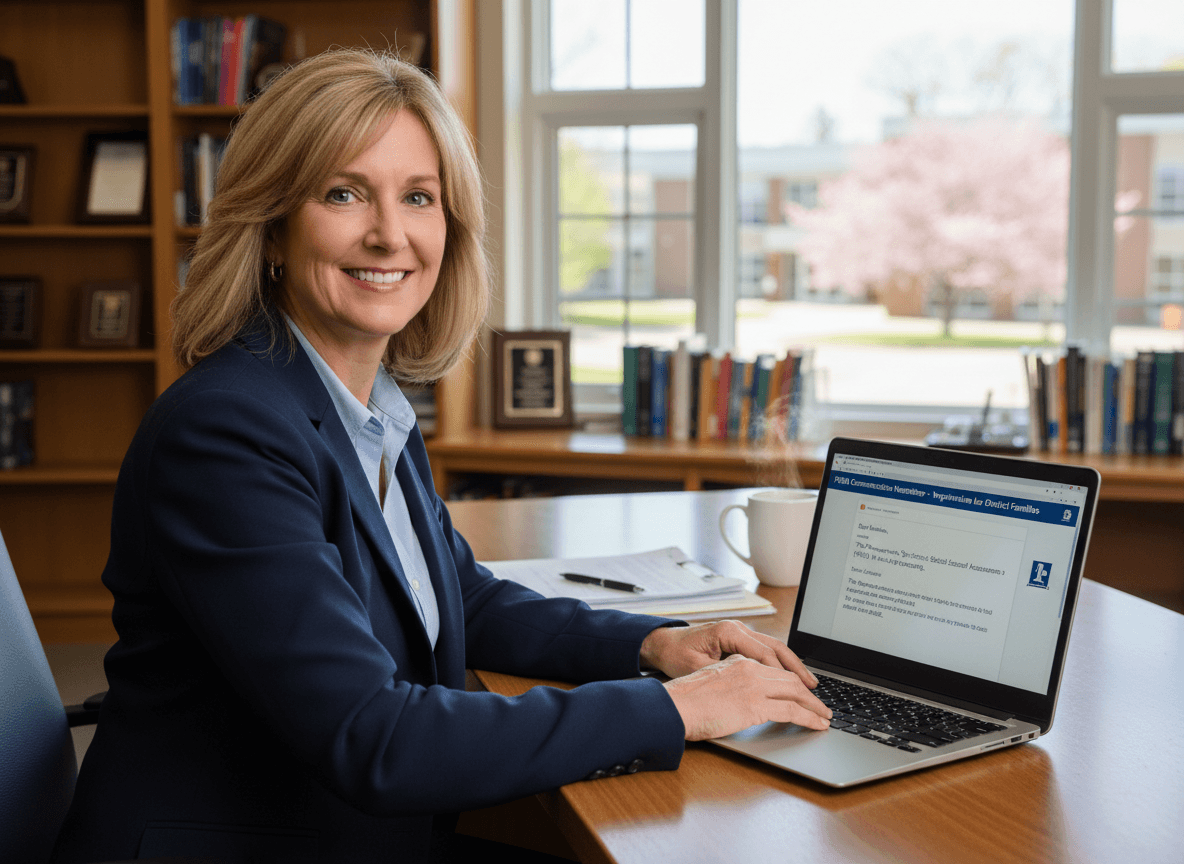
Pennsylvania principals manage parent communication inside one of the country's most complex K-12 landscapes. Philadelphia's school district, the School Reform Commission legacy, the state's extensive charter school sector, the Keystone Exam graduation requirements, and Pennsylvania's geographic diversity from Philadelphia's urban core to the rural communities of the Pocono Mountains and the southwestern coal region all shape what effective principal communication looks like. The newsletter is the tool that makes that complexity manageable for families.
What Pennsylvania parents expect from principal newsletters
Philadelphia School District parents operate in a city with an extensive school choice environment that includes traditional public schools, district-run special admission schools like Central and Masterman, and a large charter school sector. A principal newsletter that consistently demonstrates academic quality, communicates assessment results honestly, and celebrates school culture is a retention tool in a city where families actively compare schools. Philadelphia parents in neighborhoods with lower income levels often have fewer hours to spend reading long emails, so concise and direct newsletters outperform lengthy ones.
Pittsburgh parents in the Pittsburgh Public Schools system expect a similar level of substantive communication, particularly in communities near the well-regarded magnet and IB programs. Suburban Pennsylvania parents in the Main Line, South Hills, or North Hills expect newsletters that reflect academic rigor and extracurricular depth. Allentown and the Lehigh Valley principals serve large Spanish-speaking communities where language access is a baseline communication obligation. Rural Pennsylvania principals in the northcentral, central, and southwestern regions serve tight-knit communities where the school is the community anchor.
Pennsylvania education compliance communication requirements for principals
- PSSA pre-testing communication: Before the spring PSSA window, principals must communicate testing dates for grades 3-8 in English language arts and math, grade 4 and 8 science, and parents' rights related to assessment under PDE regulations.
- Keystone Exam windows and graduation implications (high school):Pennsylvania high school principals must communicate fall and spring Keystone Exam windows, and must explain annually how Keystone proficiency connects to graduation requirements, including the alternative assessment pathway and evidence-based pathway for students who do not achieve proficiency.
- PSSA and Keystone results distribution: When PDE releases results, principals must distribute individual student score reports with explanatory materials to families.
- PDE School Performance Profile communication: When PDE releases the annual School Performance Profile, principals should communicate their school's score and component breakdown to families.
- Title I family engagement obligations: Title I principals must hold annual meetings, distribute school-parent compacts, and communicate the family engagement policy.
- Charter school notification (where applicable):Principals in districts with charter schools must communicate relevant charter school enrollment information to families as required by the Pennsylvania Charter School Law.
- Annual discipline and attendance policies: Pennsylvania regulations require annual communication of student discipline policies and attendance requirements to families.
Understanding PSSA, Keystone Exams, and what they mean for graduation
The Pennsylvania System of School Assessment tests students in grades 3 through 8 in English language arts and math, and grades 4 and 8 in science. Results use four performance levels: Below Basic, Basic, Proficient, and Advanced. Proficient is the threshold that PDE uses for accountability purposes, and it is the level families recognize as grade level performance.
The Keystone Exams assess students in Algebra I, Literature, and Biology, typically in high school. Pennsylvania has used Keystone proficiency as a graduation requirement, though the implementation and timelines have shifted over time. As of the current graduation requirements, students who do not achieve proficiency on Keystones have multiple alternative pathways to demonstrate college and career readiness, including the alternative assessment pathway and the evidence-based pathway. High school principals need to explain these pathways clearly and annually. Many families do not understand that a student who does not pass a Keystone on the first attempt still has multiple routes to graduation, and that lack of understanding creates unnecessary anxiety.
Philadelphia, Pittsburgh, and Allentown: regional communication nuances
Philadelphia's school district serves the largest Spanish-speaking population in Pennsylvania. Many Philadelphia neighborhoods, including Kensington, Fairhill, and parts of North Philadelphia, have Spanish as the primary household language. Bilingual newsletters in Spanish are a baseline for many Philadelphia schools. The district also serves significant Vietnamese, Mandarin, Arabic, and Cambodian communities in specific neighborhoods. Know your school's demographic composition and build language access into your newsletter process, not as an add-on.
Allentown and the Lehigh Valley have the state's second-largest Spanish-speaking population. Allentown School District principals face particularly high language access obligations. Pittsburgh and its suburban ring are more demographically homogeneous by comparison, though Pittsburgh Public Schools serves a significant African American population in the Hill District, Homewood, and other neighborhoods where community-centered communication is essential.
Pennsylvania school calendar events to always cover in newsletters
- PSSA testing window (spring, grades 3-8)
- Keystone Exam windows (fall and spring, high school)
- PSSA and Keystone results release and score report distribution (fall)
- PDE School Performance Profile release
- Keystone graduation pathway information and senior deadlines (high school)
- Report card distribution dates
- Parent-teacher conference schedule and sign-up process
- Professional development days and school closure dates
- Title I annual meeting (Title I schools)
- Charter school open enrollment dates (where applicable)
Building a newsletter that handles Pennsylvania's complexity
Pennsylvania's layered accountability system, the Keystone graduation requirement complexity, and the state's linguistic diversity make the newsletter a more demanding communication project than in less complex states. The answer is not a longer newsletter. It is a better-organized one. Build a template with fixed sections for compliance items and flexible sections for weekly content. Pre-schedule the PSSA and Keystone communication touchpoints in August so they are on your calendar before the year starts.
Daystage helps Pennsylvania principals manage this complexity without spending hours on each edition. The platform's AI writing assistant helps translate Keystone graduation requirement language into plain English, and its direct-to-inbox delivery ensures that families in Philadelphia, Allentown, and Pittsburgh actually see the newsletter rather than missing a link in a cluttered inbox. Free plan available at daystage.com.
Get one newsletter idea every week.
Free. For teachers. No spam.
Frequently asked questions
How often should a Pennsylvania school principal send a newsletter?
Weekly is the right cadence for Pennsylvania principals. The PSSA testing window in spring, Keystone Exam windows in the fall and spring, PDE's school performance profile release, and the complexity of Pennsylvania's graduation requirements create multiple communication moments throughout the year that cannot be handled adequately in a monthly newsletter. Weekly communication also helps Philadelphia and Pittsburgh principals retain families in a competitive school choice environment.
What must a Pennsylvania principal include in the back-to-school newsletter?
The opening newsletter should cover school schedule, staff introductions, PSSA testing windows for the applicable grades, Keystone Exam windows for high school grades, graduation pathway information for high schoolers, report card dates, and your family communication plan for the year. Pennsylvania principals whose students take Keystone Exams should explain the connection between Keystone results and graduation requirements in the first newsletter of the year, because many families are not aware of those stakes.
How should Pennsylvania principals communicate about PSSA and Keystone Exam results?
PDE releases PSSA and Keystone results in the fall. Send a dedicated newsletter when results are available, explaining the four performance levels (Below Basic, Basic, Proficient, Advanced) in plain language, sharing your school's overall proficiency rates, and describing what instructional supports are available for students at Below Basic and Basic levels. For high school principals, be explicit about the connection between Keystone proficiency and graduation requirements, and explain what options exist for students who do not reach proficiency.
What Pennsylvania-specific compliance requirements must principals communicate?
Pennsylvania principals must communicate PSSA and Keystone Exam testing dates and parent rights annually. High school principals must communicate Keystone Exam graduation requirements and the alternative assessment pathway or evidence-based pathway options for students who do not achieve proficiency. Philadelphia principals operating under the SRC or in district must communicate any school improvement plan obligations to families. Title I principals must hold annual meetings and distribute family engagement policies. All principals must communicate student discipline and attendance policies annually.
What is the best newsletter tool for principals in Pennsylvania?
Daystage is a strong fit for Pennsylvania principals, particularly in Philadelphia and Allentown where Spanish-speaking families are a significant share of the parent population. Direct-to-inbox delivery means parents receive the newsletter without having to click through to a separate site, which matters in communities with lower digital engagement. The platform has school-ready templates and an AI writing assistant that helps Pennsylvania principals explain complex information like Keystone graduation requirements in plain, accessible language. Free plan at daystage.com, no credit card required.

Adi Ackerman
Author
Adi Ackerman is a former classroom teacher and curriculum writer with 8 years in K-8 schools. She writes about school communication, parent engagement, and what actually works in real classrooms.
More for Principals
Ready to send your first newsletter?
3 newsletters free. No credit card. First one ready in under 5 minutes.
Get started free