

The Oregon Principal Newsletter Guide
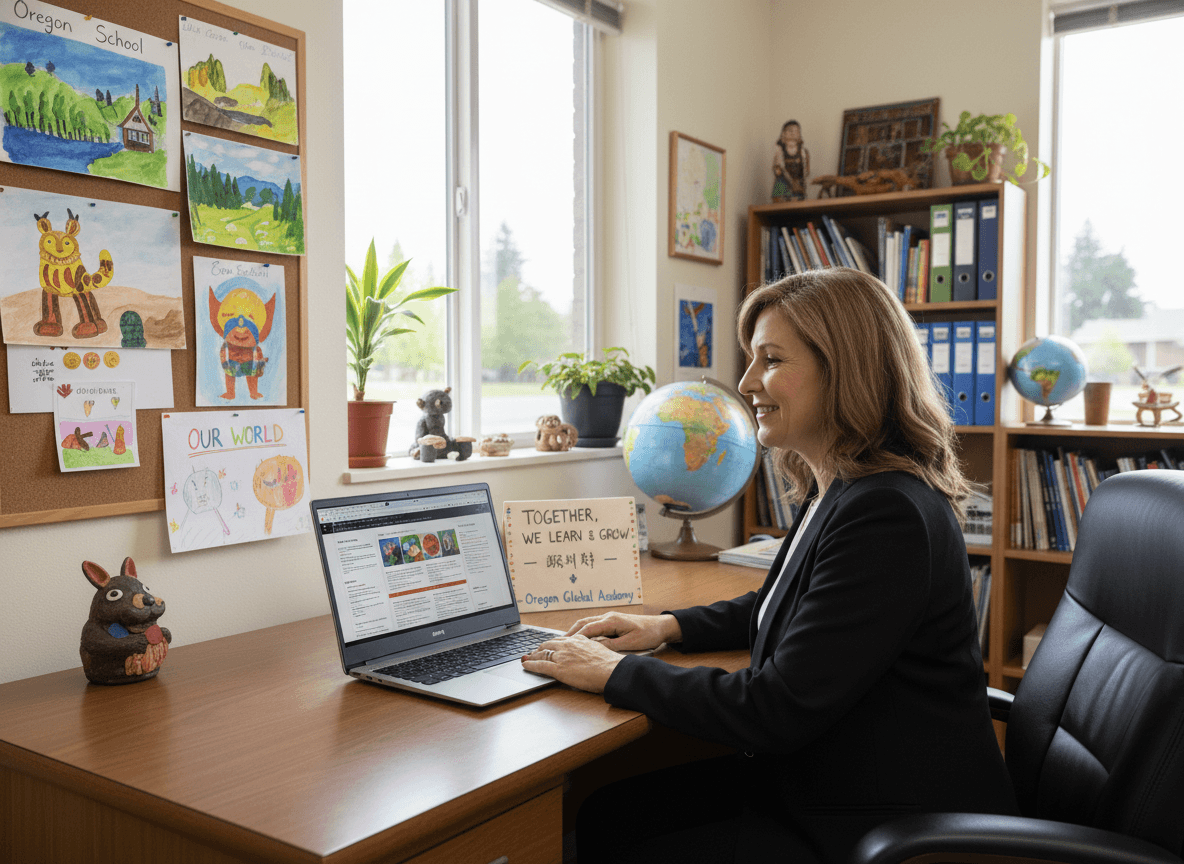
Oregon principals work inside a state that values equity, multilingual learner access, and place-based education in ways that shape what families expect from school communication. The Oregon Department of Education's emphasis on culturally responsive practices, the rollout of Ethnic Studies requirements, the large multilingual learner populations in Portland and Salem, and the tribal education contexts in Klamath and other Oregon communities all create communication demands that go beyond a standard assessment and calendar newsletter. Oregon principals who treat the newsletter as a community-building tool, not just an information delivery vehicle, build the family engagement that Oregon's educational philosophy requires.
What Oregon parents expect from principal newsletters
Portland Public Schools parents, particularly in North and Northeast Portland and the growing East Portland neighborhoods, span a wide range of socioeconomic backgrounds and language needs. PPS families who receive consistent professional communication from the principal are more likely to stay engaged with school events and less likely to disengage from the community. Portland parents in higher-income neighborhoods like Alameda and Southwest Portland tend to expect detailed academic updates and program information alongside community news.
Salem-Keizer parents include a large Spanish-speaking community that represents one of the state's highest concentrations of multilingual learners. English-only newsletters in Salem-Keizer miss a significant portion of the parent population. Eugene, Medford, and Bend principals serve communities with different demographics and expectations, but all share Oregon's expectation that the principal newsletter reflects the school's values, not just its logistics.
Oregon education compliance communication requirements for principals
- English Learner annual notifications: Principals must communicate annually to parents of EL students about EL program placement, services offered, student English proficiency levels, and the right to decline EL services under Oregon law.
- OSAS pre-testing communication: Before the spring OSAS window, principals must communicate testing dates, grade-level subjects assessed, and parent rights around testing including the opt-out process under Oregon's assessment policies.
- OSAS and Smarter Balanced results distribution: When ODE releases results in the fall, principals must distribute individual student reports with explanatory materials to families.
- Title VI Indian Education notifications: Schools serving Native American students must communicate about Title VI Indian Education programs, parent committee rights, and culturally specific supports available to students.
- Ethnic Studies implementation communication: As Oregon's Ethnic Studies requirements take effect at different grade levels, principals must communicate curriculum changes and program context to families.
- Graduation requirements (high school only): Oregon high school principals must communicate credit requirements, essential skills assessment requirements, and extended application of learning requirements to students and families.
- Title I family engagement obligations: Title I principals must hold annual meetings, distribute school-parent compacts, and communicate the family engagement policy.
Understanding OSAS and Smarter Balanced in Oregon
The Oregon Statewide Assessment System uses Smarter Balanced assessments for English language arts and math in grades 3 through 8 and grade 11. Science is assessed using NGSS-aligned tools at grades 5, 8, and in high school. Results are reported in four achievement levels for Smarter Balanced, where Level 3 represents the standard threshold. Oregon also administers the Dynamic Learning Maps assessment for students with significant cognitive disabilities and ELPA21 for English Learner proficiency.
When writing about OSAS results, explain what Level 3 means in concrete terms, not just as "meeting the standard." Share your school's progress trend, not just one year's snapshot. If your school serves significant populations of multilingual learners, be explicit about how OSAS results are contextualized for students still developing English proficiency. Oregon's academic community is sophisticated and will push back on oversimplified assessments of data.
Multilingual learner communication in Oregon schools
Oregon has one of the most linguistically diverse K-12 student populations on the West Coast. Spanish is the dominant second language in Salem, the Willamette Valley, and southern Oregon. Portland schools serve significant communities speaking Russian, Somali, Vietnamese, Mandarin, and Arabic, among others. Principals in these communities who produce English-only newsletters are making a choice to exclude a portion of their parent population from effective communication.
Build translation into your newsletter production workflow, not as an afterthought. For Spanish, a consistent translation partner or tool pays for itself in parent engagement. For less common languages, work with your district's EL coordinator to identify community liaisons who can review machine-translated content before it goes out. The annual EL notification required by Oregon law is also an opportunity to explain the school's multilingual approach in each family's home language.
Tribal education and rural Oregon communication
Oregon has nine federally recognized tribes, and their communities include students in schools across the state. The Klamath Tribes, Confederated Tribes of Warm Springs, Umatilla, Burns Paiute, Coquille, Cow Creek Band of Umpqua, Grand Ronde, Siletz, and Coos/Lower Umpqua/Siuslaw all have youth in Oregon public schools. Principals in communities with significant tribal enrollment should communicate with tribal education departments, reference Title VI Indian Education program opportunities in newsletters, and acknowledge tribal community events alongside state school calendar events.
Rural Oregon principals serve communities that are often geographically isolated. Internet connectivity may be limited in some households. For principals in eastern Oregon, the southern coast, or the Klamath Basin, consider whether your newsletter reaches families who rely primarily on mobile data rather than broadband, and optimize newsletter format accordingly. Lightweight, direct-to-inbox newsletters load faster on mobile networks than image-heavy newsletters that require a separate webpage visit.
Oregon school calendar events to always cover in newsletters
- OSAS/Smarter Balanced testing window (spring, grades 3-8 and 11)
- OSAS results release and individual score report distribution (fall)
- ELPA21 English Learner proficiency assessment window
- Annual EL program notification deadlines
- Ethnic Studies curriculum introduction dates (when applicable)
- Report card distribution dates
- Parent-teacher conference schedule and sign-up process
- Professional development days and school closure dates
- Title I annual meeting (Title I schools)
- Graduation requirement milestones and senior deadlines (high school)
Building a newsletter system that reflects Oregon's values
Oregon schools are asked to do more than deliver instruction. They are expected to reflect equity, community, and cultural responsiveness in how they operate. The principal newsletter is a public expression of those values. An Oregon school newsletter that acknowledges the community's diversity, communicates in accessible language and multiple languages, and treats families as informed partners rather than passive recipients reflects the kind of school leadership Oregon ODE is trying to build.
Daystage helps Oregon principals build that kind of newsletter without making it a production burden. The platform's direct-to-inbox delivery, school-specific templates, and multilingual workflow support fit Oregon's complex communication landscape. Principals in Portland, Salem, Eugene, and across rural Oregon use Daystage to produce weekly newsletters in under 30 minutes. Free plan at daystage.com, no credit card required.
Get one newsletter idea every week.
Free. For teachers. No spam.
Frequently asked questions
How often should an Oregon school principal send a newsletter?
Weekly is the right cadence for most Oregon principals. The OSAS testing window in spring, Smarter Balanced results in the fall, and Oregon's requirements around multilingual learner notifications and Ethnic Studies implementation all create predictable communication points throughout the year. A monthly newsletter cannot keep pace with these events without becoming unwieldy. Weekly lets you give each topic appropriate space.
What must an Oregon principal include in the back-to-school newsletter?
The first newsletter should cover school schedule, staff introductions, OSAS testing windows for each grade, Oregon's multilingual learner program options if your school serves EL students, Ethnic Studies implementation updates if relevant to your grade levels, report card dates, and your family communication plan. Oregon parents who understand what to expect from the year are more likely to engage with the newsletter consistently throughout the school year.
How should Oregon principals communicate about OSAS results?
Oregon ODE releases OSAS Smarter Balanced results in the fall. Send a dedicated newsletter when results are available, explaining the four achievement levels (Level 1 through Level 4) in plain language, sharing your school's overall proficiency rates in context, and describing what instructional supports are available for students at Levels 1 and 2. Avoid presenting results without context. Parents who understand what the scores mean and what the school is doing in response are less likely to draw inaccurate conclusions from raw numbers.
What Oregon-specific compliance requirements must principals communicate?
Oregon principals must communicate annual notifications to parents of English Learner students about EL program placement, services, and the right to opt out. Schools with Native American students must communicate about Indian Education programs and parent committee rights under Title VI. All principals must communicate Ethnic Studies curriculum implementation as it rolls out at their grade levels. High school principals must communicate graduation requirements under Oregon's updated credit and essential skills requirements. Title I principals must hold annual meetings and distribute family engagement policies.
What is the best newsletter tool for principals in Oregon?
Daystage fits Oregon principals well because it handles multilingual delivery without a complicated workflow. Portland, Salem, and Eugene principals serving Spanish, Russian, Vietnamese, Somali, or other language communities can produce and send translated versions efficiently. Direct-to-inbox delivery means families receive the newsletter without having to click through to a separate site, which improves engagement in communities where link-based newsletters see drop-off. Free plan at daystage.com, no credit card required.

Adi Ackerman
Author
Adi Ackerman is a former classroom teacher and curriculum writer with 8 years in K-8 schools. She writes about school communication, parent engagement, and what actually works in real classrooms.
More for Principals
Ready to send your first newsletter?
3 newsletters free. No credit card. First one ready in under 5 minutes.
Get started free