

The New Hampshire Principal Newsletter Guide
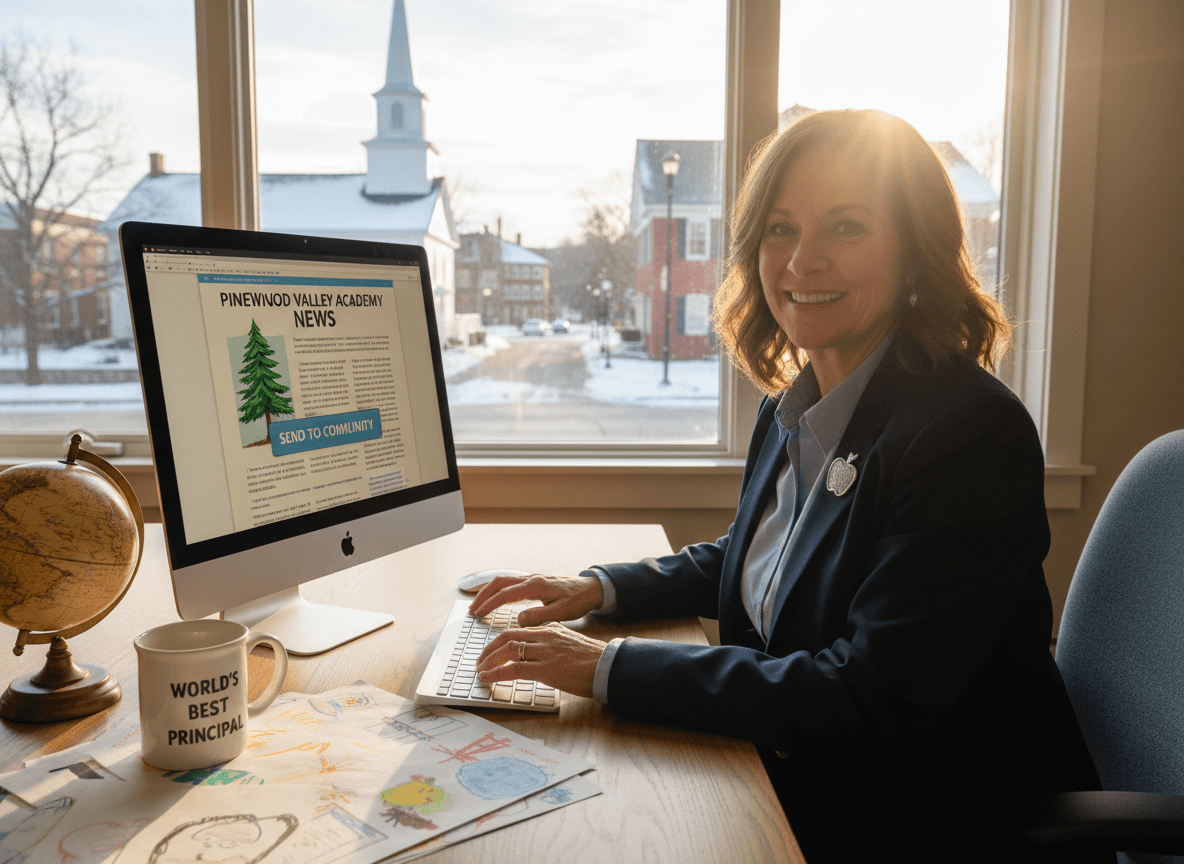
New Hampshire principals work in a state with a strong tradition of local educational control and a public that takes its schools seriously. The state's SAU (School Administrative Unit) structure means many principals serve small districts that operate independently while sharing administrative services. New Hampshire was among the first states to implement competency-based education statewide, a model that requires clear parent communication to function. The NH SAS assessment system produces public school quality data that engaged New Hampshire parents read and discuss. In this environment, the principal's newsletter is not optional. It is the primary tool for maintaining the trust that New Hampshire's community-school culture depends on.
What New Hampshire parents expect from principal newsletters
Manchester and Nashua parents, in New Hampshire's two largest cities, are engaged with school quality data and actively compare schools within the open enrollment options available in New Hampshire. A principal who communicates consistently, honestly, and professionally retains families who might otherwise explore alternatives. Manchester's large immigrant and refugee community, particularly from African and Southeast Asian countries, means translation and culturally accessible communication matters in that district.
Small-town and rural New Hampshire communities, from the Lakes Region to the North Country, are tightly knit. Parents in these communities know each other and the school staff. They want newsletters that reflect the community's character, celebrate local students and events, and maintain the personal tone that defines small-school culture. A newsletter that reads like a corporate memo is out of place in Wolfeboro or Littleton.
New Hampshire NHDOE compliance requirements principals must communicate
- NH SAS Pre-Test and Results Communication: New Hampshire uses the Smarter Balanced assessment for grades 3-8 ELA and math, and the NHSAS for grades 5, 8, and 11 science. Principals must communicate testing windows in advance and distribute individual student score reports with explanatory materials when NHDOE releases results in fall.
- Competency-Based Education Communication: New Hampshire's competency-based education framework (Ed 306.42) requires schools to communicate how competencies are defined, how students demonstrate mastery, and what happens when students need additional time to meet a competency. Annual parent communication explaining this framework is essential.
- New Hampshire School Quality Data (NHDOE): NHDOE publishes annual school performance data publicly. Principals should communicate their school's data proactively when released.
- Title I Annual Meeting: New Hampshire Title I principals must hold an annual meeting, distribute the school-parent compact, and communicate the family engagement policy each year.
- EL Program Notifications: Principals must ensure families of English Learner students receive annual placement and progress notifications in a language they understand.
- Special Education Procedural Safeguards: Principals must ensure IEP meeting notices and procedural safeguard documents reach families of students with disabilities on the required schedule.
Building the NH SAS communication calendar before school starts
The NH SAS testing window falls in spring and is predictable. Plan four newsletter touchpoints in August. First, include testing dates in the back-to-school newsletter so families see the spring timeline from day one. Second, send a January newsletter explaining Smarter Balanced, New Hampshire's performance levels, and how families can support preparation. Third, send a two-week reminder with attendance guidance and testing logistics. Fourth, plan a results newsletter for when NHDOE releases scores in fall, explaining your school's performance with honest context.
For high school principals, add the SAT school day testing date to this calendar. New Hampshire administers the SAT to grade 11 students as part of the NH SAS, and parents need advance notice for planning.
Explaining competency-based education to families
New Hampshire's competency-based education model is genuinely different from what many parents experienced in their own schooling. Students do not advance based on the calendar. They advance when they can demonstrate mastery of defined competencies. For parents who grew up with traditional letter grades and promotion by grade level, this can be disorienting if not explained clearly.
Devote at least one newsletter per year, ideally in August or September, to explaining how competencies work in your school. What are the competencies for each grade level? How do teachers assess mastery? What does it look like when a student needs more time? What are the support options? Clear, plain-language explanation of a model that is genuinely different earns parent confidence rather than confusion.
New Hampshire SAU district communication strategies
New Hampshire's SAU structure creates an interesting communication challenge. Many SAUs include multiple small schools that share a superintendent and administrative services but have distinct school cultures and campuses. Principals in these SAUs should produce campus-specific newsletters that reflect their school's identity, rather than forwarding district-level communications that feel impersonal. District communication covers policies and shared services. Campus communication covers the specific culture, events, and academic focus of your school.
Coordinate with your SAU on testing dates and shared events so your newsletter and the district calendar are consistent, but own your school's voice independently.
New Hampshire calendar events principals should cover each year
- NH SAS testing window (spring, grades 3-8)
- NHSAS science testing dates (grades 5, 8, and 11)
- SAT school day testing date (grade 11)
- NH SAS results release and school performance summary
- Competency-based education overview for new families (fall)
- Semester or trimester report and parent conference schedule
- Title I annual meeting (for Title I schools)
- Professional development days (no school for students)
- Winter weather communication protocols for school closures
Building a newsletter system that fits small New Hampshire schools
Small New Hampshire schools often run lean. A principal in a 200-student K-8 school is managing instruction, compliance, facilities, and relationships simultaneously. A newsletter workflow that takes hours per week is not realistic. Build a simple template in August that locks in required sections and update the content each week. Production time should be 20-30 minutes.
Daystage is built for exactly this workflow. New Hampshire principals using Daystage create their NHDOE compliance template and community engagement structure once, then update content weekly. Direct inbox delivery means parents do not need to navigate to a website or portal. Daystage AI drafts routine sections so principals spend time on the decisions that actually require their judgment. Free plan available, no credit card required.
Get one newsletter idea every week.
Free. For teachers. No spam.
Frequently asked questions
How often should a New Hampshire principal send a newsletter?
Weekly is the right cadence for New Hampshire principals. The NH SAS testing window in spring, NHDOE's annual school quality data release, New Hampshire's competency-based education model, and the long winter stretches in northern New Hampshire communities all create communication needs that a monthly newsletter misses. Weekly newsletters keep parents informed before questions become concerns.
What should a New Hampshire principal include in the back-to-school newsletter?
The August newsletter should cover the school schedule, staff introductions, the NH SAS testing window for spring, how your school's competency-based education approach works for new families, parent conference dates, and any Title I meeting dates. New Hampshire's SAU (School Administrative Unit) structure means many small districts share services. Explain what your SAU handles versus what your school handles so parents know who to contact for different questions.
How should New Hampshire principals communicate about NH SAS results?
The New Hampshire Statewide Assessment System tests grades 3-8 in ELA and math using the Smarter Balanced assessment, with science testing using NHSAS at grades 5, 8, and 11. NHDOE releases results in fall. Send a results newsletter explaining the performance levels, sharing your school's proficiency rates, and describing what support is available for students who did not reach proficiency. New Hampshire parents are highly engaged with academic data and expect honest, specific communication about results.
How should New Hampshire principals explain competency-based education to parents?
New Hampshire is a national leader in competency-based education, where students advance based on demonstrated mastery rather than seat time. Many New Hampshire parents, especially those new to the state or new to their child's school, are unfamiliar with how competency-based grading and promotion decisions work. Principals should dedicate newsletter content early in the year to explaining the model, how competencies are assessed, what mastery looks like, and how parents can monitor progress. Clear, jargon-free explanation prevents year-round confusion.
What is the best newsletter tool for principals in New Hampshire?
Daystage helps New Hampshire principals send professional, consistent newsletters directly to parent inboxes without requiring a portal login. SAU districts with multiple small schools use Daystage to maintain campus-specific communication while sharing a common template structure. For principals explaining competency-based education models, Daystage makes it easy to include links, resources, and visual explanations alongside the weekly update. Free plan available, no credit card required.

Adi Ackerman
Author
Adi Ackerman is a former classroom teacher and curriculum writer with 8 years in K-8 schools. She writes about school communication, parent engagement, and what actually works in real classrooms.
More for Principals
Ready to send your first newsletter?
3 newsletters free. No credit card. First one ready in under 5 minutes.
Get started free