

The North Dakota Principal Newsletter Guide
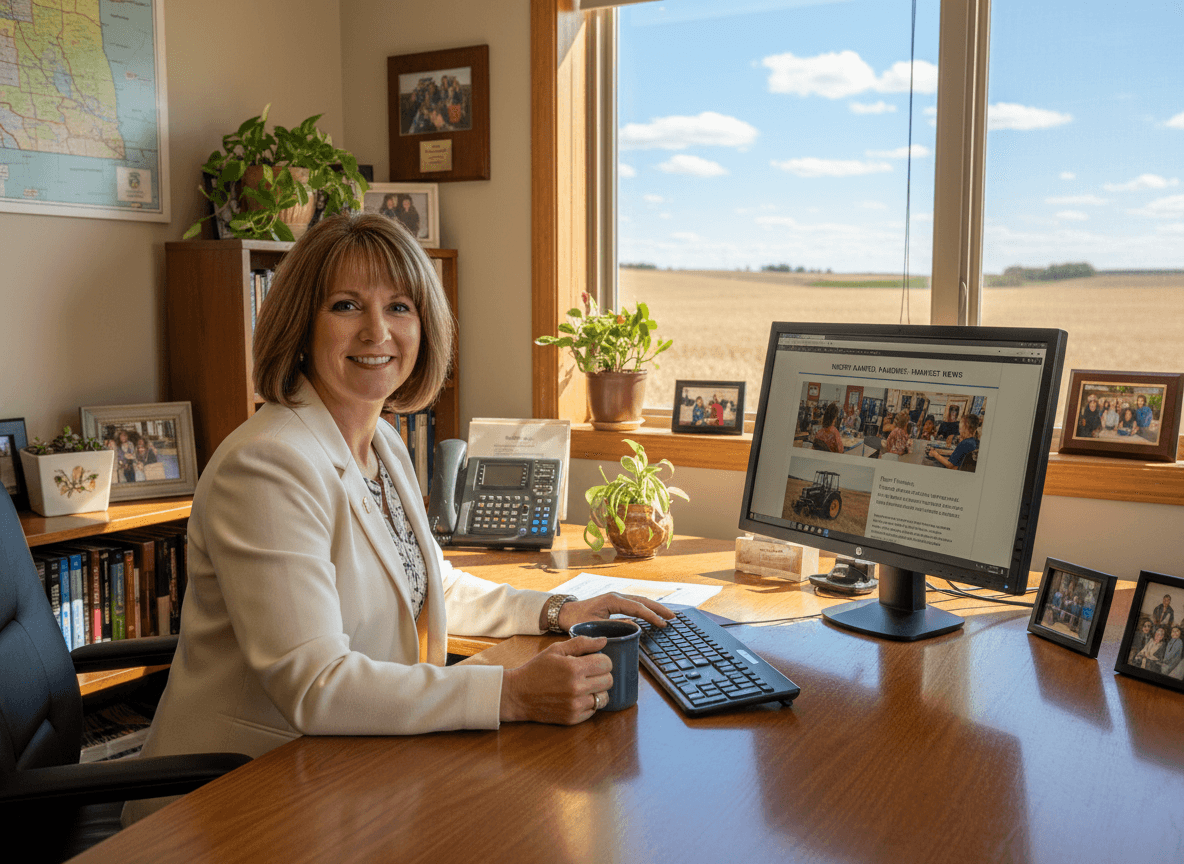
North Dakota principals work in a state defined by small communities, long winters, and a school landscape where many districts have fewer than 100 students. NDDPI reports that North Dakota has over 170 school districts, most of them rural. The two largest districts, Fargo Public Schools and Bismarck Public Schools, account for a significant share of the state's total enrollment but serve very different communities than the state's small agricultural districts. In tribal communities on the Standing Rock, Turtle Mountain, Fort Berthold, Spirit Lake, and Sisseton- Wahpeton reservations, principals navigate both NDDPI requirements and the specific needs of Indigenous families. The principal newsletter in North Dakota is how all of these schools maintain the consistent parent communication that small, tight-knit communities both expect and deserve.
What North Dakota parents expect from principal newsletters
Fargo and Bismarck parents, in the state's two largest urban districts, expect professional communication that reflects academic seriousness. Fargo Public Schools serves a growing refugee and immigrant community, particularly from Somali, Bhutanese, and Southeast Asian backgrounds. For these families, translated communication is essential, not supplemental. Bismarck parents, in a community with strong civic engagement traditions, track school performance data and expect principals to communicate results directly.
Rural North Dakota parents are among the most community-invested in the country. In many small North Dakota towns, the school is the central community institution. A principal who communicates consistently, celebrates local students and events, and maintains a personal voice earns loyalty that carries through even difficult periods like enrollment declines, budget pressures, or consolidation conversations. Rural parents notice immediately when communication becomes infrequent or generic.
North Dakota NDDPI compliance requirements principals must communicate
- NDSA Pre-Test and Results Communication: The North Dakota State Assessment tests grades 3-8 and grade 11 in ELA and math, with science at grades 5, 8, and 11. Principals must communicate testing windows in advance and distribute student score reports when NDDPI releases results in fall.
- NDDPI School Performance Data Communication: North Dakota publishes annual school and district performance data through the NDDPI report card system. Principals should communicate their school's performance data to families when released, especially for schools receiving targeted or comprehensive support designations.
- Title I Annual Meeting: North Dakota Title I principals must hold an annual meeting, distribute the school-parent compact, and communicate the family engagement policy each year.
- Tribal Education Communication: Schools serving Native American students have obligations under federal Indian education law to communicate with tribal education departments and families about programs and services for Native students. Principals should document this outreach.
- EL Program Notifications: Principals must ensure families of English Learner students receive annual placement and progress notifications in a language they understand.
- Special Education Procedural Safeguards: Principals must ensure IEP meeting notices and annual procedural safeguard documents reach families of students with disabilities on the required schedule.
Building the NDSA communication calendar before school starts
The NDSA testing window is predictable in spring. Plan four newsletter touchpoints in August before the year begins. First, include NDSA dates in the back-to-school newsletter so parents see the spring timeline from day one. Second, send a January newsletter explaining what NDSA measures, how North Dakota's performance levels work, and how families can support preparation at home. Third, send a two-week reminder with attendance guidance and test-day logistics. Fourth, plan a results newsletter for when NDDPI releases scores in fall, explaining your school's performance with honest context and a clear direction.
Science testing at grades 5, 8, and 11 adds additional communication points. For high school principals, add the SAT school day testing date alongside NDSA science for grade 11.
Reaching rural and tribal community families
Many North Dakota families, particularly in the western half of the state and in tribal communities, have limited or inconsistent broadband access. A newsletter that requires clicking through to a website may not reach these families reliably. Design newsletters to deliver as complete content directly to the email inbox, loading quickly on mobile data. For the most important communications, such as NDSA dates, parent conferences, and major program changes, send a printed version home with students.
For principals in schools near or on tribal lands, build relationships with tribal education directors and community liaisons who can distribute key communications through tribal channels. The Standing Rock Sioux Tribe, Turtle Mountain Band of Chippewa, MHA Nation (Three Affiliated Tribes), Spirit Lake Nation, and Sisseton-Wahpeton Oyate all have tribal education departments that can serve as communication partners.
Small district newsletter strategies for North Dakota
North Dakota has some of the smallest school districts in the country. Many K-12 schools have under 100 students. The principal in these schools is also often serving as a teacher, counselor, and facilities coordinator. A newsletter that takes hours per week is not realistic. Build the simplest possible template that covers the required sections: principal's message, upcoming dates, assessment update (seasonal), and a community or student spotlight. Each week, update the content. Production should take 20 minutes, not 90.
Keep it personal. In a school where the principal knows every family, the newsletter should sound like it. Generic, corporate-sounding newsletters are more off-putting in small North Dakota communities than no newsletter at all. Use first names. Reference local events. Write the way you talk.
North Dakota calendar events principals should cover each year
- NDSA testing window (spring, grades 3-8 and 11)
- NDSA science testing dates (grades 5, 8, and 11)
- NDSA results release and school performance summary
- NDDPI annual school report card release and your school's data
- Title I annual meeting (for Title I schools)
- Semester report card dates and parent conference schedule
- Professional development days (no school for students)
- Weather closure communication protocols for winter (essential)
- Tribal education program overview (schools serving Native students)
- ACT or SAT school day testing (high school)
Building a newsletter system that holds up through the North Dakota winter
North Dakota winters are long and can close schools and roads for days at a time. A school newsletter that arrives consistently in parent inboxes every week, including through February and March when morale can dip in every community, is a meaningful connection between the school and its families. That consistency is only possible with a system, not good intentions. A simple template updated weekly is what makes it sustainable.
Daystage is built for this. North Dakota principals using Daystage create their NDDPI compliance template and community engagement structure once, update it weekly, and send directly to parent inboxes. No portal login required. Daystage AI helps draft routine sections so principals spend their limited administrative time on decisions that require their judgment. Free plan available, no credit card required.
Get one newsletter idea every week.
Free. For teachers. No spam.
Frequently asked questions
How often should a North Dakota principal send a newsletter?
Weekly is the right cadence for most North Dakota principals. The NDSA testing window in spring, NDDPI's annual performance data release, the long North Dakota winter, and the geographic distances between families in rural districts all make consistent weekly communication more valuable here than in more densely populated states. A monthly newsletter in a rural North Dakota district leaves weeks of silence during critical periods like NDSA preparation, parent conference season, and weather-related closures.
What should a North Dakota principal include in the back-to-school newsletter?
The August newsletter should cover the school schedule, staff introductions, the NDSA testing window for spring, your school's current NDDPI performance data and improvement goals, parent conference dates, and for schools serving tribal communities, a brief overview of how the school partners with tribal education departments. Setting context for the NDSA and accountability framework in August prevents confusion when results arrive later in the year.
How should North Dakota principals communicate about NDSA results?
The North Dakota State Assessment tests grades 3-8 and grade 11 in ELA and math, with science tested at grades 5, 8, and 11. NDDPI releases results in fall. Send a results newsletter when scores are available, explaining the four performance levels, sharing your school's proficiency rates, and describing what supports are in place for students who did not reach proficiency. Rural North Dakota parents who receive results directly from their principal with context and a clear plan are more likely to engage with the school's improvement efforts.
How should North Dakota principals communicate with tribal community families?
North Dakota has five federally recognized tribes, and many North Dakota schools serve significant Native American student populations, particularly in the western and central parts of the state. Principals in these communities should communicate directly about programs and supports for Native students, partner with tribal education directors to distribute key communications through tribal channels, and ensure the newsletter reflects the school's genuine commitment to Indigenous students rather than treating tribal identity as a demographic footnote.
What is the best newsletter tool for principals in North Dakota?
Daystage helps North Dakota principals send professional, consistent newsletters that deliver directly to parent inboxes without requiring a portal login, which matters in rural areas with limited broadband access. Schools in Fargo Public Schools, Bismarck Public Schools, and rural North Dakota districts use Daystage to manage NDSA communication calendars efficiently. Daystage AI helps generate routine content so principals spend time on their communities, not on production. Free plan available, no credit card required.

Adi Ackerman
Author
Adi Ackerman is a former classroom teacher and curriculum writer with 8 years in K-8 schools. She writes about school communication, parent engagement, and what actually works in real classrooms.
More for Principals
Ready to send your first newsletter?
3 newsletters free. No credit card. First one ready in under 5 minutes.
Get started free