

Middle School Principal Newsletter: What to Send in March
March is one of the most loaded months on the middle school calendar. You are managing spring break announcements, wrapping up Women's History Month programming, flagging state testing, supporting 8th graders finishing high school selection decisions, and kicking off spring sports. The March principal newsletter has to move families to action on several fronts at once without becoming a wall of updates they skip.
The discipline here is triage. Figure out which items require a family response before a deadline, which are informational, and which can live in a separate communication. Then write in that order.
Spring break: give families the specifics they need
Spring break belongs near the top of the newsletter. Families are planning childcare, travel, and coverage around those dates. Give them the exact first and last days, confirm the return date, and call out anything that changes the week before or after. Modified schedules, different drop-off times, and changes to after-school programs are all worth a line.
If your school runs a meal distribution program or food pantry during breaks, include pickup details. Middle school families who rely on school meals need that information before the break, not after it starts.
Women's History Month: what students are actually doing
Families at the middle school level want to know their child is in a school that engages meaningfully with history and culture. A brief note on what teachers are doing in class, a book or documentary recommendation, or a mention of a speaker or assembly is enough. You do not need a program summary.
Middle schoolers talk about what happens in class more than they let on. When families have a hook for the conversation, it extends the learning outside school walls. Give them one specific thing they can follow up on at home.
State testing: what March means for your grade levels
March often marks the beginning of the state testing window or the final preparation sprint. Tell families which grades are tested, what subjects are on the assessment, and when the testing window opens. If your school offers morning tutoring, Saturday prep sessions, or any support for students who need it, name them here.
Keep the tone calm and practical. The most effective things families can do are ensure consistent sleep, a real breakfast, and on-time arrivals during test weeks. Say that directly. Families who know what to do feel less anxious than families waiting for guidance.
8th grade high school selection: finalize and confirm
March is typically when 8th grade high school decisions are communicated or finalized. If placement letters, magnet school decisions, or course selection forms go out this month, families need to know the timeline, what documents to expect, and what to do if they have questions.
Include the contact at the receiving high school if families need to ask questions about elective offerings or special programs. These decisions carry real weight for families. Precise information with a clear contact point is significantly more useful than a general note that decisions are being finalized.

STEM fair or science competition prep
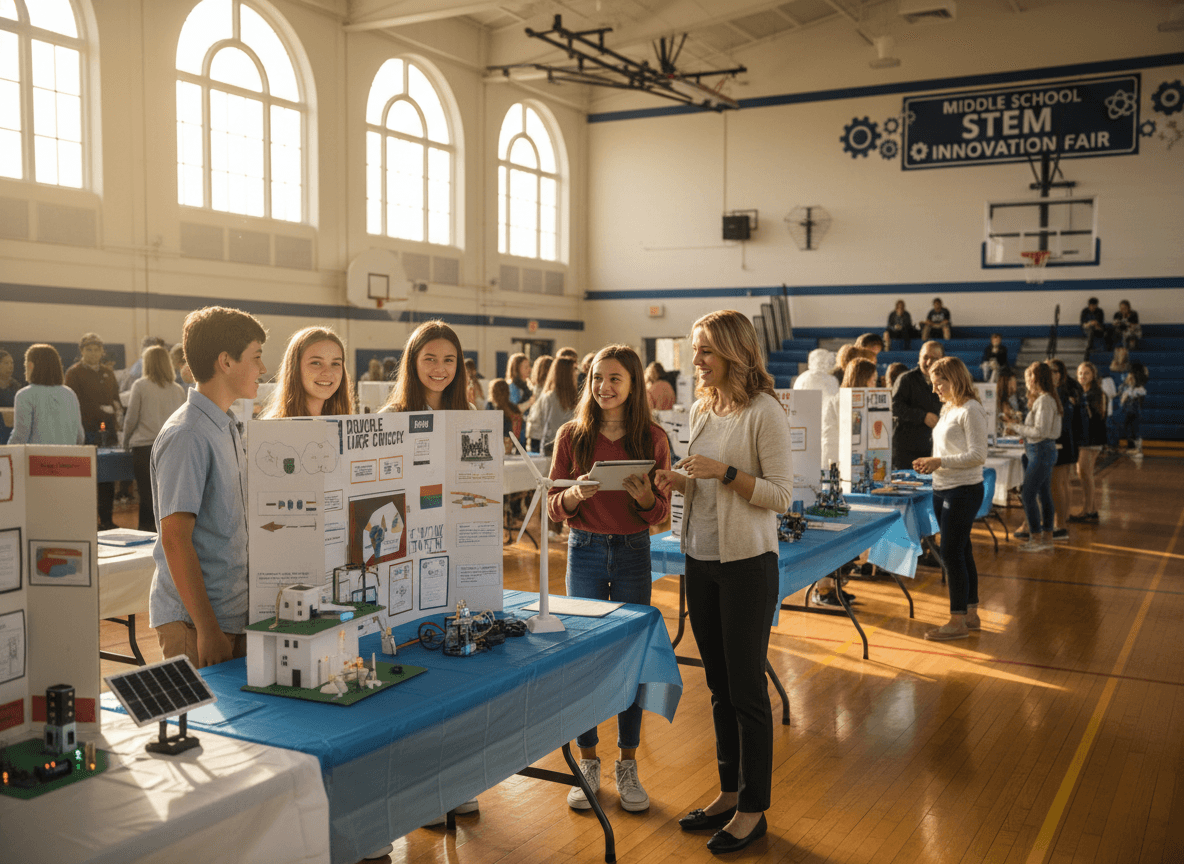
If your school runs a STEM fair or participates in a regional science competition in the spring, March is when families need to know about project requirements and deadlines. A note on what the project involves, when it is due, and how it will be evaluated helps families support their student without guessing.
Middle schoolers doing independent science projects benefit enormously from parents who understand the scope of the work. A two-sentence explanation of the project format in the newsletter prevents a lot of last-minute scrambling in April.
Spring sports: signups and physicals
Spring sports tryouts and signups typically open in March. If there is a signup deadline or a physical requirement, put the date in the newsletter. Not just the season start date, but the deadline to register and any clearance paperwork that needs to be submitted in advance.
Middle school students often want to participate but do not self-advocate for the paperwork. The newsletter reaching parents directly is the most reliable way to make sure that deadline gets on the family calendar.
Closing March with intention
March is the pivot point between the first two-thirds of the school year and the final push. The closing paragraph of your newsletter is a good place to name that directly. Acknowledge the work families and students have put in, and point clearly toward what is coming: spring events, the end of the year, and for 8th graders, the transition ahead.
Close with one specific action item. If spring break is approaching, remind families to update contact information before they travel. If testing is two weeks out, repeat the one practical thing they can do. One clear ask lands better than five general ones scattered across a long newsletter.
Get one newsletter idea every week.
Free. For teachers. No spam.
Frequently asked questions
What are the most important things to cover in a March middle school principal newsletter?
March hits middle school families with several things at once: spring break logistics, Women's History Month, the start of state testing prep, spring sports signups, and for 8th grade families, the final push on high school selection. The most useful approach is to lead with anything that has a deadline or requires a family action, then move to informational updates. Parents of 8th graders need the high school decision details front and center because those timelines are often firm.
How should a middle school principal communicate about state testing in March?
Be clear about which grades are tested and roughly when the window opens. Middle school families appreciate knowing whether their child is in a tested grade and what the school is doing for students who need additional support. Keep the tone practical: encourage regular sleep, timely arrivals, and good breakfast habits during test weeks. Avoid language that creates anxiety about scores. A short, factual paragraph is more reassuring than an extended build-up.
Should the March newsletter mention Women's History Month?
Yes, briefly. A sentence or two about what teachers are doing in classrooms, a book or media recommendation, or a note about an assembly or speaker gives families a window into what students are experiencing. Middle school students at this age are forming opinions about how their school engages with history and culture. A principal who names it specifically signals that the school takes it seriously, not just as a calendar checkbox.
What should the March newsletter say to 8th grade families specifically?
March is typically when 8th grade high school placement decisions are finalized or communicated. Families need to know the timeline, what to do if they have questions about their child's placement or course offerings, and who to contact at the receiving high school. If your feeder high school has a deadline for elective or course selection, include that date. These are high-stakes decisions for families and they appreciate precise information over general reassurance.
What newsletter tool works well for middle school principals?
Daystage is built for school principals who need to get a polished, on-brand newsletter out quickly even during a packed month like March. You can save your template, drop in new content, and send without rebuilding from scratch. The open-rate tracking lets you see whether the 8th grade testing update or high school deadline actually reached families, so you can follow up with a targeted reminder rather than resending to everyone.

Adi Ackerman
Author
Adi Ackerman is a former classroom teacher and curriculum writer with 8 years in K-8 schools. She writes about school communication, parent engagement, and what actually works in real classrooms.
More for Principals
Ready to send your first newsletter?
3 newsletters free. No credit card. First one ready in under 5 minutes.
Get started free