
Middle School Principal Newsletter: What to Send in June
The June principal newsletter is the last one families will read until the school year resumes, which means it carries more weight than most. You are closing out the year, releasing report cards, pointing families toward summer resources, welcoming incoming 6th graders, and thanking the staff and community who made the year possible. The temptation is to make it a long summary of everything that happened. Resist that. Families need clear, actionable information about what happens now and what to expect next.
Write it like a handoff. Give families what they need for summer, acknowledge the year honestly, and send them off with something real.
Report card release: access instructions and key contacts
Report card timing is the first thing many families are watching for in June. Give them the exact date cards are available, whether by mail or through the parent portal. If accessing them requires a portal login, remind families to check their credentials before summer begins. Nothing is more frustrating than finding out in July that a password has expired.
Include the name and contact for whoever fields questions about grades or promotion decisions. Office availability changes quickly after the last day of school. Families who have a legitimate question about a final grade need to know the window for reaching someone who can help.
Summer academic programs: final enrollment reminders
If your school or district offers summer credit recovery, academic support, or enrichment programs, June is the last chance to reach families with enrollment details. Include the program name, who it is designed for, the enrollment deadline, and the contact to register. Families who are on the fence in June will not see another reminder until it is too late.
For families whose student is at risk for retention or needs to address an incomplete, a direct sentence addressing that situation is more helpful than a general program announcement. You do not need to call out students by name. A line like "Families who received a conversation about promotion this spring should reach out to the counseling office before June 20th" gives the right families the information they need.
Summer resources that are actually worth the read
A curated short list beats a long one every time. Pick three to five resources and say briefly why each one matters. The public library summer reading program, one free academic review tool that covers the content your school actually taught, and one local youth program or community resource are usually enough. If you include a resource, include a reason to use it.
Summer reading lists are a staple, but consider offering a range of genres rather than a single grade-level list. Middle schoolers are more likely to read over the summer when they have some choice in the matter.
A welcome note for incoming 6th graders
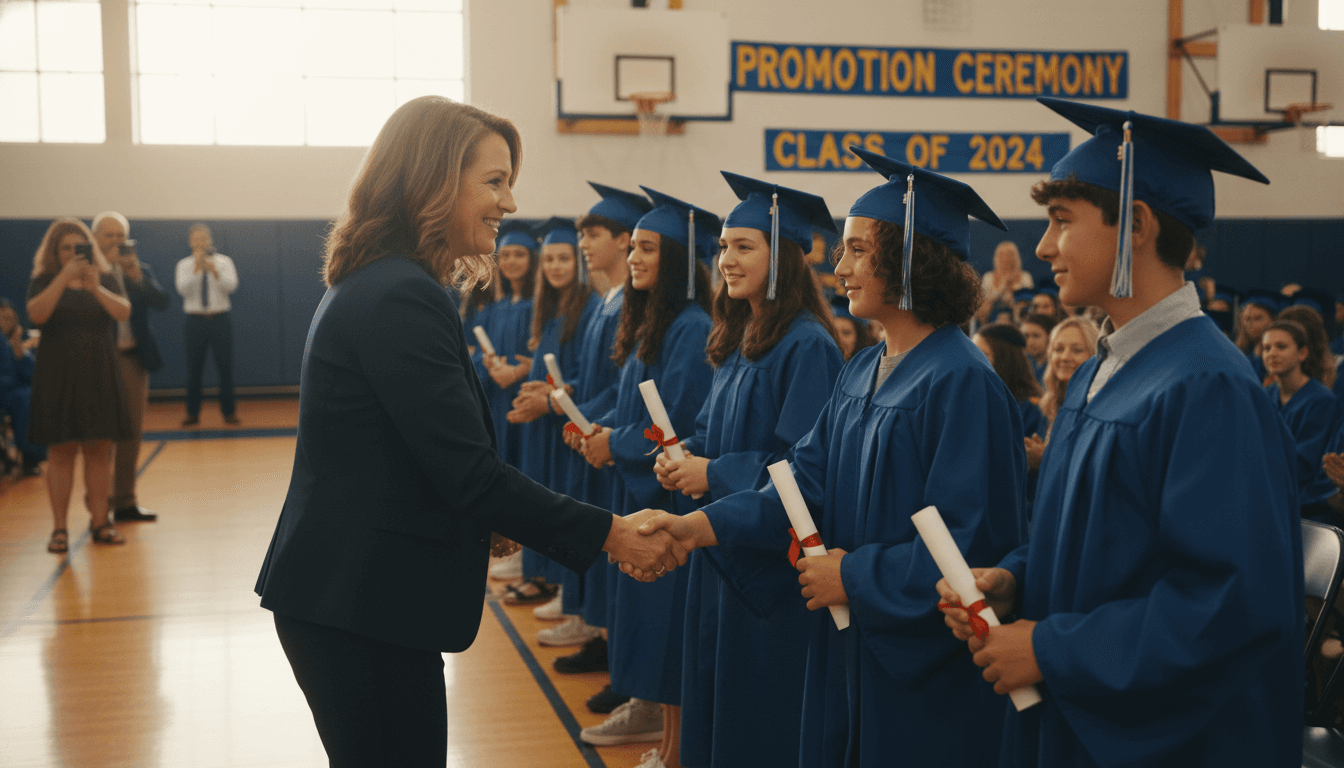
The June newsletter is read by current families, but incoming 6th grade families often receive it too if your school has a communication channel from the feeder elementary. Even if the welcome note reaches only a fraction of incoming families, it matters. These families are nervous about the transition. A direct sentence from the principal acknowledging them, naming the orientation or welcome event scheduled for August, and expressing genuine excitement about the year ahead does a lot of work in very few words.
If you have an orientation date or a schedule pickup day set for August, include it here. Incoming 6th grade families plan their summer around that date.

Transition notes for rising 7th and 8th graders
The June newsletter is a good place to give rising 7th and 8th graders a brief note about what next year will look like. Not a full course catalog, but a sentence or two acknowledging the transition: new electives available, changed advisory structures, or a note about what to expect in terms of academic expectations. Students who feel like next year has been thought about on their behalf arrive in August with more readiness.
If school supply lists or course confirmation letters are going out over the summer, note when families can expect them. The more predictable the summer communication timeline, the fewer questions your office receives in late July.
Thank-you to staff: specific and earned
The year-end thank-you to staff belongs in the June newsletter because families see it and it matters. Name specific people. Mention a specific contribution. A paragraph that says "Our librarian Ms. Chen ran 47 book clubs this year and more than 200 students checked out their first chapter book" means something. A paragraph that says "Our dedicated staff worked tirelessly" does not.
Invite families to send their own notes of appreciation while staff are still reachable. That invitation, made explicitly, results in actual notes sent, which matters to teachers heading into summer.
Closing: what this year was actually about
The last paragraph of the last newsletter is the one families remember. Do not waste it on logistics. Say something true about the year, something specific that happened in your school community that mattered. Acknowledge what was hard. Name what worked. Give families a sentence they will carry into summer.
For 8th grade families in particular, this is the last communication from you as their principal. Make it feel like what it is: a genuine close to a chapter that mattered.
Get one newsletter idea every week.
Free. For teachers. No spam.
Frequently asked questions
What should the final June middle school principal newsletter include?
The June newsletter is the last communication many families will read until August, so it needs to do real work. Cover report card release dates and how to access them, summer learning resources, a welcome note for incoming 6th graders, and any summer program enrollment reminders with final deadlines. Close with a genuine acknowledgment of the year. This is also the newsletter where you thank staff by name and recognize the families who showed up consistently. Specificity matters here more than it does at any other point in the year.
How should a principal communicate report card release in June?
Be specific about when report cards are available and how families access them. If report cards are mailed, give the expected delivery date. If they are accessible through a parent portal, give the exact date the portal opens and a reminder to check login credentials before summer. Families who have questions about a grade or a promotion decision need to know who to contact and before what date, since staff availability changes quickly once the school year ends.
Should the June newsletter address incoming 6th graders?
Yes, briefly. The transition from elementary to middle school is the biggest academic and social shift many families have seen, and a welcoming note in the June newsletter from the principal sets the tone before families ever step foot in the building. Include a note about what to expect in August, whether that is an orientation session, a schedule pickup day, or a welcome letter coming over the summer. Incoming 6th grade families are anxious. Even two sentences from the principal directly addressing them goes a long way.
How do you handle summer resources in a June middle school newsletter?
Keep summer resource lists short and curated. Families do not read a list of forty links. Choose three to five specific resources: the public library summer reading program, one free academic support site that aligns with what your school teaches, and any local youth programs that connect to the school's community. A short note explaining why you selected each resource makes it more likely families will actually follow through.
What newsletter tool should middle school principals use for the June year-end send?
Daystage is a good fit for the June newsletter because it lets you create a well-organized final communication that families can reference over the summer without it disappearing into an email inbox. The public newsletter link stays accessible, so if a family misses the email in June they can still pull up the report card access instructions in July. For a communication as important as the year-end send, having a durable, branded link makes a real difference.

Adi Ackerman
Author
Adi Ackerman is a former classroom teacher and curriculum writer with 8 years in K-8 schools. She writes about school communication, parent engagement, and what actually works in real classrooms.
More for Principals
Ready to send your first newsletter?
3 newsletters free. No credit card. First one ready in under 5 minutes.
Get started free