

Middle School Principal Newsletter: What to Send in April
April is the most testing-heavy month of the middle school year, and your newsletter has to hold the full picture at once. State assessments are either underway or hitting their peak, spring sports are deep into the season with playoffs approaching, Earth Day programming is running through classrooms, and 8th grade families are starting to look toward promotion. Managing all of that in one newsletter without burying the most urgent items takes some discipline.
Lead with what requires a family action right now. If testing is active, that goes first. Everything else follows in order of urgency.
State testing: logistics families need during the window
If your school is in the middle of the state testing window in April, families need to know the specific testing dates by grade level. Give them the exact days. If different grades test on different schedules, break it down clearly. Ask for on-time arrivals on those mornings and minimal absences during the window.
Be honest about what happens if a student misses a test day. If makeup testing is required, say so. Families who understand the logistics make better decisions than families guessing at consequences. Keep the language informational, not threatening. Most families want to do the right thing and just need to know what that looks like.
Supporting students at home during testing
A practical paragraph on home support is worth including, especially for parents who feel anxious about testing and do not know how to help. The most useful guidance is also the most straightforward: consistent sleep, a real breakfast, and a calm morning routine on test days. Avoid screens late at night. Keep morning stress low.
Mention any school-side support available during the testing window, such as morning tutoring, counselor drop-ins, or a quiet work space before school. Some students benefit from knowing those resources exist even if they do not use them.
Attendance push: April is when it matters most
April attendance tends to slide for two reasons: testing fatigue and families who start treating the school year as functionally over. The newsletter is the right place to address this directly without singling anyone out. Remind families that absences during the testing window may require makeup assessments. Note that spring quarter grades count toward promotion decisions.
A brief note from the school counselor about the connection between attendance and end-of-year placement can carry more weight than a general attendance reminder. If you have a counselor who wants to contribute a paragraph, April is a good month for it.
Earth Day: what students are doing at school
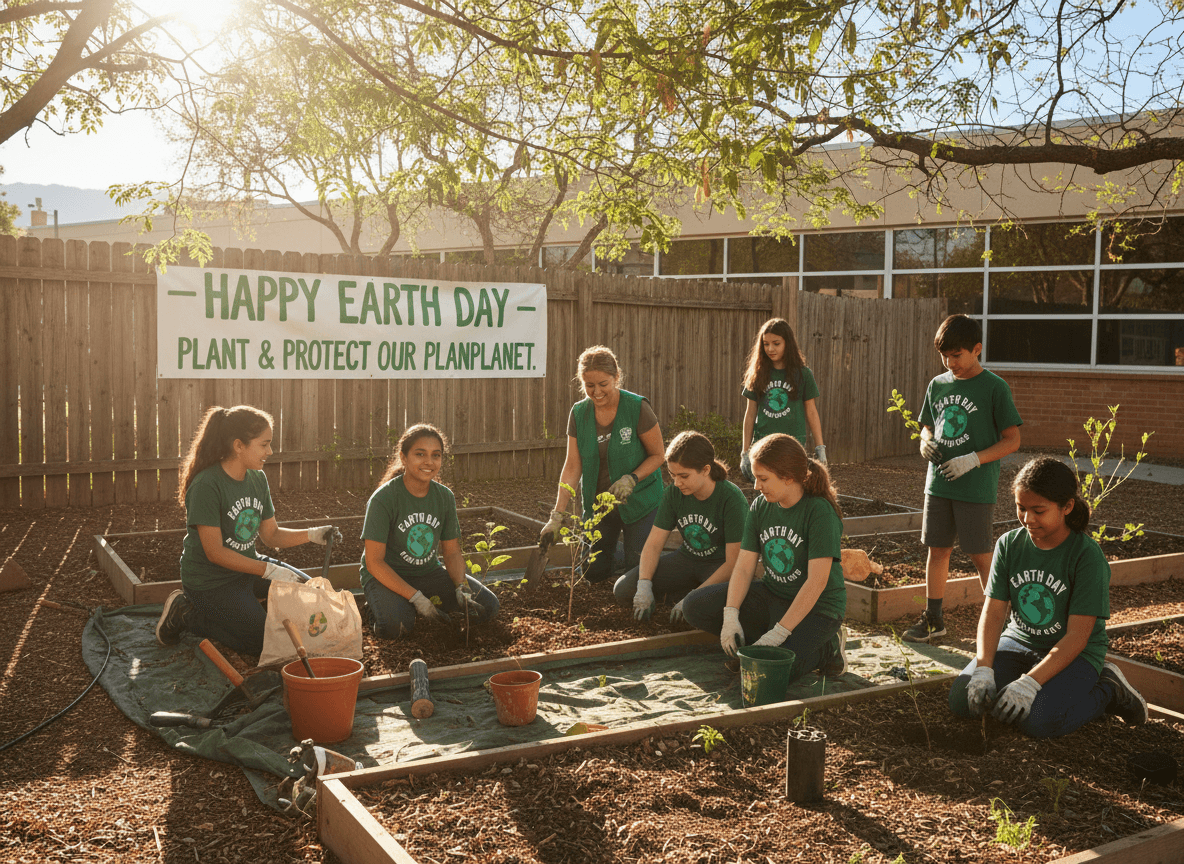
Earth Day falls on April 22nd, and many middle schools organize classroom projects, campus cleanups, or service learning events around it. Give families a two-sentence snapshot of what is happening at school. If students are doing a garden project, a recycling initiative, or a community cleanup, name it specifically.
Middle schoolers doing project-based work around Earth Day often want to extend it at home but do not know how. One concrete suggestion, such as a family cleanup at a local park or a household audit of energy use, gives families a connection point without requiring the newsletter to become a sustainability guide.

School Counselor Appreciation Week
School Counselor Appreciation Week falls in early April. Acknowledge it in the newsletter. Introduce your counseling team by name, describe briefly what they do, and invite families to say thank you. Middle school families often do not know the full range of support counselors provide, and a brief profile in the newsletter builds that awareness.
It also signals to students that the school values the counseling relationship. That matters in the middle school years, when students are more likely to seek help from a counselor they feel is respected by the adults around them.
Spring sports playoffs and what families need to know
Spring sports are hitting their competitive stretch in April, and families with student-athletes need schedule updates. Include playoff brackets or tournament dates if they are set. If transportation to away games is provided, note the logistics. If families need to arrange their own transportation, say that too.
A line recognizing the athletic program and the coaching staff by name goes a long way in April. Playoff runs bring community attention to the school. The principal newsletter is a natural place to acknowledge that.
First mention of 8th grade promotion
April is early enough to plant the seed without overwhelming families with details that are not finalized. A brief note that 8th grade promotion details are coming, with an approximate date or a range for the ceremony, gives families enough to start planning. Families who need to request time off work or arrange childcare appreciate any lead time you can give.
You do not need the full program in April. You just need families to know it is coming and roughly when. More details will follow in the May newsletter when logistics are locked in.
Get one newsletter idea every week.
Free. For teachers. No spam.
Frequently asked questions
What should a middle school principal newsletter cover in April?
April is dominated by state testing for most middle schools, which means the newsletter has to do two jobs at once: keep families informed about testing logistics and keep them engaged with everything else happening in a busy month. Spring sports playoffs, Earth Day, School Counselor Appreciation Week, and the first mention of 8th grade promotion details all belong in April. Lead with testing logistics if your school is in the middle of the window, then move to the events that require family action.
How do you communicate with families during state testing weeks without creating panic?
The most effective testing communication is specific and brief. Tell families the exact testing dates by grade, ask for on-time arrivals and minimal absences during those days, and remind them of the practical supports at home: sleep, breakfast, a calm morning. Avoid building up the stakes of individual scores. Middle school families who receive factual, calm updates are better prepared to support their student than families who receive lengthy messages about testing significance.
When should the April newsletter mention 8th grade promotion rehearsal?
April is a good time for a first mention of 8th grade promotion planning, even if the rehearsal is in May or June. Families benefit from as much lead time as possible to request time off work or arrange for younger siblings. A brief line noting that details are coming, with an approximate date for the ceremony, reduces the volume of individual questions you receive in May.
How do you handle attendance in an April principal newsletter?
April is when cumulative attendance issues become visible, and it is also the month when the end-of-year countdown tempts families to pull students for early vacations. A direct note about attendance expectations during testing and finals, along with a reminder that absences during testing windows may require makeup testing, is worth including. Frame it as information rather than a warning. Families who understand the logistics are more likely to keep students on track.
What platform do middle school principals use to send newsletters in April?
Daystage is a strong choice for April principal newsletters because it lets you create a clean, branded newsletter fast during a month when your time is stretched thin by testing coordination. You can segment your send to reach only 8th grade families with promotion-specific updates, and the delivery confirmation gives you confidence that testing reminders actually reached parents before test week.

Adi Ackerman
Author
Adi Ackerman is a former classroom teacher and curriculum writer with 8 years in K-8 schools. She writes about school communication, parent engagement, and what actually works in real classrooms.
More for Principals
Ready to send your first newsletter?
3 newsletters free. No credit card. First one ready in under 5 minutes.
Get started free