

May Principal Newsletter Template: What to Send Your School Community This Month
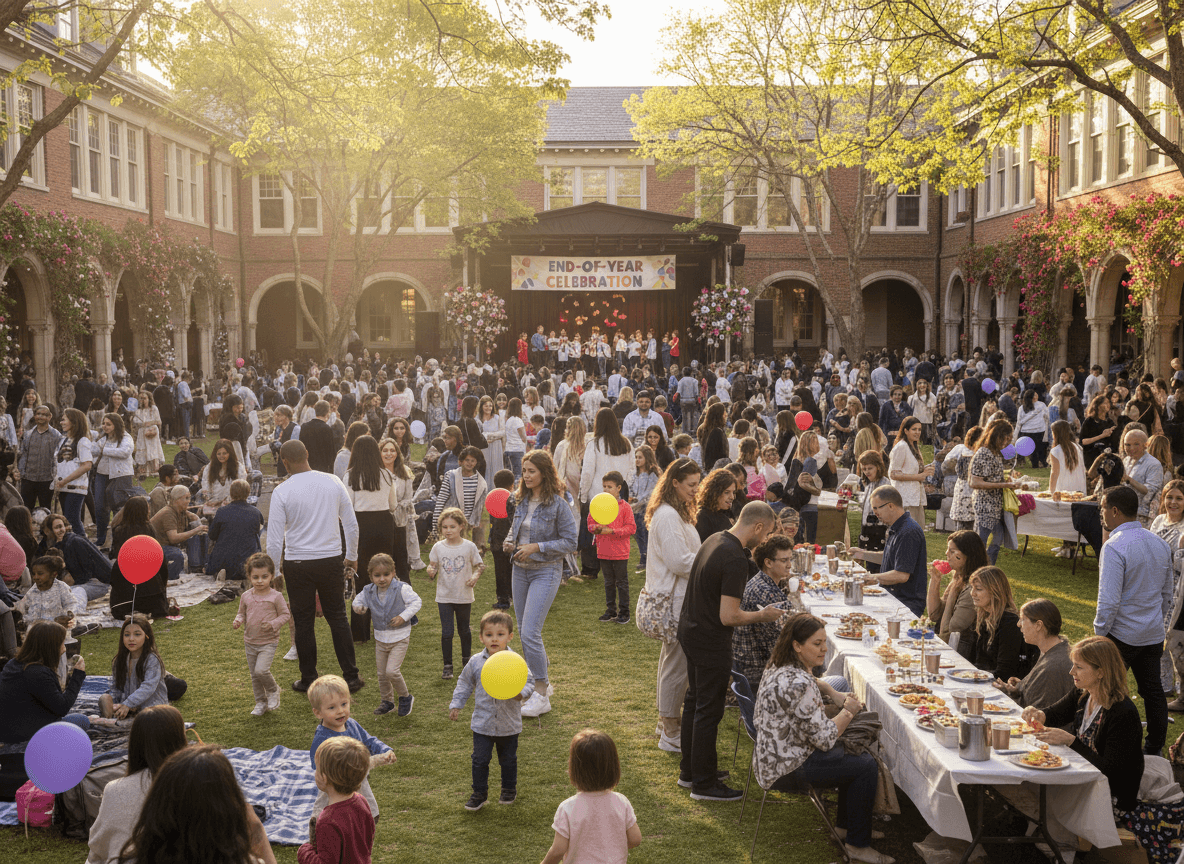
May is the finish line. State testing is largely complete. Events are stacking up on the calendar. Students are buzzing. Teachers are running on the energy of the home stretch and the exhaustion of a full school year. And families, who have been engaged to varying degrees all year, are in their most emotionally present month because the year is about to end and the memories being made now will stick.
The May principal newsletter carries more emotional weight than any other issue of the year. It is also the most logistically dense. Getting it right means covering the practical details families need while also communicating with the warmth and genuine care that the end of a school year deserves.
Principal's note: the meaning of the finish line
The May opening note is the one that will be remembered. This is not the month for a neutral, logistics-focused opener. Families are in a reflective mood in May. They are thinking about what their child accomplished this year, who their child's friends are, which teacher made a difference, and how they feel about the school community their family is part of.
Write an opening that reflects that honestly. Name something the school accomplished this year that you are genuinely proud of. Name something about the students that you observed and that will stay with you. Name something about the school community, parents and staff and students together, that made the year work. This is the one month where sentiment earns its place in the newsletter, as long as it is grounded in something specific and real.
Teacher Appreciation Week: recognition that means something
Teacher Appreciation Week falls in the first full week of May. The principal newsletter is one of the most powerful public recognition channels available. Use it.
Name specific teachers and support staff. Not all of them necessarily, but more than one, and for something particular. "Ms. Rodriguez stayed after school twice a week all year to run the robotics club and sent six students to the district competition for the first time in our school's history" is more powerful than "our teachers work so hard." Specific recognition tells families and staff that the principal is paying attention.
Extend recognition beyond classroom teachers. Include paraprofessionals, custodians, office staff, counselors, and bus drivers. These roles are invisible to many families, and naming them in the newsletter is a meaningful act. Invite families to participate in any school-organized appreciation activities and thank volunteers who supported teachers through classroom help, field trip chaperoning, or event planning during the year.
End-of-year events calendar
May typically has more family-facing events than any other month of the school year. The single most useful thing the May newsletter can do is give families a complete, accurate, easy-to-read calendar of everything happening through the last day of school. Families who do not have this calendar miss things they want to attend. Those misses generate resentment that is entirely preventable.
For each event, include:
- Event name, date, and time.
- Location, including whether it is in the building or off-site.
- Whether family attendance is expected, welcome, or limited.
- Any registration, ticket purchase, or RSVP requirement and the deadline.
- Any student dress code or preparation requirement for the event.
If the list of events is long, a simple table or bulleted list by date is easier to scan than paragraphs. Families reference this section of the May newsletter repeatedly throughout the month.
Graduation and promotion ceremony logistics
For schools with graduation or promotion ceremonies, the May newsletter must include complete logistical information. The office cannot answer individual questions from every family if the newsletter did not give families what they needed first. Cover:
- Ceremony date, time, and location.
- Parking: where to park, whether shuttle service is available, and how early families should plan to arrive.
- Ticket distribution: whether tickets are required, how many each family receives, and when and how to pick them up.
- What graduates or promoted students should wear and when they need to arrive.
- Livestream link if the ceremony will be broadcast for families who cannot attend in person.
- Photography and video policies during the ceremony.

Summer programs and learning opportunities
May is the last practical window for communicating summer program information before the school year ends. After the last day of school, the community disperses and communication reach drops sharply. Use the May newsletter to cover:
- School or district summer learning programs, with eligibility, dates, and registration information.
- Summer reading programs through the school library or public library, including required reading lists where applicable.
- Athletic camps or enrichment programs offered by the school or community organizations.
- Any mandatory summer interventions or reading requirements for students who did not meet grade-level expectations, with the specific steps families need to take.
Volunteer recognition
May is the time to thank the parents and community members who volunteered during the year. A school's volunteer community is one of its most valuable assets, and those volunteers are more likely to return next year, and to recruit others, when they feel genuinely recognized.
Name your volunteers where you can. If the list is very long, at least name the volunteer coordinators and chairs of key programs. Describe what the school year looked like because of their work. A field day that happened because twenty parents helped set up and run stations. A reading program that served sixty students because twelve parent volunteers came in every week. Numbers and specifics make the recognition feel real rather than perfunctory.
Closing the year: the final newsletter
End the May newsletter with something that honors what the year was and points families toward fall. Thank the school community for everything that made the year work. Name what you are looking forward to building on next year. Invite families to stay connected over the summer and to share their feedback on the school's communication and programming.
If your school sends a summer newsletter, mention it here and invite families to stay subscribed. The families who stay engaged over the summer are the most engaged families in September. The May newsletter is your last chance to ask them to stay connected, and most of them will say yes if you ask directly.
Get one newsletter idea every week.
Free. For teachers. No spam.
Frequently asked questions
How should a principal recognize Teacher Appreciation Week in the May newsletter?
Teacher Appreciation Week falls in the first full week of May. The principal newsletter is one of the most meaningful ways to publicly recognize staff. Name specific teachers and support staff and describe something particular they did this year. Generic praise lands weakly. Specific praise for a named person for a named action is what families share with their children and what staff remember. Invite families to participate in any school-organized appreciation activities and thank volunteers who supported teachers throughout the year.
What should the May newsletter include about end-of-year events?
May typically has more events than any other month of the year, and families who do not have a complete calendar miss things they wanted to attend. The May newsletter should include a complete end-of-year event calendar with dates, times, locations, and any registration or ticket requirements. Cover field days, performances, award ceremonies, grade-level celebrations, senior events, and the last day of school. For each event where family attendance is expected or welcome, make that explicit. Families who have the full calendar in advance plan better and show up more.
How should a principal communicate graduation or promotion logistics in May?
Graduation and promotion ceremonies require detailed advance communication. Families need to know the date, time, location, parking logistics, ticket distribution if the venue is capacity-limited, what graduates or promoted students should wear, when they need to arrive, and what happens if a family member cannot attend in person. If your school streams the ceremony, include the link. The more complete the logistics communication in the May newsletter, the fewer individual questions the office fields in the week before the ceremony.
What should a principal say about summer programs in May?
May is the last practical window for communicating summer program registration to families. Cover the school's or district's summer learning programs, including eligibility, registration deadlines, dates, and what families should expect. Include enrichment programs, athletic camps, and any library or community programs affiliated with the school. For students who did not meet grade-level expectations in core subjects, communicate any mandatory summer interventions or reading requirements clearly and with the specific registration steps.
How does Daystage help principals close out the year with strong communication?
Daystage lets principals send the full end-of-year event calendar as a beautifully formatted email that families can reference throughout May. The event block feature makes it easy to list multiple events with dates and details in a scannable format. Many principals also use the final May newsletter to invite families to subscribe or stay connected over the summer, which builds the audience for fall communication. Daystage saves that subscriber list automatically so the fall newsletter reaches everyone from the prior year.

Adi Ackerman
Author
Adi Ackerman is a former classroom teacher and curriculum writer with 8 years in K-8 schools. She writes about school communication, parent engagement, and what actually works in real classrooms.
More for Principals
April Principal Newsletter Template: What to Send Your School Community This Month
Principals · 7 min read
January Principal Newsletter Template: What to Send Your School Community This Month
Principals · 7 min read
Elementary School Principal Newsletter Guide: Building Family Trust from Day One
Principals · 8 min read
Ready to send your first newsletter?
3 newsletters free. No credit card. First one ready in under 5 minutes.
Get started free