
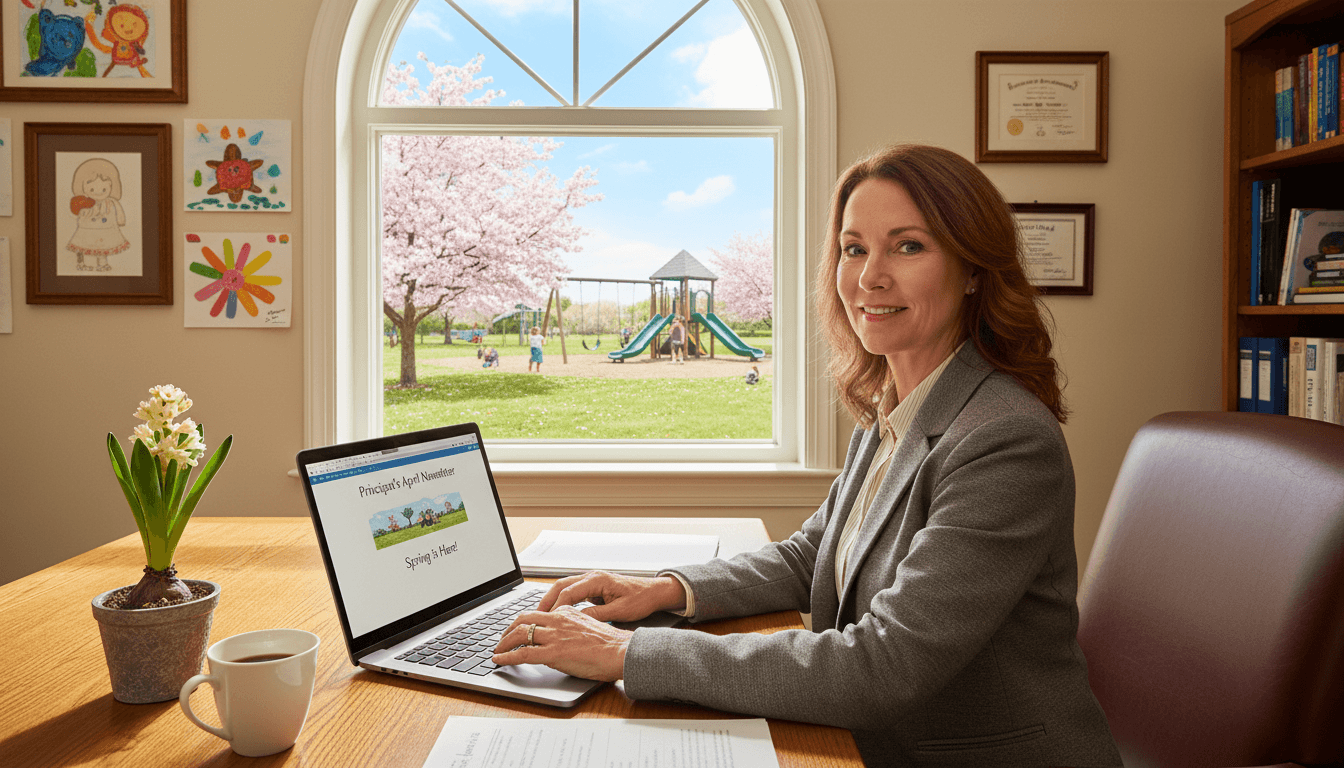
April Principal Newsletter Template: What to Send Your School Community This Month
April is the most operationally intense month of the school year for most principals. State testing windows are open in most states. Spring sports seasons are at their peak. High school end-of-year events, including prom and senior programming, are either happening or being planned. Earth Day falls on the 22nd. And underneath all of it, the end of the year is close enough that families are beginning to ask questions about what comes next.
The April principal newsletter needs to be focused and practical. Families do not need inspiration in April. They need accurate information delivered clearly so they can support their students through the most demanding stretch of the school year.
Principal's note: naming the stretch
April is not the month for a warm and leisurely opening. Acknowledge the reality directly: this is a busy and demanding stretch for students and families, and the school knows it. A brief, honest opening that names what is happening, testing season, spring events, the push toward year-end, and expresses the school's confidence in the community's ability to get through it builds more trust than a cheerful opener that ignores what families already know.
Two to three sentences is enough. Then get directly into the content families need. In April, the opening note should orient, not delay.
State testing: final logistics and what families need to know
If you sent a testing preparation newsletter in March, the April newsletter is the logistics follow-up, not a repeat of the preparation guidance. Families now need specifics:
- Testing schedule by grade: Which grades are testing which subjects on which dates? If your school has a published testing calendar, summarize it and include a link.
- Day-of logistics: What time do students need to arrive? Are there schedule changes on testing days? What should students bring?
- Attendance during testing: Why it matters, what happens if a student misses a testing day, and how make-up sessions are handled.
- Technology testing reminders: For computer-based tests, are students allowed to bring personal devices? Are there any login requirements families should know about?
- After testing: When will results be available, and what will the school communicate when they arrive?
Keep the tone calm and practical. Students who arrive at school on testing days rested, fed, and without anxiety from home perform better. Your newsletter communication directly affects the household energy around testing.
Spring sports: full season in motion
By April, every spring sport is in full competition. The April newsletter is the right time for a substantive athletic update. Include a brief summary of each active spring sport: where the team stands in its season, any significant recent results, and upcoming games or meets that families can attend.
Go beyond results where possible. Name a student athlete who showed leadership or improvement. Note a coach who is doing something worth recognizing. Spring sports bring families to school buildings at times that are different from the traditional school day, and the newsletter is one tool for driving that attendance and community energy.

Prom and senior events for high schools
High school principals should dedicate a section of the April newsletter to senior programming. For most high schools, prom is in late April or early May. Senior families need:
- Prom date, location, and ticket information.
- Dress code expectations and any guidelines that are enforced.
- School-sponsored safe transportation options if the school has them.
- The school's policy on after-prom activities, including any school-sponsored safe celebrations.
Beyond prom, April is when other senior events, senior breakfast, senior skip policies, senior privilege programs, and graduation planning, begin to accelerate. A brief preview of the senior calendar through May helps senior families plan and reduces last-minute questions.
Earth Day: connecting school to community
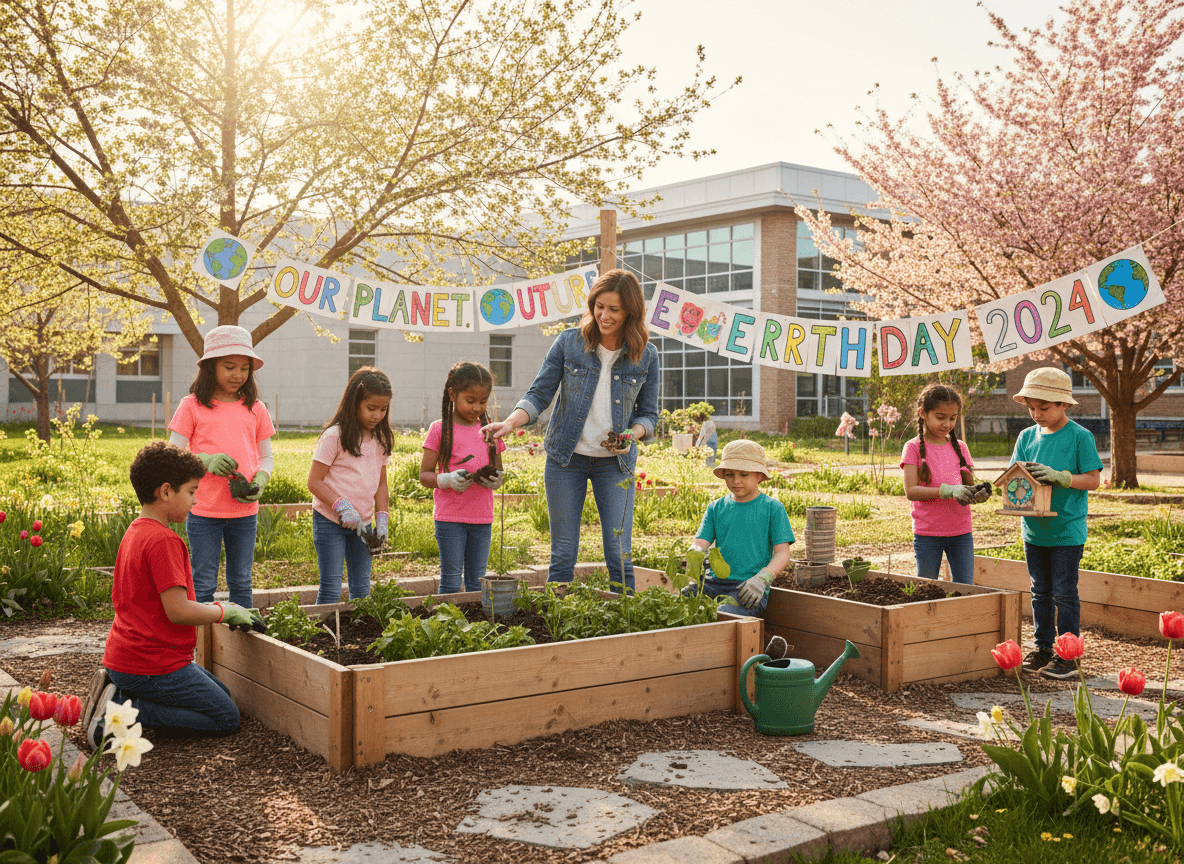
Earth Day on April 22nd is an opportunity to highlight environmental learning and community action at your school. The newsletter is the right place to share what your school is doing:
- School garden projects or outdoor learning spaces, including what students are growing or building.
- Recycling, composting, or energy conservation initiatives running in the building.
- Science units or service learning projects connected to environmental topics.
- Earth Day assemblies, community cleanups, or schoolwide events.
- Partnerships with local environmental organizations or parks.
Even if your school's Earth Day programming is modest, name it. A school that acknowledges environmental education and gives students hands-on work connected to the natural world is modeling something families value.
School garden and outdoor projects
April is planting season in most of the country. If your school has a garden, April is when it comes to life. Share an update on what is being planted, which classes are working in the garden, and whether families can volunteer for garden workdays or donate supplies.
If your school does not have a garden but has outdoor learning spaces, nature trails, outdoor classrooms, or simply uses the schoolyard for science observation, describe what students are doing outside in April. Families rarely know about outdoor learning unless the principal tells them. These activities are exactly the kind of content that makes families proud of their school and more likely to stay engaged through the end of the year.
Closing April: pointing toward the final stretch
End the April newsletter by orienting families to what is coming in May. Testing results coming soon. End-of-year events beginning to land on the calendar. Teacher Appreciation Week in the first full week of May. Graduation or promotion ceremonies for the schools that have them.
A brief, specific closing that connects April to May reminds families that the year is not over and that the best communication is still ahead. April families who feel well-informed going into May are the most engaged community members at end-of-year events, which makes those events better for everyone.
Get one newsletter idea every week.
Free. For teachers. No spam.
Frequently asked questions
What should the April principal newsletter say about state testing?
April is when most state testing windows are fully open or just opening, so the newsletter should be specific and practical. Give families the exact testing dates for each grade level, confirm what students need to bring, explain any schedule changes on testing days, and cover how make-up testing works for absent students. This is not the month for general testing preparation guidance. April families need logistics, not motivation. Keep the tone calm and clear, and avoid language that raises anxiety about stakes.
How should a principal communicate prom and senior events in April?
High school principals should dedicate a newsletter section to senior events happening in April and May. Cover prom date, location, ticket cost and sales process, dress code expectations, and any school-sponsored safe transportation options. For senior-only events like senior breakfast, senior skip day policies, or senior privilege programs, be explicit about what is sanctioned and what is not. Senior families who receive clear communication about end-of-year events are more cooperative and less anxious as the year closes.
How should a principal address Earth Day in the April newsletter?
Earth Day on April 22nd is an opportunity to highlight what your school is doing in sustainability, environmental education, or outdoor learning. Name specific activities: a school garden project, a recycling initiative, a science unit on environmental systems, a community cleanup, or a schoolwide Earth Day event. If the activities connect to state science standards or service learning requirements, mention that briefly. Families respond well to newsletters that show students doing real work connected to the real world.
What should the April newsletter say about spring sports?
By April, spring sports seasons are fully underway. Include a brief update on each spring sport: current records or standings, upcoming key games or meets, and any athlete recognition worth highlighting. For middle schools, this might mean intramural sports or physical education highlights. For elementary schools, it might mean after-school sports programs or field day preparations. The goal is to acknowledge that the whole school is in motion, not just the academic program.
How does Daystage help principals during the high-volume April communication period?
April is one of the heaviest communication months of the school year because testing, spring events, and end-of-year logistics all overlap. Daystage lets principals schedule newsletters in advance so communication goes out on the planned schedule even during the most demanding testing weeks. The template system means each April newsletter takes minutes to populate, not hours to build. Principals who use Daystage report that maintaining consistent communication during testing season is much more manageable with a tool designed for it.

Adi Ackerman
Author
Adi Ackerman is a former classroom teacher and curriculum writer with 8 years in K-8 schools. She writes about school communication, parent engagement, and what actually works in real classrooms.
More for Principals
March Principal Newsletter Template: What to Send Your School Community This Month
Principals · 7 min read
May Principal Newsletter Template: What to Send Your School Community This Month
Principals · 7 min read
Elementary School Principal Newsletter Guide: Building Family Trust from Day One
Principals · 8 min read
Ready to send your first newsletter?
3 newsletters free. No credit card. First one ready in under 5 minutes.
Get started free