
Elementary Principal Newsletter: What to Send in May

May is the month when the school year starts to feel like a celebration. Events are stacking up, students are energized, and families are paying close attention. The May elementary principal newsletter is one of the most read communications you send all year, because it covers things families genuinely care about: ceremonies, field day, teacher appreciation, and the start of summer planning.
The risk in May is writing a newsletter that tries to say everything and ends up saying nothing clearly. Organize it so families can find what they need, take action where required, and feel the warmth of a year that went well.
Teacher and Staff Appreciation Week: lead with it
Teacher and Staff Appreciation Week is typically the first full week of May, and it deserves the lead position in your newsletter. This is one of the few moments in the school year when families are explicitly invited to participate in school culture, not just receive information from it. Tell them exactly how to show up.
Be specific about the daily themes or activities your PTA has organized. If families are encouraged to bring flowers, write notes, or contribute to a class lunch, give them the what, the when, and the how. Families who want to participate but receive only a vague "show your appreciation" message often end up doing nothing because they are not sure what is appropriate. Clear guidance produces more participation, and more participation makes the week feel like the community event it is meant to be.
Do not forget to include classified staff, custodians, office staff, and cafeteria workers. A newsletter that only mentions classroom teachers misses an opportunity to model the kind of gratitude culture you want your students to carry with them.
End-of-year event calendar: what families need to plan around
May is when families start asking "when is the last day?" and "what is happening at the end of the year?" Give them a clear overview of the final weeks. You do not need every detail yet, but the major events with their dates: kindergarten graduation, fifth grade promotion, field day, talent show, spring concert, volunteer appreciation, and the last day of school.
Families are scheduling work time off, grandparent visits, and end-of-year childcare. The more lead time they have, the better prepared they will be to actually attend the events that matter to them.
Kindergarten graduation and fifth grade promotion details
These ceremonies deserve their own brief section rather than a line buried in the event calendar. Families attending a kindergarten graduation or fifth grade promotion have logistical questions: where to park, how long the ceremony runs, how many guests can attend, whether there are assigned seats, and what students should wear.
If ticket availability is limited, say so in this newsletter rather than waiting until the week of the event. Families who find out late that they needed to request tickets in advance are understandably frustrated. Early, clear communication about capacity gives everyone a fair chance to plan.

Field day: logistics and what students should bring
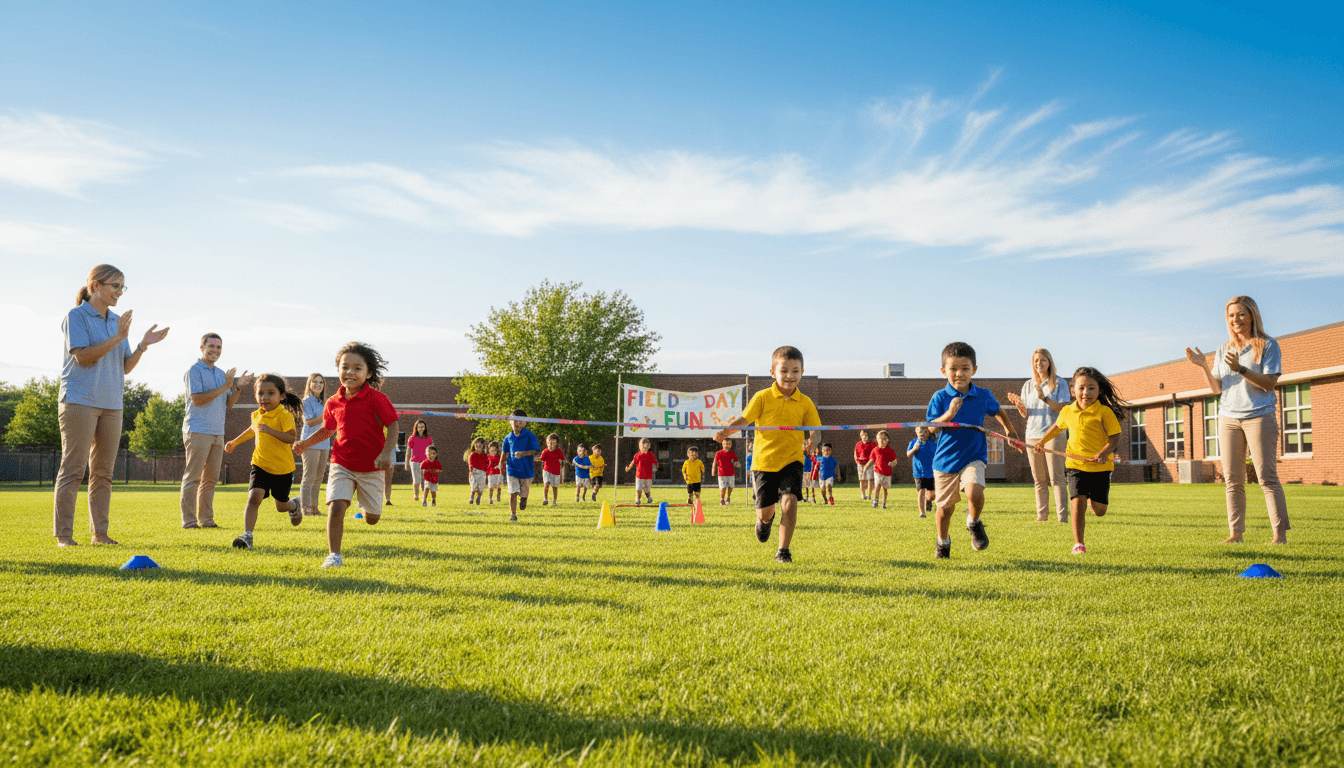
Field day is a highlight for elementary students, and the newsletter is where you make sure the day runs smoothly. Tell families the date, what grade levels participate when, whether students should wear specific colors or clothing, and what to pack. Water bottles, sunscreen, closed-toe shoes, and an extra change of clothes are the usual requests.
If you need parent volunteers for field day stations, say so here with the sign-up deadline. Field day volunteer slots tend to fill up fast, especially for outdoor events. Give families a clear window so you are not scrambling the week before.
Summer reading program preview
Planting the summer reading seed in May sets up a smoother transition in June. Mention the program by name, say where families can sign up or pick up materials, and give one reason to participate. If the school library has a kickoff event in early June, include the date. If you are partnering with the local public library, name it and mention that it is free.
Keep this short in May. Families are not ready to think deeply about summer learning yet. You just want the information on their radar before June hits and the end-of-year rush drowns everything out.
Lost-and-found: the annual appeal
Every school has it. By May, the lost-and-found is usually overflowing. A specific ask in the principal newsletter gets more action than a general reminder posted in the hallway. Tell families when you plan to donate unclaimed items, and ask them to walk through the lost-and-found with their child before that date.
This is also a moment to mention labeling: a brief note that labeled items are much more likely to be returned is genuinely useful for families who still have a year of school ahead of them. Frame it as practical advice, not a complaint about the current pile.
Closing May with genuine appreciation
End the newsletter with something personal. May is when principals can look back at the year with some perspective. Name one thing that happened this year that you did not anticipate and that turned out to be meaningful. Acknowledge the families who showed up consistently. Thank the volunteers, the room parents, the folks who came to every single event even on a Tuesday night in January.
Families who feel seen by the principal at the end of the year return in August with goodwill already established. That goodwill is worth protecting with a closing paragraph that says something real rather than something generic.
Get one newsletter idea every week.
Free. For teachers. No spam.
Frequently asked questions
What should the May elementary principal newsletter lead with?
Teacher and Staff Appreciation Week is the natural lead for May. It is the biggest community-facing event of the month, it requires family participation to go well, and it signals the kind of school culture you want to celebrate as the year wraps up. Tell families specifically how they can participate, whether that means signing up to bring lunch, writing a note, or joining a celebration morning. Families want to show up for this but often do not know how.
How do you communicate kindergarten graduation and fifth grade promotion in the newsletter?
Be specific about timing, location, what students should wear, and who is invited. End-of-year ceremonies create a lot of family questions because they feel more formal than a typical school event. If there are ticket limits, say so early so families can plan. If the event will be recorded and available later, mention that too. Families who cannot attend appreciate knowing they will have another way to see it.
When should field day information go in the May newsletter?
Include field day details the week before the event at the latest, and earlier if you are asking families to volunteer or send students in specific clothing. Field day is a high-anticipation event for elementary students. Families who know what to expect, whether their child needs to wear house colors, bring extra water, or pack a different kind of snack, can prepare their child and avoid the morning panic of not knowing.
How do you introduce the summer reading program in the May newsletter?
Keep it brief and make it feel like an invitation, not an assignment. Name the program, say where families can sign up or pick up materials, and give one concrete reason to participate. If the school or local library has a kick-off event, mention the date. The goal in May is to plant the seed. You will have the June newsletter to give more detail as the end of school gets closer.
How does Daystage help elementary principals send the May newsletter efficiently?
Daystage is particularly useful in May because the newsletter needs to cover a lot of ground without feeling overwhelming. You can use separate content blocks for each topic, appreciation week, end-of-year events, field day, and summer reading, so families can scan to what matters to them. The event block with RSVP lets you collect field day volunteer signups or ceremony RSVPs directly inside the newsletter, which saves families the step of hunting for a separate form.

Adi Ackerman
Author
Adi Ackerman is a former classroom teacher and curriculum writer with 8 years in K-8 schools. She writes about school communication, parent engagement, and what actually works in real classrooms.
More for Principals
Ready to send your first newsletter?
3 newsletters free. No credit card. First one ready in under 5 minutes.
Get started free