

Elementary Principal Newsletter: What to Send in April
April is the month when the school year tips toward the end. State testing is happening or just finished for many grades, spring events are stacking up on the calendar, and families are starting to feel the pull of summer. The April elementary principal newsletter has real work to do: it needs to keep families engaged at a moment when attention tends to drift, while also handling the practical logistics that require action.
A well-organized April newsletter does not try to cover everything. It picks the items that matter most, structures them clearly, and respects the time of families who are just as busy as you are.
State testing: the practical update families need
If state testing is happening in April for your third, fourth, and fifth graders, this is your primary logistics communication. Tell families the test dates or window, confirm which grades are involved, and remind them what they can do to support their child. Keep the tone matter-of-fact. Testing is a part of the school year, not a crisis.
The most useful thing you can say is practical: students do better when they sleep well, eat breakfast, and arrive on time. If the school has any changes to scheduling during testing week, like modified specials or altered lunch timing, mention that now so families are not caught off guard. Families who feel informed are better partners during testing week than families who are guessing.
Earth Day and what your school is actually doing
Earth Day lands on April 22nd, and many elementary schools build something meaningful around it. The principal newsletter is the right place to tell families what that looks like at your school. A garden project, a building-wide recycling push, a classroom read-aloud series, a litter clean-up walk: all of these are worth naming specifically.
Families who know their child participated in something concrete on Earth Day have a conversation to look forward to at dinner. Families who only hear a vague mention of environmental awareness have nothing to grab onto. Specificity is what turns a newsletter item into a family moment.
Poetry Month: one thing families can do at home
April is National Poetry Month, and elementary classrooms often build it into their literacy work. A brief mention in the newsletter is worthwhile, especially if you can give families one thing to do: a short poem to read together, a question to ask their child about what they wrote in class, or a book recommendation from your librarian.
You do not need to write a full description of the classroom poetry unit. One sentence of context and one concrete action is more valuable than a paragraph that families will skim past.
Spring pictures: the logistics families want up front
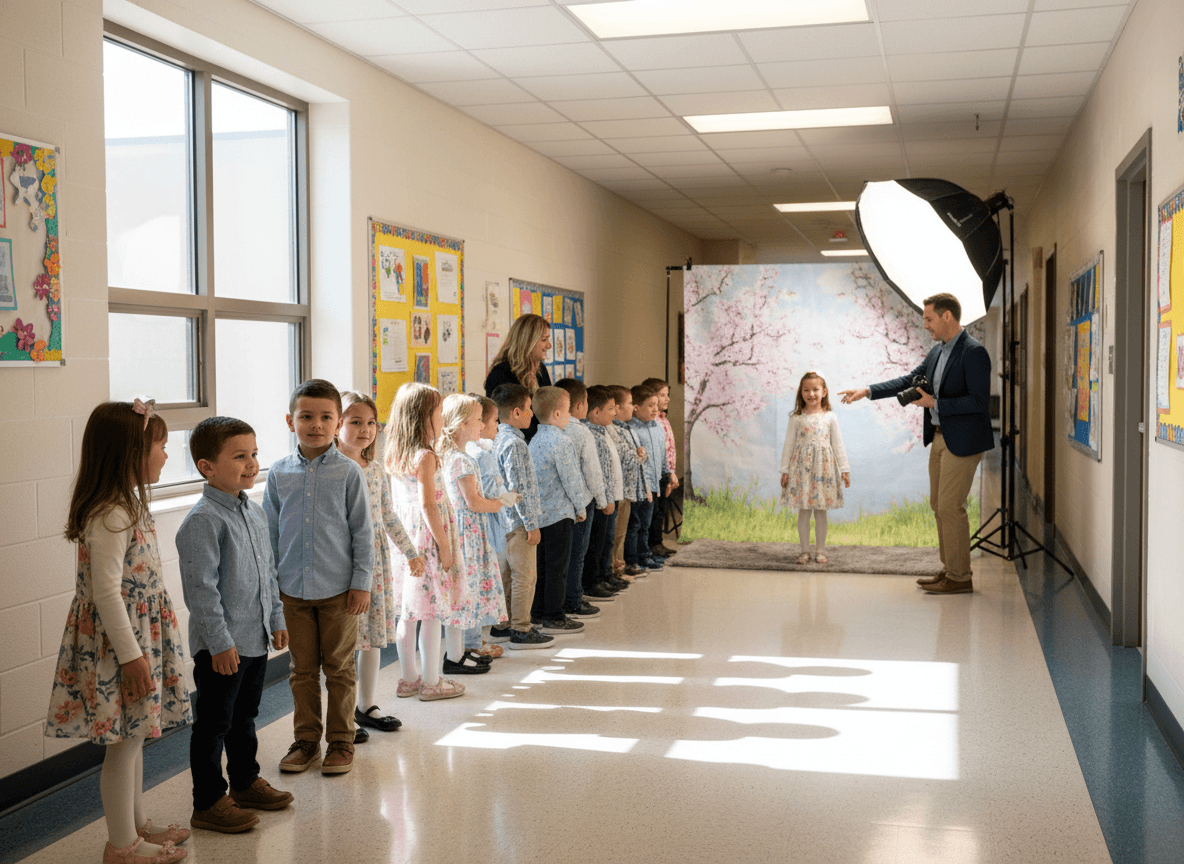
Spring picture day creates questions every year: what to wear, whether retakes are available, how to order, what the deadline is. Put the logistics in the newsletter clearly. Date, instructions for ordering, and whether makeup pictures are offered. If retakes from fall picture day are also available in spring, say that too.
Elementary families do not mind being reminded about picture day. They do mind finding out the deadline passed while they were waiting for the order form that never came home in their child's backpack.

Spring carnival, fundraiser, or community event
Many elementary schools hold their biggest community event of the year in April or May. If a spring carnival, auction, or fundraiser is coming up, April is when families need the details. Date, ticket purchase deadline, volunteer sign-up link, and what the funds support. Give families enough to put it on their calendar and take action if they want to be involved.
If volunteers are needed, be specific about what you need. "We need 12 people to help with setup on the evening of April 25th from 4 to 7 PM" is more likely to get responses than a general call for help. Families who want to contribute respond better to a clear ask than an open-ended invitation.
Inclusive messaging around spring holidays
April brings Easter and Passover, and many families observe one, the other, both, or neither. A brief acknowledgment in the newsletter of the spring holiday weekend, combined with a clear statement of the school's calendar, is respectful and practical. Avoid language that inadvertently centers one tradition while ignoring others.
If your school has classroom celebration guidelines, April is a good time to remind families of the policy. This is especially relevant if you have had misunderstandings in previous years. A calm, advance reminder is far easier to manage than a reactive note after something has already happened.
Garden club, outdoor classroom, and spring learning
Spring is when outdoor learning picks up at elementary schools. If you have a garden club, an outdoor classroom space, or grade-level field experiences planned for April or May, mention them. Families like knowing that learning is extending beyond the four walls of the building. It also gives students something to tell their families about before they even get home.
Close the April newsletter by naming one thing that is working. A test that went smoothly, a classroom observation that surprised you, a student moment that reminded you why this work matters. April can feel like a gauntlet of logistics. A specific moment of humanity at the end of the newsletter reminds families that you are running a school, not just a schedule.
Get one newsletter idea every week.
Free. For teachers. No spam.
Frequently asked questions
What should an elementary principal prioritize in the April newsletter?
April has a lot of activity, so the question is what requires family action and what is purely informational. State testing logistics, spring pictures, and carnival or fundraiser deadlines all require something from families. Earth Day and Poetry Month are informational and cultural. Lead with the items that need a response, then layer in the awareness items. Families who need to act appreciate knowing immediately rather than finding out after a long newsletter.
How do you communicate state testing to elementary families in April without creating anxiety?
Be specific about which grades are tested and roughly when, but center the message on what the school is doing to support students rather than on consequences or scores. Remind families of the practical things they control: sleep, breakfast, on-time arrival. If your school offers testing prep sessions or morning check-ins for students who are anxious, mention those specifically. Families who feel like the school has a plan are calmer about testing than families who are just told it is happening.
Should the April newsletter mention Easter and Passover?
Yes, briefly and inclusively. A simple acknowledgment that spring holidays are approaching and a reminder of the school holiday schedule is helpful. Avoid language that centers one tradition over another. Something like 'We wish all families a restful spring holiday weekend' works well for a diverse community. If there are specific classroom celebration policies, April is the time to remind families of those guidelines.
How do you cover Earth Day in a principal newsletter?
Connect it to something tangible happening in your school. If classrooms are doing a school-wide clean-up, a planting project, or a recycling drive, name it specifically. Families respond better to 'Our fourth graders planted 30 seedlings in the school garden on April 22nd' than to a general statement about environmental awareness. One concrete detail gives the moment weight and gives students something to talk about at home.
How does Daystage help elementary principals manage the busy April newsletter?
Daystage makes it easy to organize a newsletter that covers multiple topics without it feeling scattered. You can use section blocks to separate testing updates, event announcements, and cultural moments so families can scan and find what matters to them. The built-in school branding means every April newsletter looks consistent with what families have been receiving all year, which builds trust even before they read a single word.

Adi Ackerman
Author
Adi Ackerman is a former classroom teacher and curriculum writer with 8 years in K-8 schools. She writes about school communication, parent engagement, and what actually works in real classrooms.
More for Principals
Ready to send your first newsletter?
3 newsletters free. No credit card. First one ready in under 5 minutes.
Get started free