

April Academic Progress Update Newsletter for School Families
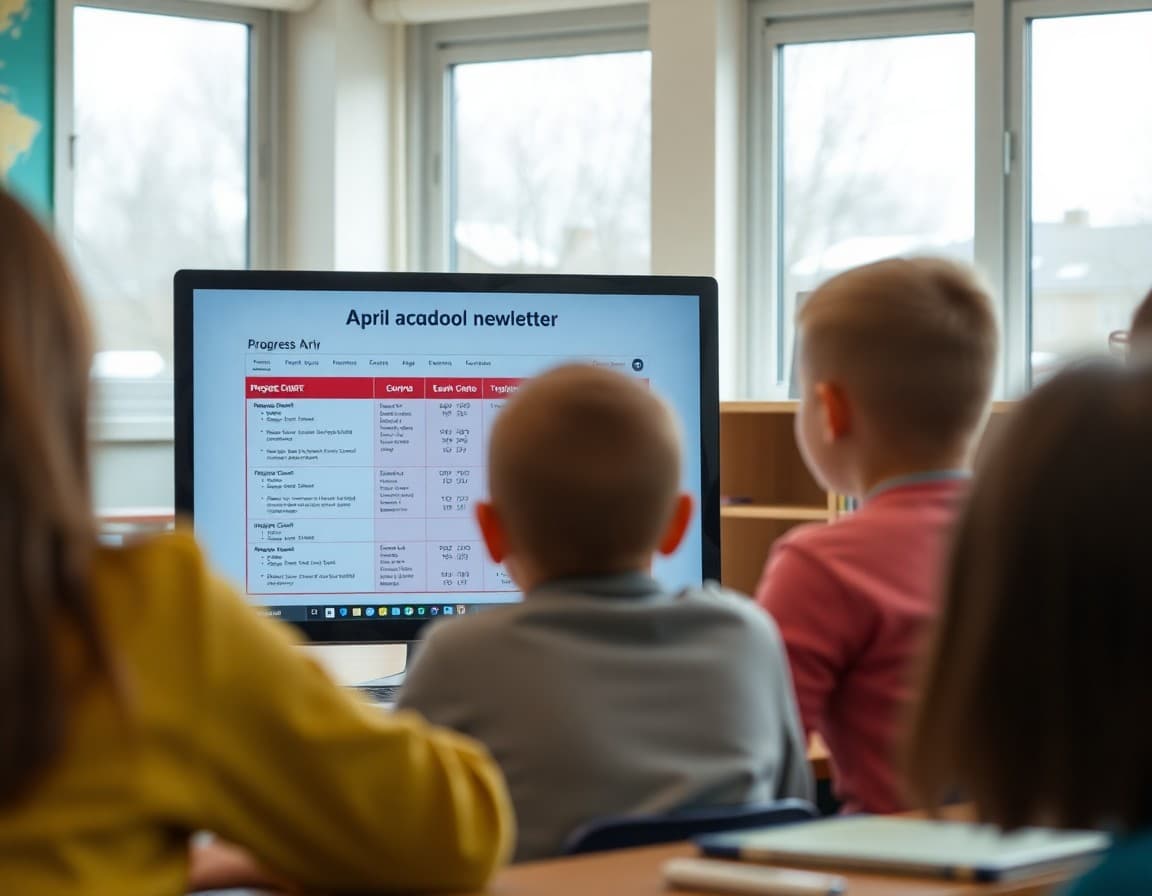
April is the post-testing exhale. For most schools, the big state assessments are done or nearly done, and the attention shifts to the final two months of the school year. Your April academic progress update newsletter plays a specific role: it closes the testing chapter, reinforces the work that still lies ahead, and begins preparing families for year-end conversations about grades, promotions, and placements.
Close the Testing Chapter
Families who sat through weeks of testing anxiety need a clear signal that it is over and that the school handled it well. A short paragraph acknowledging the effort works: "Our students completed state assessments last week. They showed up, did their best work, and handled the pressure well. We are proud of how they carried themselves through it. Results will come from the state in July, and we will share school-level outcomes in our summer communication." That is enough. It closes the loop without overpromising.
What Academic Work Remains
The final eight weeks of school contain substantial academic work: end-of-year projects, final exams in secondary schools, portfolio completion, graduation requirement checks, and promotion decisions. Give families a clear picture of what is coming. Grade-level summaries are helpful: "For 8th graders, final exams run June 3-7. For 6th and 7th graders, the final quarter grade is determined by classroom assessments and project completion."
Explain How Promotion Decisions Are Made
April is when families start wondering whether their child will be retained or promoted. Address this directly rather than waiting for them to ask: "Promotion decisions are based on academic performance across the year, attendance, and teacher recommendation. Families whose children are at risk for retention will be contacted individually before May 15 to discuss options." That sentence answers the question most families are asking and eliminates weeks of speculation.
Highlight Academic Accomplishments This Month
April typically surfaces strong student work. Science fairs, history presentations, senior projects, and spring reading challenges often conclude this month. Naming one specific accomplishment makes the newsletter feel grounded: "Our 7th graders completed their independent research projects last week. Twenty-two of them chose topics in environmental science, and three submitted their work to the district research competition."
A Template Excerpt for April
"Testing is behind us. The next eight weeks are about finishing strong. For our 3rd through 5th graders, that means completing the end-of-unit projects in science and social studies before May 30. For 6th graders, it means the annual biography project due May 19. For all students: attend consistently, complete assignments, and lean on your teachers if you hit a wall. We are here until the final bell on June 14, and so are they."
Address Enrichment for Students Who Excelled
Not all April academic communication needs to be about intervention. Students who performed strongly on assessments or who are ready for challenge deserve acknowledgment and next steps too: "Students identified for our summer enrichment program will receive individual letters in May. If you believe your child is ready for advanced coursework next year, please schedule a conversation with their current teacher before May 1."
Set Up May and June Conversations
April newsletters can do advance work for May. Planting seeds like: "We will host our final set of parent-teacher conferences on May 15. These conversations are focused on the full year and what comes next. We hope you will plan to attend" increases May conference participation. Families who see it coming twice show up.
An April academic update newsletter that is honest about where students stand, clear about what remains, and forward-looking about year-end conversations sets up the final stretch of the school year. Families who know the plan going into May are partners. Families who are surprised in June are critics.
Get one newsletter idea every week.
Free. For teachers. No spam.
Frequently asked questions
What academic topics should an April newsletter address?
April newsletters typically bridge post-testing and year-end planning. Cover what happens now that testing is over, any remaining assessments, teacher grading timelines, and how end-of-year placements or promotions are determined. Also mention any academic interventions or enrichment programs running through the end of the year.
How do I address families whose children struggled on assessments?
Address this as a school-wide communication, not a personal one. Something like: "For students who found testing challenging, we will be scheduling academic support conversations in May to discuss the best path forward for next year. Families will receive individual outreach from teachers or counselors." Reserve individual conversations for conferences, not newsletters.
Should I share any preliminary testing data in April?
Only share what is official and verified. Preliminary data can shift significantly, and publishing early estimates that later change undermines trust. If you have confirmed data from earlier in the year, share that. For spring assessments, a simple "Results are expected to arrive in July. We will communicate them as soon as we receive them" is enough.
What is the right length for an April academic update newsletter?
April families are approaching end-of-year fatigue. Keep your academic update to 350 words or less in the body, use bullet points for upcoming academic milestones, and close with a forward-looking note about May. Longer updates from April often go unread.
What newsletter platform is best for sending academic updates to school families?
Daystage is designed for exactly this kind of regular principal communication. It lets you build a mobile-first layout with sections for academic updates, upcoming dates, and family resources. The scheduling feature means you can write your April academic update in advance and set it to send at the optimal time without having to remember to push send.

Adi Ackerman
Author
Adi Ackerman is a former classroom teacher and curriculum writer with 8 years in K-8 schools. She writes about school communication, parent engagement, and what actually works in real classrooms.
More for Principals
Ready to send your first newsletter?
3 newsletters free. No credit card. First one ready in under 5 minutes.
Get started free